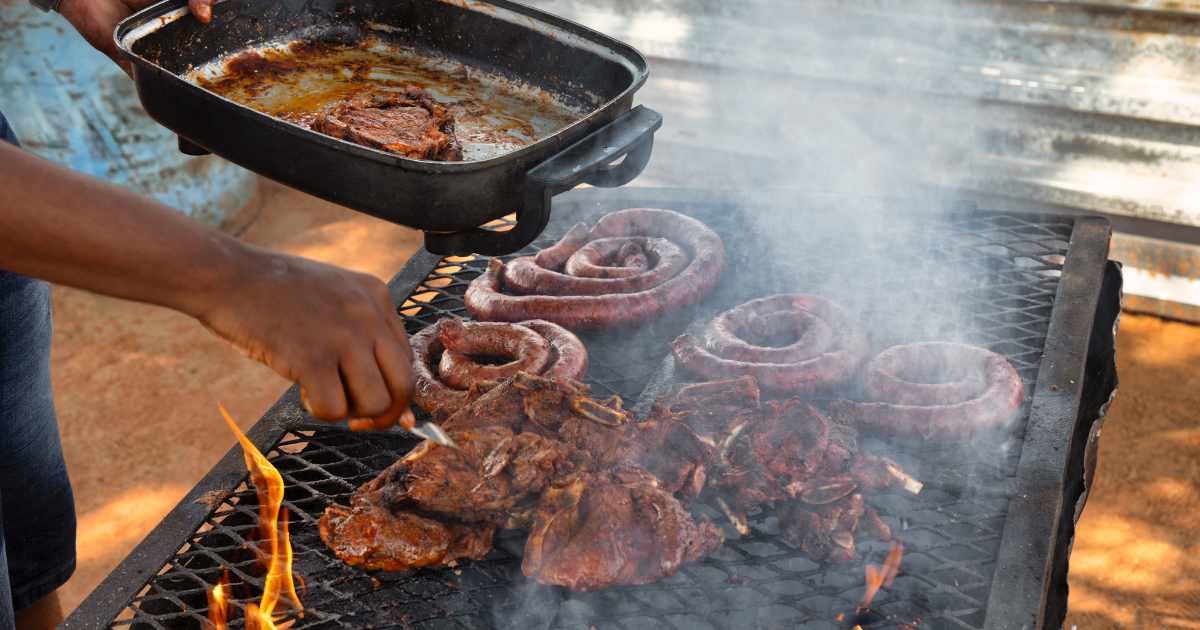
Shisanyama businesses, grilled meat sold and often eaten on-site in a social, communal setting, are among the more resilient township and township-adjacent food business models in South Africa, because they sell an experience as much as a meal. Understanding what actually drives that experience matters more than the grilling technique itself.
These are the fundamentals behind the shisanyama businesses that genuinely thrive.
The social atmosphere is the actual product
Customers come for the communal experience, eating together, socialising, often over a full afternoon or evening, as much as for the meat itself. A shisanyama that treats atmosphere as an afterthought loses what actually differentiates it from a plain takeaway.
Seating, music and a welcoming, unhurried environment are investments in the actual product, not decoration around it.
Meat sourcing and quality control need to be consistent
Reliable relationships with trusted suppliers, and consistent quality control on freshness and cut, protect both the business’s margin and its reputation, since a shisanyama’s regular customers notice quality dips quickly in a business built on repeat visits.
Compliance with food handling and hygiene regulations applies here as it does to any food business; our guide to Regulation R638 covers the specific hygiene requirements that apply.
Location and licensing determine viability from the start
Foot traffic and proximity to a residential community that will return regularly matter more than a prime commercial address, since the model depends on repeat local custom rather than passing trade alone.
Register the business properly with the Companies and Intellectual Property Commission, and confirm the correct food handling and, where alcohol is sold, liquor licensing requirements before opening.
Manage the cost side carefully
Meat is a significant, price-volatile input cost, and a shisanyama’s margins are thinner than they might appear once wastage, fuel or gas for grilling, and staff costs are properly accounted for.
Track cost per portion carefully and adjust pricing as input costs shift, rather than holding prices fixed out of habit while margins quietly erode.
Frequently asked questions
What actually differentiates a successful shisanyama?
The social, communal atmosphere as much as the meat itself. Treating atmosphere as an afterthought loses the real differentiator.
Why does meat sourcing consistency matter so much?
Regular customers notice quality dips quickly in a business built on repeat visits, so reliable suppliers protect both margin and reputation.
Does a shisanyama need a prime commercial location?
Not necessarily. Proximity to a residential community likely to return regularly often matters more than passing commercial foot traffic.
What licensing does a shisanyama need?
Standard company registration, food handling compliance, and liquor licensing if alcohol is sold on the premises.
What is the biggest cost risk?
Meat, a significant and price-volatile input, alongside wastage and fuel costs that erode margins if pricing isn’t adjusted regularly.