Are you wondering whether your business is paying too much tax, or whether your business is missing out on savings from tax deductions?
In this article, we’ll take a look at legitimate ways in which you can get tax deductions for your South African business.
Understanding Tax Deductions
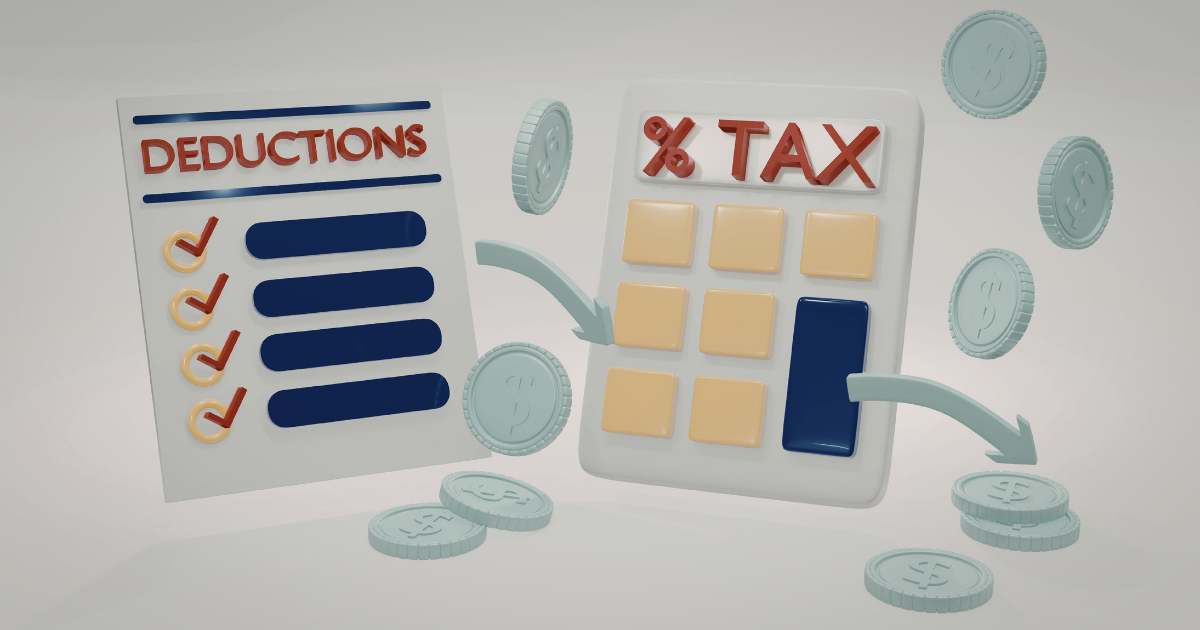
A tax deduction reduces your taxable income. You might make the mistake of confusing this with free money. But a tax deduction doesn’t mean you get free money. Instead, it lowers the profit that gets taxed.
If your business makes R800 000 profit and you have R200 000 in valid expenses, you are taxed on R600 000. That is the basic principle.
In South Africa, the rules sit with the South African Revenue Service. The law says an expense must be incurred in the production of income and for the purpose of trade. That sounds simple. In practice, many business owners get it wrong.
I have seen profitable SMEs pay more tax than necessary. Not because they were dishonest. Because they did not know what qualified.
1. Home Office Expenses
Many entrepreneurs work from home, and it’s important to know how to claim correctly. You can claim a portion of rent, bond interest, rates, electricity, water, and cleaning. However, there is a condition before you can claim this. The space must be used regularly and exclusively for business.
The claim must be based on square metres. If your home is 200 square metres and your office is 20 square metres, you can claim 10% of qualifying household costs.
Here is what many do not know: If you claim home office expenses as a homeowner, there may be capital gains tax implications when you sell the property. That portion of the house might not qualify for the full primary residence exclusion. Many accountants fail to explain this risk.
2. Vehicle Expenses and Logbooks
If you use a vehicle for business, you can claim fuel, maintenance, insurance, licence fees, and wear and tear. This requires you to keep a logbook.
SARS requires a detailed logbook that shows dates, kilometres travelled, and the purpose of the trip. Without it, your claim can fall apart during verification.
If your business use is below 50%, it may not make sense to place the vehicle in the company. You may be better off claiming a travel allowance structure. The wrong structure can increase tax instead of lowering it.
Vehicle tax deductions for small businesses depend on usage patterns. Many SMEs never review this.
3. Wear and Tear on Assets
When you buy a laptop, printer, or piece of machinery, you cannot always deduct the full amount immediately.
These items fall under wear and tear allowances. SARS publishes write-off periods. For example, laptops are often written off after three years.
Here is what most business owners miss. If your entity qualifies as a Small Business Corporation under Section 12E, you may deduct certain assets at accelerated rates. That can improve cash flow in the early years.
Small business corporation tax in South Africa offers relief. Few SMEs check if they qualify.
4. Professional Fees
Accountant fees are deductible. Legal fees related to business are deductible. Tax practitioner costs are deductible.
If you paid someone to register your company with the Companies and Intellectual Property Commission, that cost forms part of your start-up expenses.
Here is a deeper point. Fees related to capital raising are treated differently from normal operating expenses. If you restructure or bring in investors, some legal costs may not be immediately deductible. The classification matters.
Professional fees tax deduction is often underclaimed because invoices sit in e-mail folders and never reach bookkeeping.
5. Marketing and Advertising
If you spend money to attract customers, that cost is usually deductible. This includes social media advertising, partnering with influencers, Google Ads, and more. This is one of the tax deductions that are especially relevant for e-commerce businesses.
If you run ads on Google or Facebook, those advertising costs qualify as operating expenses. SMEs make the mistake of not tracking and claiming the costs associated with domain registration and annual hosting renewals. These may seem like small amounts, but over five years, they add up.
6. Bank Charges and Merchant Fees
Bank fees on your business bank account are also deductible. If you use payment platforms like PayFast or Yoco, their merchant fees reduce your taxable profit.
In practice, these are often ignored because business owners only look at gross income. They forget that merchant fees are already deducted before funds reflect in the bank.
7. Training and Skills Development
If a course improves your current business skills, the cost is deductible. A short course in digital marketing for your retail business qualifies. If you are paying for personal interest courses, then they do not qualify. The training must relate to your existing trade.
If your company is registered for the Skills Development Levy and you submit workplace skills plans correctly, you may recover part of your training spend through grants.
8. Bad Debts
If you invoice a client and declare the income, and the client never pays, you can write it off as a bad debt.
However, the deduction for bad tax is reliant on documentation. You must prove that you tried to collect. E-mails. Calls. Demand letters. SMEs make the mistake of leaving unpaid invoices on the books for years. They never write them off, meaning they continue to pay tax on income they will never receive.
It’s crucial that you understand how to qualify for the deduction. To qualify, the amount must have been included in your previous or current year of assessment.
Record Keeping Is Essential
Do not be one of those business owners who miss out on tax deductions because you lack record-keeping.
Implementing effective record-keeping systems is the first step. SARS can request supporting documents during verification. If you cannot produce them, deductions get reversed.
Use accounting software and separate personal and business accounts. This will not only help you qualify for tax deductions but will also enhance your business operations.