South African businesswomen have built and led companies across mining, biotechnology, manufacturing, wine and finance, often in industries where women remain a visible minority in senior leadership. Their stories are covered less often than their male counterparts’, which is exactly why they are worth telling properly rather than in passing.
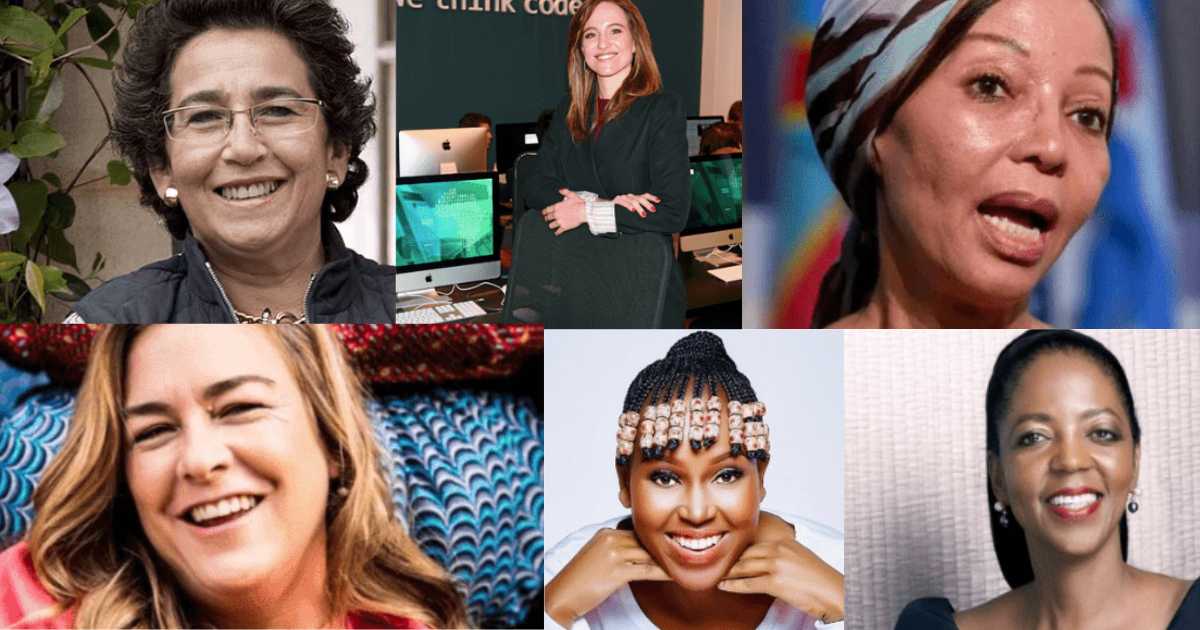
Here are eight women who have built genuine, lasting businesses across very different sectors.
Wendy Appelbaum
Wendy Appelbaum became a director at Liberty Investors early in her career and now chairs De Morgenzon, the Stellenbosch wine estate she has owned since 2003. She is consistently ranked among the wealthiest women in South Africa and was recognised among the world’s top female entrepreneurs in 2006. Her career spans finance and agriculture, two sectors that rarely overlap in one leadership path.
Arlene Mulder
Arlene Mulder is a leading figure in Africa’s tech startup space. She won the Forbes Woman Africa Technology and Innovation award and has served as a global ambassador for She Loves Tech. Mulder founded SheLovesCode, a not-for-profit advancing digital education across Africa, and also founded BiB, one of the continent’s first audio library apps.
Dineo Lioma
Dineo Lioma co-founded three biotechnology companies, Deep Medical Therapeutics, Incitech and CapeBio Technologies, and has been named among Forbes Woman Africa’s Top 20 Wealth Creators. Her work sits at the intersection of science and commercialisation, helping South African biotech research reach the market rather than stay in the lab.
Nneile Nkholise
Nneile Nkholise was named Africa’s top female innovator by the World Economic Forum in both 2016 and 2018, and featured on Forbes Africa’s 30 Under 30 list. She founded iMED Tech, which develops medical prostheses and bio-implants, and more recently founded 3DIMO, focused on the livestock sector.
Bridgette Radebe
Bridgette Radebe began her career managing individual shaft mining operations before founding Mmakau Mining in 1980, a company that has grown substantially in the decades since. She serves as president of the South African Mining Development Association, sits on the Sappi board, and is widely regarded as one of the first black women to build a genuine mining enterprise in South Africa.
Mayleen Kyster Nduli
Mayleen Kyster Nduli founded African Steel Holdings during a period when the domestic steel industry was struggling, and built it into a supplier of raw, manufactured and fabricated steel to a large share of South Africa’s construction projects. The Steel and Engineering Federation of Southern Africa has recognised her for innovating within the local steel industry.
Sarah Collins
Sarah Collins founded Wonderbag, a heat-retention cooker that needs no electricity, aimed at giving rural African households a sustainable cooking solution. The company won the Climate Change Leadership Award and was named one of Time’s 50 Most Genius Companies, after Wonderbag was recognised as Africa’s fastest-growing carbon offset project.
Dr Judy Dlamini
Dr Judy Dlamini is the founding chair of Mbekani Group, which holds a portfolio of investment and operational businesses, and serves as Chancellor of the University of the Witwatersrand. Before founding her own ventures she was a senior manager at HSBC South Africa. Forbes has named her among Africa’s 50 most powerful women and among the 50 women over 50 leading across Europe, the Middle East and Africa.
Where to see more of them
None of these women built their businesses through a single funding round or a lucky break. Appelbaum’s finance background fed directly into running a wine estate. Dlamini moved from a corporate banking career into founding her own diversified holding company. Radebe spent years managing individual mining operations before founding her own firm. The pattern across all eight is time spent building sector expertise before founding, rather than founding first and learning the industry afterward.
What these eight have in common
None of them built in an easy category. Mining, biotechnology and steel manufacturing are capital-intensive, technically demanding sectors that remain heavily male-dominated at senior level, and each of these women reached the top of one anyway. Several also moved between sectors, from finance into agriculture, from corporate banking into a diversified holding company, which suggests the underlying skill was building and running an enterprise rather than expertise in one narrow field.
If you are looking for funding routes specifically aimed at women-owned businesses, our guide to government funding for SMEs covers the programmes that weight their criteria by ownership, and our piece on the challenges women-led SMEs face in South Africa covers the barriers that make these stories the exception rather than the rule.
Frequently asked questions
What industries are South African businesswomen most successful in?
Across this list alone: mining, biotechnology, wine, steel manufacturing, technology and diversified investment holding. There is no single sector, which is itself worth noting given how often women in business are associated with a narrow set of industries.
Is funding available specifically for women-owned businesses in South Africa?
Yes. Several development finance institutions and the dtic’s own incentive schemes weight funding criteria by ownership, meaning women-owned enterprises can access a larger share of qualifying support than a business without that ownership profile.
What do these businesswomen have in common beyond success?
Most built in capital-intensive or technically demanding sectors rather than lower-barrier service businesses, and several moved between industries during their careers rather than staying in one lane.
Are there more women-led businesses worth knowing about?
Yes, well beyond this list. Our broader coverage of female entrepreneurs and the specific challenges they face is a good next read.
Where to look next
If any of these stories resonates with a specific sector you are building in, the common thread worth taking is persistence in an industry that was not designed to make room for you rather than choosing an easier category. That pattern shows up across all eight.
This article was updated in September 2026.