Data centres are the linchpin of cybersecurity and cloud computing. Without this vital piece of infrastructure, businesses aren’t able to safely store sensitive data or access information from multiple locations (such as a team working remotely needs to). So how do these tie in together, and why should a small business owner even care?
Many businesses have already seen the benefit of using cloud storage. This technology works by using remote servers to protect business information. Some have “on-site” servers, which means that a business has its storage in the same business that it operates, whereas others have it “off-site”. Regardless of the physical location, employees then use an Internet connection to access the files.
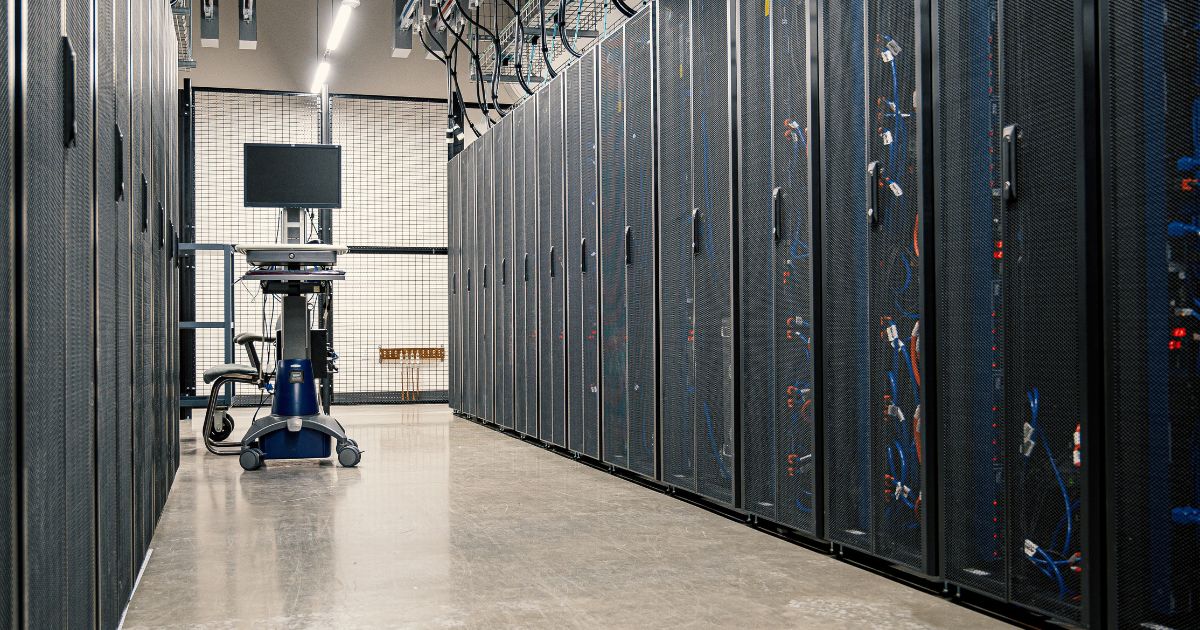
However, on-site servers, or data centres, as they are often referred to, can mean that the company has to spend more on cybersecurity because a robust cybersecurity infrastructure also means physical security. Additionally, this extra security and the necessary equipment to safely maintain a server can be costly. That’s why businesses can consider using off-site storage in the form of other companies that operate data centres.
“Cloud computing isn’t new to South African entrepreneurs. “SMEs utilise cloud services extensively; however, for some applications, such as backup and archiving, as an example, the actual infrastructure inside a data centre is often more cost-effective,” says Jacques De Jager, Chief Operations Officer at Digital Parks Africa. “SMEs must ensure that their IT services and operations are constantly optimised against cost and performance.”
A Look At Data Centres
“Business operations for businesses of any size are becoming increasingly dependent on IT infrastructure,” he explains. “This infrastructure should not be based on premises but in a data centre to keep it secure, always powered on and efficiently cooled.”
De Jager elaborates that data centres provide physical security, protecting systems from theft or tampering. “They also provide constant power and cooling for guaranteed uptime. This is key to an SME’s ability to operate and generate revenue. Data centres also provide the largest access to ICT networks and services providers, meaning that SMEs have the best possible choice of network carrier or specialised IT service providers, all from the same location.”
With the recent rise in cyber scams, phishing attempts and other dangers, businesses must understand the importance of securing themselves and their customer information from nefarious activities.
Cloud Storage that Mitigates Risk
Entrepreneurs who use cloud storage already understand that operations are convenient to access from anywhere, but it also serves as a risk mitigation tool.
Should physical devices be lost or stolen, work that is stored or backed up in the cloud is still safe. Depending on how data is retrieved, be it an app, a web portal, or an application programming interface (API), login details may be required. This means that passwords can be changed to ensure safety and access control.
De Jager shares advice about how SMEs can mitigate risk when it comes to investing in data centres. Firstly, he recommends, businesses choose a data centre provider that has an unblemished record. “This record should cover its entire uptime since its inception. They should include their own research from some of the existing data centre clients.” He highlights that SMEs need to look carefully at the centre’s portfolio. “SMEs should look for the data centre services portfolio with a wide variety of services and skills, as well as parameters such as 24/7 remote hands and resolution times in hours, as opposed to days. This is of critical importance.”
According to De Jager, a multi-data centre strategy is something that businesses cannot go without. “A multi-data centre strategy must be designed against uptime requirements and available budgets. Several configurations are possible, with the highest available configuration being two data centre sites running in an all-active and live data synchronised fashion.”
The point to this is that there will always be a backup server. After all, servers are still machines, and unforeseen circumstances can occur, such as a power failure where backup generators don’t kick in. Whenever the worst-case scenario happens, the point is to be prepared and not be caught off guard. “There are configurations such as active-passive or active-standby that vary in complexity, infrastructure requirements and costs. Multi-data centre strategies rely heavily on redundant and always available transmission links between data centre sites.”