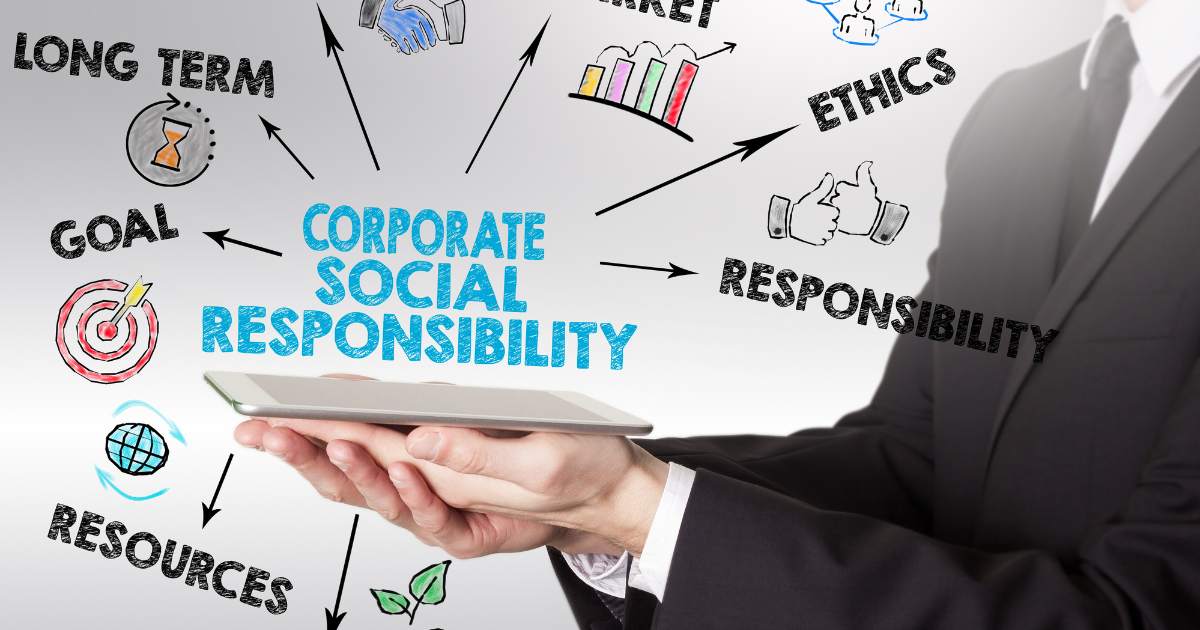
There is a need for more Corporate Social Responsibility (CSR) education directed at South African SMEs. Many business owners focus on monetary value, and since CSR initiatives typically don’t have immediate monetary benefits, businesses get discouraged from participating in them or struggle to see where the value lies.
However, CSR initiatives have the potential to empower both SMEs and communities at large. When businesses position themselves as impact-driven businesses, they reap the benefits in the long run.
Benefits include increased customer support, investor trust, attracting new customers, access to new markets, and more.
1. Increased Customer Support
Customers are increasingly looking for brands that align with their morals and values. According to the Sourcing Journal, 90% of Gen Z and 91% of millennials are more eager to support brands serving a social and environmental benefit.
So, while some businesses might not see the immediate benefit of investing in CSR, the long-term benefits include an increased customer base, as well as retaining the loyalty of your target audience.
South African businesses can engage in initiatives dedicated to sustainable development, like skills development, which ties to SDG 4 (quality education) and SDG 8 (decent work and economic growth). Other CSR efforts can include environmental conservation. These can take the form of providing accredited vocational training or mentorship programs.
Other impactful CSR efforts can include environmental conservation, such as supporting renewable energy projects and waste management and recycling programs. To explore other ideas that align with your business, have a look at the 17 Sustainable Development Goals established by the United Nations.
2. Boost Investor Trust
Investors aren’t willing to risk their reputation with a company that doesn’t align with their values. It’s crucial not to assume that investors only have an interest in the financial performance of a company, and while that is a factor, the triple bottom line (TBL) is a fundamental factor in assessing a company’s performance.
The triple bottom line refers to measuring a business on its performance towards social issues, environmental goals and profits. Thus, instead of focusing on one factor in isolation, like profits, all three should exist. Profit, people, and planet should all co-exist in your business efforts.
3. Access to New Markets
CSR also gives businesses the opportunity to tap into new markets. Before a small business heads into new market territory, they’ve got to get a handle on the local culture, local values and what the local people need. That way, they can make sure their CSR initiatives are actually making a difference. For instance, a telecommunications company can sponsor local schools and a few hotspot points with Wi-Fi to help ease the burden on students getting data for assignments.
This way, they are able to access support from members of that community. This support doesn’t always have to be monetary. Perhaps that business needs to conduct a survey and collect data for its business. However, businesses looking to tap into new markets must be transparent about what they’re doing, why they’re doing it, and what they’re hoping to achieve from it.
When you lay it all out in the open, it shows you’re being genuine, it builds trust and lets customers know you actually care about making a positive impact. CSR can even inspire some new products or services that are more affordable, easier to get your hands on or just plain better for the environment. Employees can also feel more dedicated when your business displays a commitment to making an impact.
4. Employee Retention
According to Harvard Business School, 93% of employees believe that companies have to lead with purpose. In addition to this, 88% believe that it is not acceptable for businesses to make money in a way that harms society at large.
This is an indication that including CSR in your company’s strategy can help retain your employees. When your employees are on board with CSR and take part in local initiatives, they not only feel more encouraged about being a part of your business, but they can go out and tell customers about these initiatives, which helps build a positive rep for the business.
Really, CSR is not just about doing good; it’s also a savvy move for small businesses looking to grow.