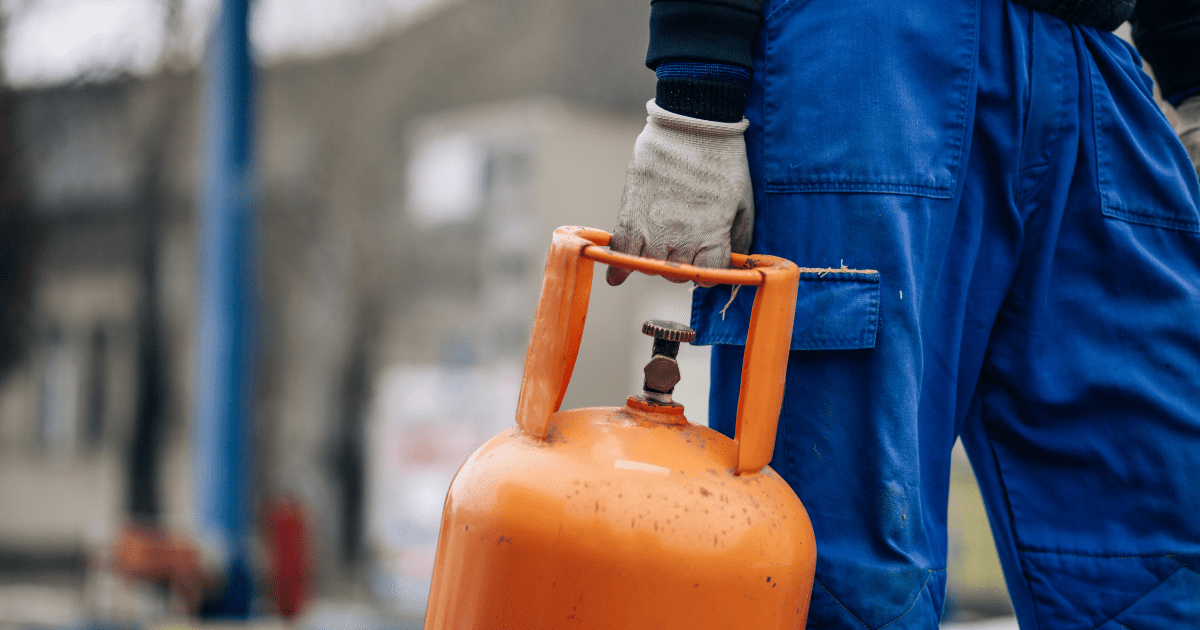
A gas refill business is one of South Africa’s more overlooked business opportunities, you see them everywhere around the country, and for good reason. Many South Africans rely on LPG gas for cooking or heating, and these businesses can serve both domestic and commercial demand without requiring much in the way of specialist skills.
This guide covers what it costs, how profitable it can genuinely be, and the licensing you need to get right before you start trading.
What it costs to start a gas refill business
Official fees are checked against the regulator (September 2026). Add your own quotes for everything else to get your total. Nothing you type leaves your device.
Our guide puts a properly set up gas refill business at roughly R250,000, depending on your LPG supplier, storage and cylinder deposits.
-
Company registration (CIPC) A private company with a standard Memorandum of Incorporation. CIPC notes this fee can be reduced in some cases. Source: CIPC forms and feesR175 Official fee
-
Company name reservation (CIPC) Optional, but worth doing before you print anything. R50 online; R75 if you apply manually. Source: CIPC forms and feesR50 Official fee
-
SARS income tax number Issued automatically when CIPC registers your company. You still need to register on SARS eFiling. Source: SARSFree Official fee
-
Petroleum site and retail licence Required to sell petroleum products, including LPG, to the public. Apply on form DMRE 39 at the department's regional office; you must also publish a notice of your application in four newspapers, so budget for those adverts. Source: gov.za
-
Only if you build or run bulk LPG storage facilities. Source: LPGSA
-
Cylinder stock and deposits Your LPG supplier sets the deposit per cylinder size.
-
Scale, filling equipment and safety cage
-
Fire safety equipment and signage
-
Premises rent and deposit
How much does it cost to start a gas refill business in South Africa?
Startup costs vary considerably depending on your LPG marketer, storage capacity, equipment agreement, working stock and cylinder deposits. As a general guide, expect to budget somewhere around R250,000 to get a gas refill enterprise properly off the ground.
Ongoing costs, rent, insurance and staffing, vary meaningfully by location and scale, so build these into your business plan realistically rather than focusing only on the initial setup figure.
Is a gas business profitable?
Starting a gas refill business can be genuinely profitable in South Africa. Demand for LPG gas remains consistent, and wholesale gas pricing leaves reasonable room to add a solid margin on resale.
Profitability ultimately depends on location and volume: operate where genuine demand exists, and fulfil large enough quantities, and the business has real potential to be highly profitable. Commercial gas refill work specifically requires larger volumes to be fulfilled per order, but also carries the potential for stronger margins than residential-only operations.
Once established, day-to-day operating costs are relatively low, especially compared to more labour-intensive business models like a bakery or a shisanyama.
How do I start a gas refill business?
Becoming an LP gas distributor in South Africa requires the correct wholesale licence. You need a DMRE 38 wholesale licence, applied for through your regional office of the Department of Mineral Resources and Energy.
As part of the application, you need to publish a notice of application in four newspapers, and pay the applicable annual licence fee. Once granted, you must submit annual business records to the department using the wholesale licence annual information submission form, the DMRE 30.
Beyond the wholesale distribution licence itself, LPG storage and installations must also meet SANS 10087 safety compliance, with a Certificate of Conformity required for every installation, a separate compliance track worth budgeting time and cost for alongside your DMRE application.
You will also need a reliable wholesale LP gas supplier, one of the most important relationships in the entire business. Beyond licensing and supply, focus on securing the right location, investing in enough gas cylinders to match expected demand, and building a clear operational plan for refilling and rotating empty cylinders.
If your business will offer deliveries, budget for the right transport, and think through how you will market the business and build your customer base from the start.
Frequently asked questions
What licence do I need to start a gas refill business in South Africa?
A DMRE 38 wholesale licence from the Department of Mineral Resources and Energy, alongside SANS 10087 safety compliance for storage and installation, each with a separate application and compliance process.
How much does it cost to start a gas refill business?
Roughly R250,000 as a general benchmark, though the exact figure depends heavily on your LPG marketer, storage capacity, equipment agreement and cylinder deposit requirements.
Is a gas refill business more profitable than other small businesses?
It can be, once established. Day-to-day operating costs are relatively low compared to more labour-intensive businesses, and demand for LPG gas remains consistently strong across South Africa.
Does a gas refill business need commercial or residential customers to be viable?
Either can work. Residential demand is broad and consistent, while commercial customers require larger volumes per order but typically offer stronger margins, many successful operators serve both.
How long does it take to get a DMRE wholesale licence?
Response times vary, but the process includes publishing a notice in four newspapers and a formal review by your regional DMRE office, so budget for this to take meaningfully longer than a standard business registration.
Getting started
Secure your DMRE 38 licence and SANS 10087 compliance early, since these take real time, then focus on finding the right location and a reliable wholesale supplier. With a strong business plan and genuine local demand, a gas refill business remains one of the more consistently profitable opportunities available to South African entrepreneurs.
Originally published in April 2022. Updated September 2026 to reflect current DMRE licensing and SANS 10087 compliance requirements. Licensing requirements change, so confirm current requirements directly with your regional DMRE office.