South Africa’s small business sector has a persistent funding problem, and it is not always the one entrepreneurs think it is. Business owners frequently approach funders with applications built around what they need: working capital, equipment finance, and a cash injection to bridge a difficult period – and are (sometimes) turned away without a clear explanation of why.
Lilah Clark, SME Development Manager at the Johannesburg Stock Exchange (JSE), offers a framework that helps explain the gap: funders do not fund “eggs”, they fund “chickens” that can reliably produce more “eggs”.
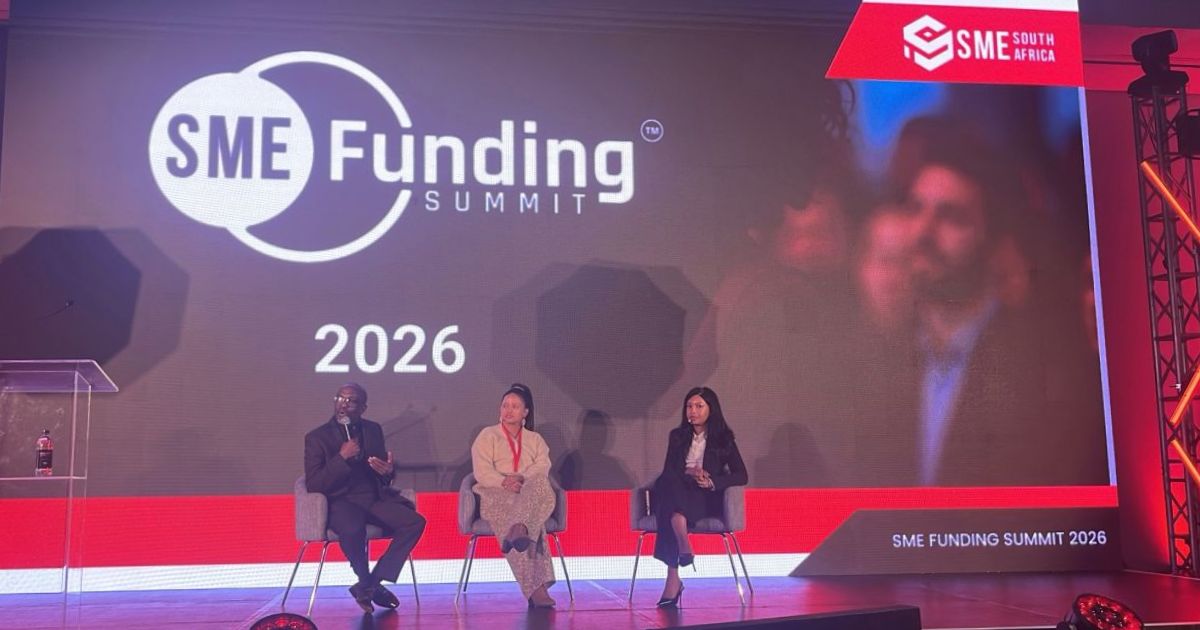
The metaphor, drawn from Clark’s presentation at the SME Funding Summit 2026, points to a distinction that many small to medium-sized enterprise (SME) founders overlook. Funders are not evaluating the need itself; they are evaluating the underlying asset, the capability, systems and track record that indicate a business can continue generating income well beyond the point of disbursement. A funding request, however pressing, is rarely enough on its own to move a funder to act.
For SME founders, funders and the broader ecosystem of enterprise and supplier development practitioners, this distinction carries practical weight. It separates a funding application that gets taken seriously from one that is classified as not yet investment ready.
Drawing on Clark’s framework, this article examines what funders are actually assessing and what it takes for a business to move from asking for capital to attracting it.
The Chicken Versus Egg Problem
Clark’s framework rests on a single image, a chicken that lays eggs. The chicken represents the underlying asset, the capability, systems and infrastructure a business has built, while the egg represents the income that asset produces. Funders, Clark argues, are not interested in the egg on its own; an isolated sale or a single contract means little without evidence that the chicken behind it can keep producing.
The reality is lenders demand clear cash flow, technology integration for automated operations, and structured data – whether financial or compliance – before approving growth capital. By relying on outdated systems like paper records, SMEs risk not getting the capital they require to upgrade.
It is a translation problem rather than a fault on either side; SMEs are not wrong to ask for funding, and funders are not wrong to withhold confidence. Clark says the bridge between what SMEs say and what funders say is trust.
Funding Is the Outcome, Not the Starting Point
Funding is not where a business begins. Clark insists that it is where a certain kind of business arrives. Her three-part reality check makes the sequence explicit.
One: Funding is not the starting point.
Two: Funding is the outcome.
Three: Funding follows readiness.
Reordered this way, capital stops being a rescue plan and becomes a reward for work already done. This sequence ensures that each phase feeds into the next. In this way, funding is an outcome that validates a working commercial engine, not the starting point that creates one.
Why Funding Is An Outcome
Lenders and investors look for certain elements before deploying capital. They want to see predictable revenue, product-market fit and operational traction. For example, demonstrating that people want to pay for your product or services proves viability far better than any projection-heavy business plan. This leads to capital deployment.
What Funders Are Really Evaluating Behind the Numbers
A funder’s decision rarely hinges on the numbers in the application. It hinges on what sits behind it: customers, revenue, systems, a credible management team, governance, growth potential and cash flow. Together, these form the real checklist Clark says determines whether a business reads as investable, regardless of how compelling the funding request itself sounds.
The Investable Business Checklist
Clark says the following seven elements are those that turn a funding application into investment.
- Systems: Internal systems, such as financial reporting, management control, and internal controls, are essential for SMEs to secure external funding because they build trust and reduce perceived risks for lenders and investors.
- Governance: Strong governance structures like compliance, management structures and risk control are needed to secure external funding and build trust with lenders.
- Cash Flow: Cash flow is the actual movement of money into and out of a small business, and it acts as the primary proof lenders and investors require to approve SME funding.
- Growth Potential: Growth potential is one of the main signals lenders and investors use to decide if an SME deserves funding. High growth potential shows market demand and efficient operations, which helps offset the perceived risk of lending to small businesses.
- Management Team: A strong management team with proven ability, leadership integrity, operational understanding and relevant risk lowers the perceived risk of the business.
- Revenue: Revenue is the primary proof of a business model’s viability and directly dictates an SME’s borrowing capacity, affordability assessments, and access to alternative capital.
- Customers: Having customers validates demand, generates verifiable cash flow and enables specialised financing options.
The above elements all play a part in the risk assessment lenders do when assessing an SME. SMEs must ensure they have all elements in place to secure the specialised funding needed for sustainable growth.
The Funding Readiness Ladder Every SME Must Climb
According to Clark, every business sits somewhere on a six-stage ladder, running from idea through proof of concept, revenue, profitability, bankability and, eventually, scale. Knowing which stage a business occupies is more useful to an SME owner than knowing which funder to approach next, because the stage determines what kind of capital is even realistically available.
The Six Stages of the Ladder
Stage 1: Idea
The first stage of SME funding readiness is the idea stage. This phase focuses on validating a concept, proving market demand, and defining a clear value proposition before seeking external capital. Key focus areas include:
- Concept Validation: Prove that a real market problem exists and that people are willing to pay to solve it.
- Value Proposition: Define how your product or service uniquely solves the problem better than existing alternatives.
- Basic Compliance: Establish the foundational legal structure, such as registering your business entity and identifying required tax obligations.
- Initial Roadmap: Outline a basic product or service roadmap showing how the concept moves from a drawing board to an initial launch.
Stage 2: Proof of Concept (PoC)
During this stage, a business tests its product, service or idea to validate that it is technically and commercially viable before seeking outside capital.
Why is proof of concept important for funding readiness?
- Funders want evidence: Lenders and early-stage investors do not fund raw thoughts; they fund proof that a business model can work and generate revenue.
- More funding options: Showing a successful PoC opens doors to bootstrapping validation, early angel investors, or non-dilutive grants rather than desperate high-cost borrowing.
- Realistic Projections: A completed PoC helps you build accurate cash flow forecasts and unit economics instead of wild guesses.
Stage 3: Revenue
The revenue phase is where a business can prove it can consistently generate sales, track income, and show financial stability before lenders or investors will give it capital.
What lenders are looking for includes:
- Consistent bank deposits highlight steady and predictable cash flow.
- A financial digital footprint that includes everyday transactions, card payments and invoices creates a clear digital trail that proves real market demand
- Minimum thresholds that demonstrate annual turnovers and other financial aspects of the business.
Stage 4: Profitability
This is the pivotal transition phase where a business moves from relying on external capital or breaking even to generating consistent, sustainable net income from its core operations. At this stage, funding readiness shifts from proving a concept to demonstrating financial maturity and a reliable capacity for debt service or investor ROI.
Key characteristics of the profitability stage:
- A validated business model
- Auditable financial records
- Positive unit economics
- Internal cash generation
Funding requests at this stage are meant to accelerate expansion – such as opening new locations, upgrading tech, or bulk inventory purchases – rather than covering operational deficits.
Stage 5: Bankability
The bankability stage is where a business proves it has the financial stability, clear records, and reliable cash flow required by lenders to safely repay a loan. During this stage, formal financial institutions and development banks evaluate whether your company can handle debt without risking default.
Key requirements in this stage:
- Clean financial records
- Regulatory compliance
- Clear loan repayment plan
- Collateral or security in the form of assets
Stage 6: Scale
The scale stage is the pivotal phase where a proven business model proves it can expand rapidly and generate predictable returns without breaking its operational or financial foundations. At this point, investors and lenders shift focus from whether the product sells to whether the enterprise can grow systematically without constant owner intervention.
Key requirements for the scale stage:
- Operational repeatability where core processes are fully documented, digitised, and independent of the founder.
- Financial transparency, which involves clean, auditable financial records, stable cash flow, and clear unit economics that show every invested rand yields a measurable return.
- Demonstrated demand that shows that sales and customer acquisition are consistently outpacing current operational capacity, signalling a genuine market pull rather than speculative growth.
- Robust governance structures such as strong internal controls, risk management protocols, and clear compliance frameworks.
During this scaling phase, short-term cash flow fixes like overdrafts are replaced by growth-orientated capital.
SMEs can use this ladder to assess where the business is in terms of growth, and that will guide founders in their pursuit of funding. A business in stage 1 still needs to validate the idea before looking for growth funding, while any business in stage 6 will be looking for equity investment, which provides more capital for expansion.
Think Like an Investor, Not an Applicant
Clark offers one mindset shift above all others, replacing “can I get funding?” with “would I invest in this business?” The question sounds like a small adjustment, but it forces an owner to view their own business the way a funder would, stripped of the urgency and self-interest that usually shape a funding pitch.
The chicken must come first. Capability before capital, value before funding, and fundability before investment. Only once those are in place does funding play the role it was always meant to play, not as a foundation to build on, but as an accelerator for a business that has already proven it can stand on its own.