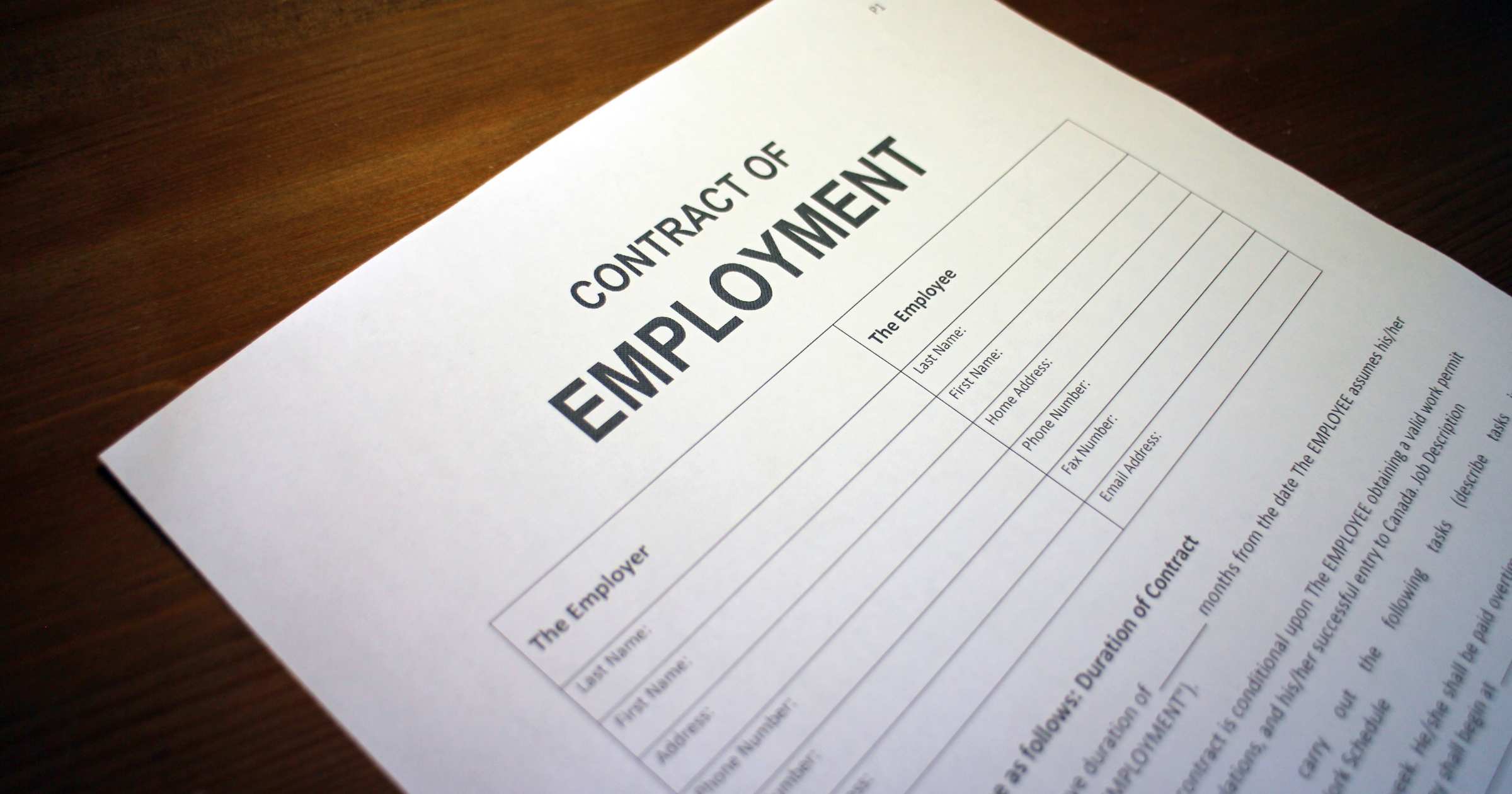
Hiring employees is a task on its own: ensuring that you find the right candidate for a clearly defined role can be the make-or-break of building your team. But once you have the best fit for the role and they become your permanent employee, you also need to ensure that their contracts remain relevant and up to date.
Employment contracts are not “sign them and leave them” documents. In fact, any HR representative or business owner filling these tasks needs to remain on top of any changes that might need to be made to the contracts.
Contracts need to be updated when job descriptions change significantly beyond what the person was employed for. Additionally, these also need to be updated when there are legislative changes. “For South Africa’s small and mid-sized businesses (SMMEs), the gap between past compliance and present law is becoming a dangerous fault line,” says Karabo Kopeka, Managing Director at Clientèle Legal.
“In 2019, the Commission for Conciliation, Mediation and Arbitration (CCMA) reported that 80% of its cases originated from small businesses, and the risk is even greater now: the Code of Practice on Dismissal, effective from September 2025, replaces earlier guidelines, and employment contracts that do not reflect these changes are at risk of being unenforceable,” he explains.
Among the unfair dismissal claims for 2025 (January to September), Clientèle Legal has worked on 2 533. This amount highlights the severity of the misinterpreted or outdated employment contracts.
Legislative Updates
On 4 September 2025, the Minister of Employment and Labour published the new Code of Good Practice on Dismissal (the Code). It repeals the previous Schedule 8 Code of Good Practice on Dismissal and the Code of Good Practice Based on Operational Requirements. Furthermore, it aims to refine and clarify dismissal standards and introduces several modifications to the structure and content, addressing issues ranging from probation to operational requirements.
“Among the notable updates, the Code recognises the realities faced by SMMEs, allowing them to adopt simpler, less formal processes when managing dismissals. However, it expands the purpose of probation beyond performance to also include broader suitability for employment. It clarifies that prior warnings may not always be required when poor performance involves senior managers or specialised employees whose judgment should equip them to meet expectations,” Kopeka elaborates. “The Code also widens the definition of incapacity to cover incompatibility or situations such as imprisonment, and it introduces refreshed guidance on unprotected strikes and legitimate grounds for retrenchment.”
Kopeka notes that while not specifically addressed in the Code, employment contracts drafted before the rise of remote work are another potential stumbling block. They often do not cover data use outside the office, performance management at home, or working hours.
“A dismissal of a remote worker for underperformance must comply with current labour laws, and must be supported by remote work policies and an employment contract that sets out remote work expectations. If the policies or contracts are unclear, a case of unfair dismissal could be brought against the employer at the CCMA,” he warns.
Outdated Documentation Equals Risk
He also adds that risk is not limited to a single type of document. From supplier agreements and service contracts to HR policies, any clause that fails to reflect current legislation leaves businesses exposed to significant legal risks. And given that regulations evolve across multiple fronts, the exposure is often broader than business owners realise.
“The solution lies in reframing compliance from a tick-box exercise to a strategic shield: Regular reviews protect your business from avoidable shocks, and these reviews don’t need to be overwhelming or unaffordable.” Practical steps include auditing all contracts annually, conducting internal risk assessments, and ensuring that HR and operations teams stay abreast of legislative changes through ongoing education.
Partnering with an experienced legal expert can also help SMMEs to cut through complexity. “The law is not static, and your contracts should not be either. Legal specialists can translate shifting regulations into practical, plain-language updates that keep your business on the right side of the law, effectively safeguarding you and your employees,” Kopeka concludes.
Relevant Acts Employers Must Adhere To
Other legislation that employers must familiarise themselves with includes:
- Labour Relations
- Public Employment Services
- Labour Relations Act of 1995 (as amended)
- Basic Conditions of Employment Act No. 75 of 1997
- National Minimum Wage Act of 2018
- Employment Equity Act of 1998 (as amended)
- Broad-Based Black Economic Empowerment Act No. 53 of 2003
- Skills Development Act No. 97 of 1998 (as amended)
- Skills Development Levies Act No. 9 of 1999
- Public Holidays Act No. 36 of 1994
- Compensation for Occupational Injuries and Diseases Act 130 of 1994 (as amended)
- Occupational Health & Safety Act No. 85 of 1993 (as amended)
- UIF