Last updated: September 2026. Pig farming is capital-hungry at the start and unforgiving about detail. Pigs convert feed efficiently, breed in litters rather than singles, and reach market weight in months rather than years, which is why the returns attract people. What ends most small piggeries is not the animals: it is feed cost, biosecurity and having no confirmed route to an abattoir. Sort those three out before buying a single pig.
Decide what you are actually producing
There are three distinct businesses here and they need different setups.
Weaner production means keeping sows and selling piglets at weaning to other farmers. Income arrives regularly, the capital requirement is lower, and you depend on other producers as buyers.
Finishing means buying weaners and growing them to slaughter weight. It is feed-intensive with a short cycle and suits someone who has an abattoir relationship but not breeding facilities.
Farrow to finish covers both, from breeding to slaughter weight. It gives the most control and the best margin, and it needs the most capital, skill and housing.
Start with one. Most people should begin with finishing or a small number of sows and expand once the numbers are proven.
Feed is the largest cost by a wide margin
Feed dominates the cost of producing a pig, and pigs need different rations at different stages: creep feed for piglets, grower, finisher, and specific rations for pregnant and lactating sows. Feeding one general ration to everything wastes money and slows growth.
Price feed from several suppliers before committing, and work out what your feed cost per kilogram of live weight gained actually is. That single number tells you whether the business works at current pig prices. Where you can safely use by-products from bakeries or food producers, do it carefully and legally: feeding untreated food waste, particularly anything containing meat, is restricted because of disease risk and can be prohibited.
Biosecurity, and African swine fever
African swine fever is present in South Africa, has no vaccine and no treatment, and kills most infected pigs. Outbreaks lead to movement restrictions and culling, and it is a controlled animal disease that must be reported to a state veterinarian on suspicion.
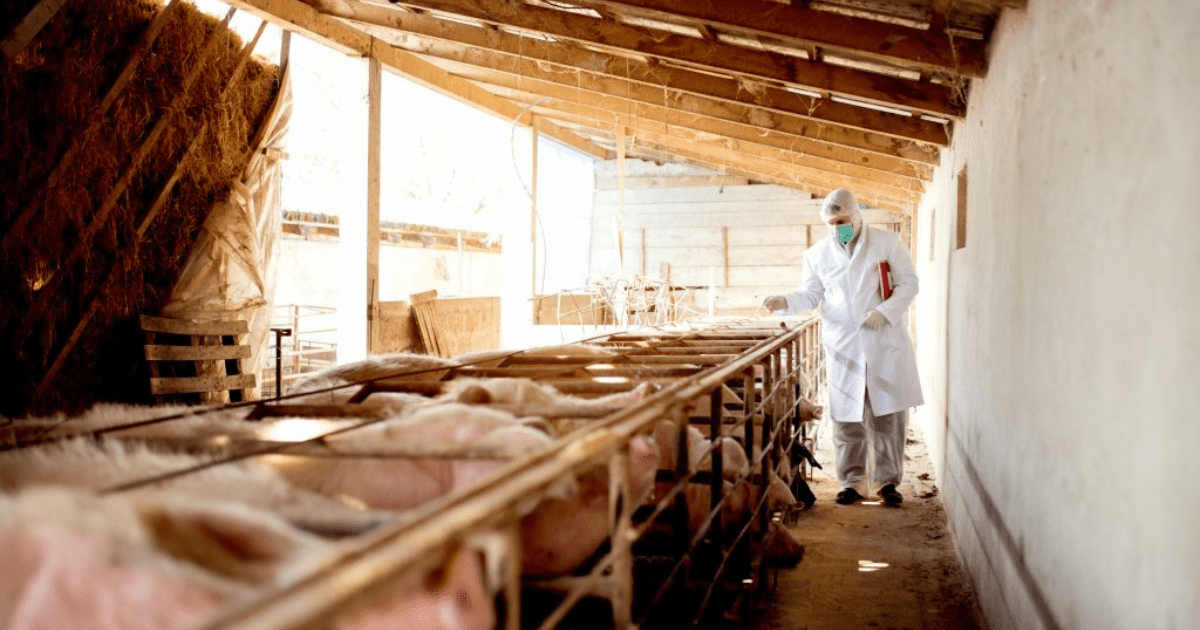
Biosecurity is therefore not optional housekeeping, it is the business. Control who enters the piggery, require a change of footwear and clothing, do not bring in pigs from unknown sources without isolation, keep feed and water secure from wild animals, and never move between herds casually. A single introduction can end everything you have built. Buy breeding stock only from reputable producers who can show health status.
Housing that suits the climate
Pigs do not tolerate heat well and cannot sweat. Housing needs shade, ventilation and a way to keep animals cool in summer, plus dry, draught-free areas for young piglets that need warmth.
Floors must drain and be washable, because hygiene directly determines disease pressure. Farrowing pens need protection against sows crushing piglets, which is a significant cause of pre-weaning loss. Plan effluent handling from the start: pig waste is substantial, and disposal must be lawful and away from watercourses.
Zoning, environmental and slaughter rules
Intensive animal keeping needs appropriate zoning or municipal consent use, with minimum distances from neighbouring dwellings and water sources. Larger operations may trigger environmental authorisation.
Critically, pigs for human consumption must be slaughtered at a registered abattoir. Informal slaughter for sale is unlawful and closes the door on any formal buyer. Establish which abattoir will take your pigs, at what weight, on what schedule and at what price before you start, because that relationship is your entire route to market. Departmental contacts and veterinary services are listed on the government services portal.
Market and cash flow
Buyers include abattoirs, processors, butcheries and direct customers. Each wants different weights and consistency, and the ones paying best want reliable supply rather than occasional batches.
Cash flow is the practical constraint. From serving a sow to selling her offspring at slaughter weight is close to a year, and you feed everything throughout. Work out the full cost of a cycle and make sure you can fund it without selling animals early at poor prices, which is how small piggeries erode their own breeding stock.
Funding
Development finance institutions fund agricultural ventures, and the National Empowerment Fund runs programmes for entrepreneurs and women-owned businesses. The National Youth Development Agency covers applicants under 35, and provincial agriculture departments run their own support schemes.
What every funder wants is the same: a compliant registered entity, secured land with the right zoning, evidence of a market, and projections built on realistic feed cost and mortality.
Frequently asked questions
Is pig farming profitable in South Africa?
It can be, because pigs convert feed efficiently and breed in litters. Profitability is decided by feed cost per kilogram gained, mortality and your selling price, not by herd size.
What should a beginner start with?
Finishing bought weaners, or a small number of sows. Farrow to finish gives the best margin but needs the most capital and skill.
What is the biggest risk?
African swine fever. It has no vaccine or treatment, kills most infected pigs, triggers movement restrictions, and must be reported to a state veterinarian on suspicion.
Can I slaughter and sell pigs myself?
No. Pigs for human consumption must be slaughtered at a registered abattoir, and informal slaughter for sale is unlawful.
Do I need municipal approval?
Generally yes. Intensive animal keeping requires suitable zoning or consent use, with distance requirements from homes and watercourses, and lawful effluent disposal.
How long until the first income?
Months for finishing bought weaners, closer to a year for a full breeding cycle, and you carry feed costs throughout. Fund the full cycle before starting.