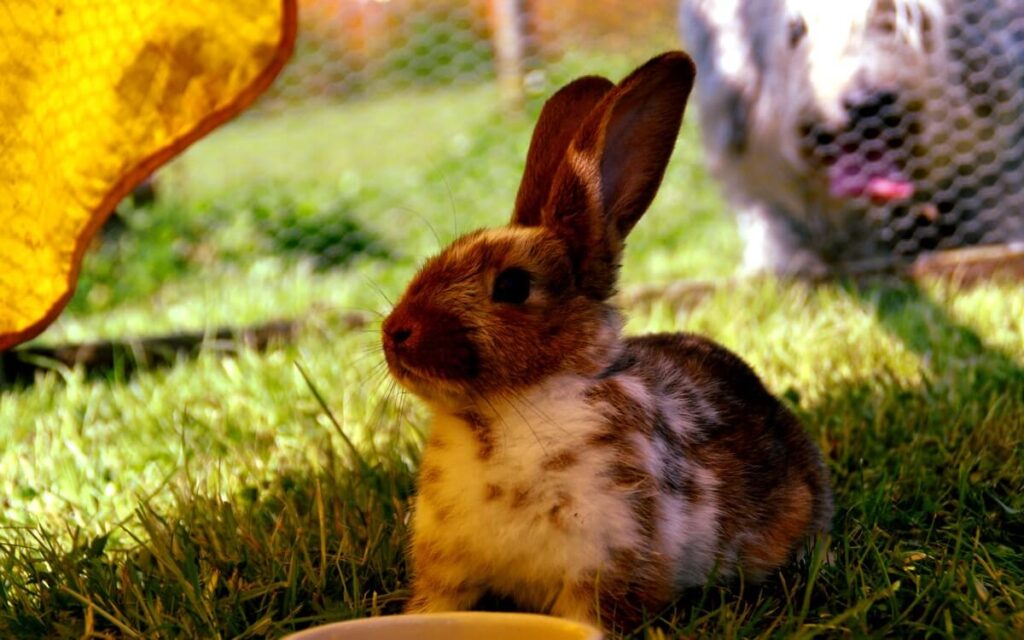
Rabbit farming remains a genuinely low-cost way for small-scale farmers to enter agriculture: rabbits grow and reproduce quickly, setup costs are relatively modest, and the enterprise suits backyard-scale production as well as larger commercial operations.
Pertunia Setumo, agricultural economist at FNB Business, notes that rabbit farming has lower barriers to entry than most livestock farming, it is less demanding, easier to maintain, and requires less land and fewer resources overall.
What is rabbit farming?
Rabbit farming in South Africa involves breeding rabbits for meat, along with fur and wool. Rabbit meat carries among the lowest calories per serving of any meat with a high protein concentration, though it remains relatively unfamiliar to South African consumers used to beef, lamb, chicken, fish and pork. China remains the largest global producer, with France, Italy and Spain also carrying strong rabbit meat consumption.
Local rabbit farmers generally supply niche and informal markets: individual restaurants, butcheries and private customers.
A structural risk worth understanding upfront
The industry’s biggest processor, Coniglio Rabbit Meat Farm, was liquidated in October 2019, leaving around 110 small-scale contracted rabbit farmers owed more than R16 million and without their primary off-take buyer. This is not a minor historical footnote, it illustrates a genuine structural risk in rabbit farming specifically: a small industry with very few processors means losing one abattoir or export buyer can leave a large share of producers stranded overnight.
Before committing capital, research who the current, active off-take buyers and abattoirs actually are, rather than assuming any single processor named in older material is still operating. Organisations like the Commercial Rabbit Producers Association (Corpa) and the Gauteng Rabbit Breeders Association are a reasonable starting point for current, on-the-ground market information.
Industry overview
Domestic consumption of rabbit meat has historically sat well below international levels, largely due to limited local awareness of its nutritional benefits and limited retail availability. The meat is generally found in gourmet restaurants, specialist butcheries, informal markets and select retailers rather than mainstream supermarkets.
Start-up costs
Rabbits typically reach production weight (around 3.5kg) in roughly 90 days, with a gestation period of about 31 days producing one to ten kits per litter.
For a small-scale unit of around 150 does and 30 bucks, expect a start-up investment in the region of R35,000, covering breeding stock, feed, labour and other variable costs for the first month. This excludes housing structures, which scale with the size of the operation, and other ad hoc fixed costs.
Feed requirements run to roughly 9.2kg per rabbit across its life cycle to reach a marketable weight of around 2.2kg. Confirm current feed and livestock pricing directly with suppliers, since these shift with broader agricultural input costs.
Requirements
To set up a rabbit farming operation, you generally need:
- Agriculturally zoned land.
- A building or structure to house the animals.
- Infrastructure: security, water and electricity.
- Rabbit farming and breeding equipment.
- Breeding stock (production does and commercial bucks).
- A confirmed off-take arrangement or buyer before scaling production.
- Someone to manage day-to-day farming operations.
- Roughly one labourer per hundred production animals.
- Transport to deliver livestock to a buyer or processing point.
- Commercial pelleted feed, or primary-produced feed as an alternative.
Laws and regulations
Rabbit farming activity must align with the Department of Agriculture’s requirements, which also certifies products for export. The department publishes guidance on housing, feeding, selecting breeding stock, breeding, birth and weaning specific to rabbits.
Funding
Masisizane Fund, an Old Mutual non-profit initiative, provides development funding and business support to SMEs in high-performing sectors including agribusiness, franchising and supply chain or manufacturing.
Export Marketing and Investment Assistance (EMIA) is a government-sponsored scheme supporting local companies to increase their competitiveness abroad, including patent registration and product mark support, while developing export markets and attracting foreign direct investment.
Co-operative Incentive Scheme (CIS), part of the wider guide to cooperatives in South Africa, offers a matching grant of up to R350,000, helping cooperatives acquire startup requirements and build an initial asset base.
Agro-Processing Support Scheme (APSS) supports investment by agro-processing and agri-business enterprises that demonstrate increased capacity, job creation, modernised equipment, improved competitiveness, or broader participation.
AgriBEE Fund, established with the Land Bank, promotes black participation across the agricultural value chain through funding for equity deals, acquisitions and enterprise development.
NYDA provides youth entrepreneurs with financial and non-financial business development support, aimed specifically at early-stage businesses showing genuine future potential.
Industry challenges
Finding an abattoir willing to slaughter rabbits, particularly in small volumes, remains one of the most persistent challenges for independent rabbit farmers. Limited off-takers mean pricing power tends to sit with buyers rather than producers, cage and equipment suppliers are few and can be expensive for a starting operation, and commercial rabbit feed can be difficult to source, leading some farmers to substitute horse feed pellets given the similar digestive systems.
Choosing your breeding stock
Research your intended rabbit breed thoroughly before starting. Experienced farmers consistently emphasise that understanding your rabbits’ specific needs matters as much as understanding the business itself, rabbits are prone to illness and need attentive care.
Buy only from a registered, accredited, ethical breeder, associations like breed-specific rabbit clubs are a good source of vetted breeder contacts. When selecting stock, look for bright eyes, dry noses, clean ears and feet, smooth clean fur, and properly aligned teeth. Breeding stock should be around six months old, and should generally be replaced every three years as productivity declines.
Avoid buying a mature female of unknown age, she may already be past her productive life. Long toenails are one practical sign of an older rabbit. Always ask about the parent stock’s breeding record before committing to a purchase.
Frequently asked questions
Is rabbit farming still profitable in South Africa given Coniglio’s liquidation?
It can be, but the 2019 Coniglio liquidation is a genuine cautionary example. Confirm you have a real, current off-take buyer or processor lined up before scaling production, rather than assuming demand exists without a contract in place.
How much capital do I need to start rabbit farming?
Roughly R35,000 for a small-scale unit of about 150 does and 30 bucks, covering breeding stock, feed and labour for the first month, excluding housing structures.
What is the biggest industry-wide challenge in rabbit farming?
Limited processing and off-take capacity. Very few abattoirs handle rabbits, especially in small volumes, which concentrates pricing power with buyers and creates real risk if a single processor exits the market.
What funding is available for a rabbit farming business?
Options include the Masisizane Fund, EMIA, the Co-operative Incentive Scheme, the Agro-Processing Support Scheme, the AgriBEE Fund and NYDA youth funding, each with different eligibility criteria worth checking directly.
How do I find a reputable rabbit breeder to buy stock from?
Through established breed associations and rabbit clubs, which can point you to registered, accredited breeders and give access to breed-specific guidance and support networks.
Getting started responsibly
Rabbit farming remains a genuinely low-cost entry point into agriculture, but the collapse of the industry’s largest processor in 2019 is a real lesson: confirm your market and off-take arrangement before you scale, not after.
Originally published in January 2020. Updated September 2026 to remove outdated references treating the now-liquidated Coniglio Rabbit Meat Farm as an active buyer, and to flag off-take risk as a genuine industry consideration. Processor and buyer availability changes, so confirm current market access directly before scaling production.