The South African Future Trust (SAFT) has announced that Standard Bank is the headline sponsor for the 2025 SAFT Summit. The third annual event will take place at the Sandton Convention Centre on 5 and 6 November 2025. It brings together entrepreneurs, investors, changemakers, and innovators for two days of unparalleled networking and knowledge sharing.
This year features international and local speakers, more than 2000 delegates, and over 200 exhibitors.
SAFT’s Origin Story
The South Africa Future Trust had its genesis in 2020. “The Oppenheimer family generously put aside R1 billion for entrepreneurs to help them fight through the challenges of the COVID-19 pandemic,” said Nico Jacobs, CEO of the South African Future Trust. “The family went to the six major banks, asked them to identify clients that meet specific criteria, and explained that they intend to help these businesses cover expenses during the lockdown.
“They received over R2 billion worth in applications,” he adds. “The next step was to go to the businesses and ask that they provide proof that it is truly the number of staff being paid, after which the money would be paid directly into the staff’s accounts.”
Jacobs explains that the payment was interest-free and wouldn’t be due for five years, meaning the payment is only due in December 2025.
“We realised that so many businesses that have taken out loans would still have struggled to pay them back in a few months, so the time allowed them to get back on their feet.”
Since the end of the pandemic, the fund has pivoted to be a support structure. “We not only offer support financially but also non-financially, because we realised that scaffolding support, mentorship, learning and development, etc., is also very important.”
Jacobs elaborates that they looked at both the formal economy and the informal economy. “In the first, the bank works quite closely with the fund, but we also gave away a large amount of money to the partners that were working in the township space, such as A2Pay with their sales solutions.” He shares that these kinds of strong partnerships have helped pivot the fund to be a financial and non-financial support structure for both the formal and informal sectors.
“No matter how good, big or brilliant you are, I don’t think any single organisation can make the change we need to see in the country. You have to bring together people from the private sector, with a part of philanthropy,” he adds.
Partnering with Standard Bank
Commenting on the partnership, SAFT Chairman Jonathan Oppenheimer said, “My family’s relationship with Standard Bank has been defined by a shared urgency and purpose to build a better future for South Africa.”
Historically, the Oppenheimer family and Standard Bank have walked a long journey together from the first check that was signed to fund the mining operations, to most recently being named the headline sponsor for the SAFT Summit, working together on the Top Women in Business Conference and the Kasi SME Summit Pitch Competition.
“It is a great fit because Standard Bank aligns with SAFT,” Jooste notes about the partnership. “Standard Bank is established across Africa with a footprint in the countries where SAFT also operates, and both are like-minded.”
Jooste explains that the like-mindedness aligns where both institutions realise that entrepreneurship is a changer for the economy, and a wealth creator globally. “But you have to invest in the sector, to nurture the sector, to create access points and networking opportunities,” he adds. “Summits are the platforms that you are creating where people can engage and find funders, investors, suppliers, etc.”
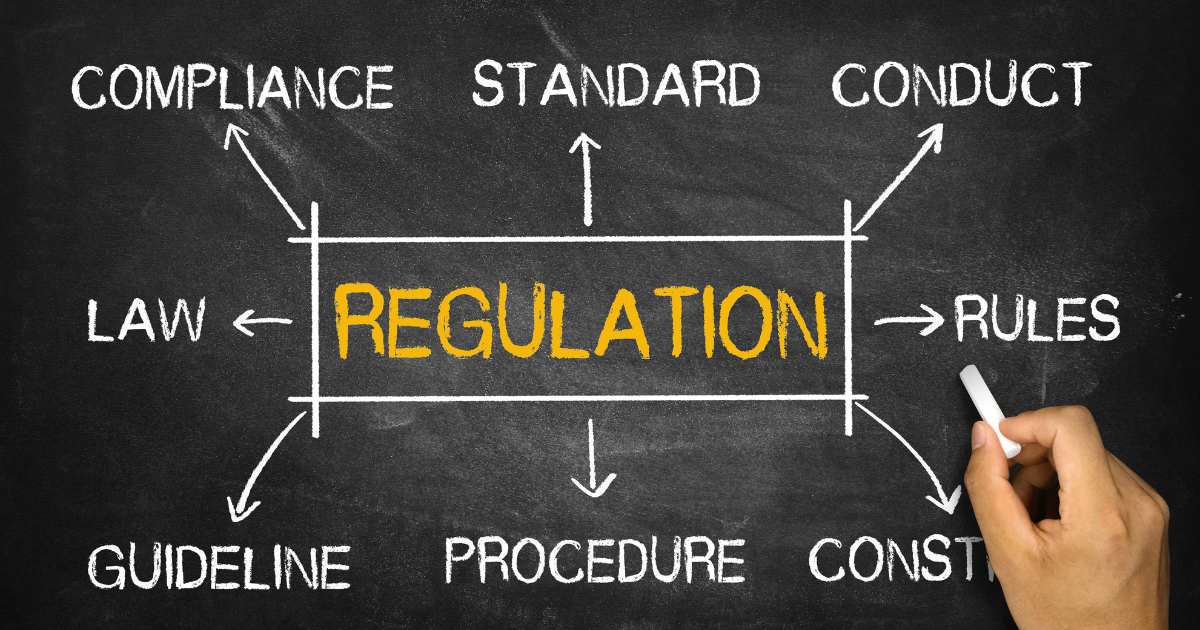
Compliance is More Than a Checklist
“The culture around compliance needs to change if businesses, particularly township businesses, are going to be compliant,” Jooste says. He further states that, according to him, there are two types of compliance: friction-based and differentiation.
“Friction-based compliance, which is more like ticking a box, does nothing for your business. People see it as the cost of doing business, and I have to comply.” An example of this is having a Certificate of Acceptability.
“The more important compliance that we look at, we see as a differentiator as an investment opportunity,” he explains. “Take, for instance, legal compliance. If you are not legally compliant, you get a fine. It is a financial problem. If you are not registered, for instance, you can’t access funding. This has the added effect that if the community you operate in knows you are not compliant, then you will struggle to build trust and, consequently, to conduct business.
“We see it’s important to change the culture and the lens through which entrepreneurs look at compliance. They must start seeing it as a competitive advantage. It creates a better business because it asks you questions about important matters such as health and safety,” he concludes.