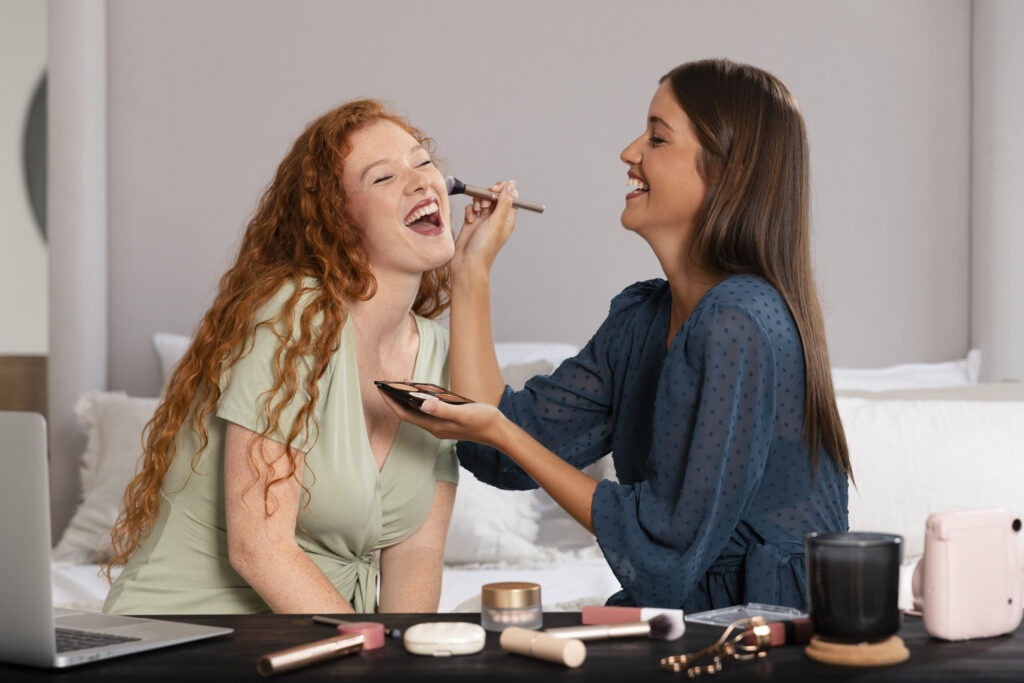
Makeup artistry needs no special licence, so the business side is what separates the artists who earn a living from the ones who stay a side hustle. The things that decide it are a deposit policy that survives no-shows, pricing that accounts for travel and preparation time rather than just the hour in the chair, and planning cash flow around a season that is heavily weighted to matric dances, weddings and December.
Skill gets you booked once. Everything after that is a business, and it is the business half that most artists never set up properly.
There is no register to join and no qualification the law demands before you take a paying client. That low barrier is why the market is crowded, and why the artists who treat it as a proper trading business tend to pull away from the ones who do not.
Nobody licenses you, so your standards are your reputation
There is no statutory licence for makeup artistry. What exists instead is a hygiene expectation that clients increasingly know to check, and one bad reaction shared publicly can cost you a season.
Sanitise between clients, decant product rather than dipping into the pot, use disposable applicators for mascara and lip products, and keep brushes properly cleaned with a documented routine. Ask about allergies and sensitivities before you start, and patch test where anything might react.
Say all of this out loud on your social accounts. Most artists treat hygiene as invisible back-of-house work. Showing it is free marketing to exactly the client who is nervous about booking someone new.
Register the business once it is earning
You can trade as a sole proprietor with no registration at all, declaring the income in your personal tax return. That is the sensible starting point while you are testing whether the work pays.
Register a private company with the Companies and Intellectual Property Commission through BizPortal when you want a separate legal identity, which costs R175 including a name reservation. That usually becomes worth it when you start invoicing companies, hiring assistants, or taking on work that carries real liability.
Keep the money separate from day one either way. A dedicated bank account is the difference between knowing what you earn and guessing. You will also need it the moment anyone asks you for an invoice.
If you work from home, check your municipality’s rules on running a business from a residential property before you have clients arriving weekly. Requirements differ by municipality and it is a cheap thing to confirm early.
Price for the whole job, not the hour in the chair
This is where most artists undercharge, and it is not really about confidence. It is about counting.
A single booking is rarely one hour. It is the consultation, the trial, travel there and back, setup, the application itself, waiting through a ceremony for touch-ups, cleaning your kit afterwards, and the admin around it. Price the job, and build travel in explicitly rather than absorbing petrol quietly.
Package the work the way clients buy it. Bridal is a package including a trial, the morning itself, and a set number of additional faces for the bridal party. Matric dances are a shorter single application, often several in one afternoon at one address, which changes the economics entirely. Editorial and corporate work bills differently again, usually by half day or day rate.
Charge separately for anything that scales with the client rather than with you: extra faces, early call times, travel beyond a set radius, and a second location on the same day.
Deposits are the whole cash flow strategy
No-shows and last-minute cancellations are the single biggest drain on a mobile beauty business, because you cannot resell a Saturday morning at short notice.
Take a non-refundable deposit to secure any date. State the balance terms and when they are due, and put a clear cancellation window in writing before you accept the booking. A short message setting out the terms is enough, and having it in writing is what makes it enforceable rather than awkward.
For weddings, structure it in stages: a deposit to hold the date, the trial paid separately, and the balance settled before or on the day rather than chased afterwards. Chasing a bride for money after her wedding is a conversation you will lose.
Our guide on ensuring clients pay on time covers the wider habit.
Plan for a season, not a month
This work is seasonal in a way that catches new artists out. Matric dance season, wedding season and December functions bunch the income into part of the year, and then there are quiet months where the phone barely rings.
Budget across the year rather than the month. Put money aside during the busy season deliberately, because the quiet months are not a surprise, they are a pattern you can see coming.
Use the slow period for the work that has no deadline: refreshing your portfolio, shooting content, approaching photographers and venues, and learning a technique you keep turning down work for. The artists who use the quiet months to sell are the ones with a fuller diary next season.
Your portfolio is your shopfront
Clients book what they can see, and they book someone who has done their face, their skin tone, their occasion.
Shoot a range deliberately. A portfolio that shows one look on one skin tone tells most of the market you are not for them. Photograph in natural light where you can, and show the finished result honestly rather than filtering it into something you cannot reproduce on the day.
Build relationships with photographers, videographers, hair stylists, wedding planners and venues. In this trade referral is most of the pipeline, and being the artist a photographer trusts to be on time and easy to work with is worth more than any advert.
Client photographs need permission
A photograph of a client’s face is personal information, and posting it without permission is a POPIA problem as well as a trust problem.
Ask before you post, and get it in writing even if that is just a message you keep. Say specifically where it will appear. Someone comfortable with a photo in your portfolio may not want it in a paid advert.
Bridal parties deserve particular care, since the couple may have their own arrangement with a photographer about when images may be published. Ask rather than assume. Our POPIA compliance guide sets out the obligations.
Know what your kit actually costs you
Product is a consumable, not a once-off purchase, and artists routinely underestimate the replacement rate.
Track what you spend on product, brushes, disposables and sanitiser over a few months and work out a realistic cost per face. Until you know that number, you do not know your margin, and a fully booked season can still leave you with nothing.
Buy for versatility rather than range. A palette that works across many skin tones earns its place. A colour you bought for one shoot two years ago does not. Keep the receipts, because these are business expenses that reduce your taxable income.
Frequently asked questions
Do I need a licence to work as a makeup artist?
No statutory licence is required. What matters is hygiene practice, and if you work from home, checking your municipality’s rules on operating a business from a residential property.
Should I register a company?
Not immediately. Trading as a sole proprietor needs no registration. Registering a private company costs R175 through BizPortal and makes sense once you are invoicing businesses, taking on assistants, or carrying real liability.
How much should I charge?
Price the whole job rather than the time in the chair, including consultation, trial, travel, setup and cleaning. Charge separately for extra faces, early call times and travel beyond a set radius.
How do I handle cancellations?
Take a non-refundable deposit to hold any date, set out the balance terms and a cancellation window in writing before accepting, and settle wedding balances before or on the day.
Can I post photos of my clients?
Only with their permission. A photograph of someone’s face is personal information under POPIA, so ask before posting and be specific about where the image will appear.
Further reading
Originally published in October 2023. Updated September 2026 with current registration costs and the practical side of running the business. Fees change, so confirm current figures with CIPC before you register.