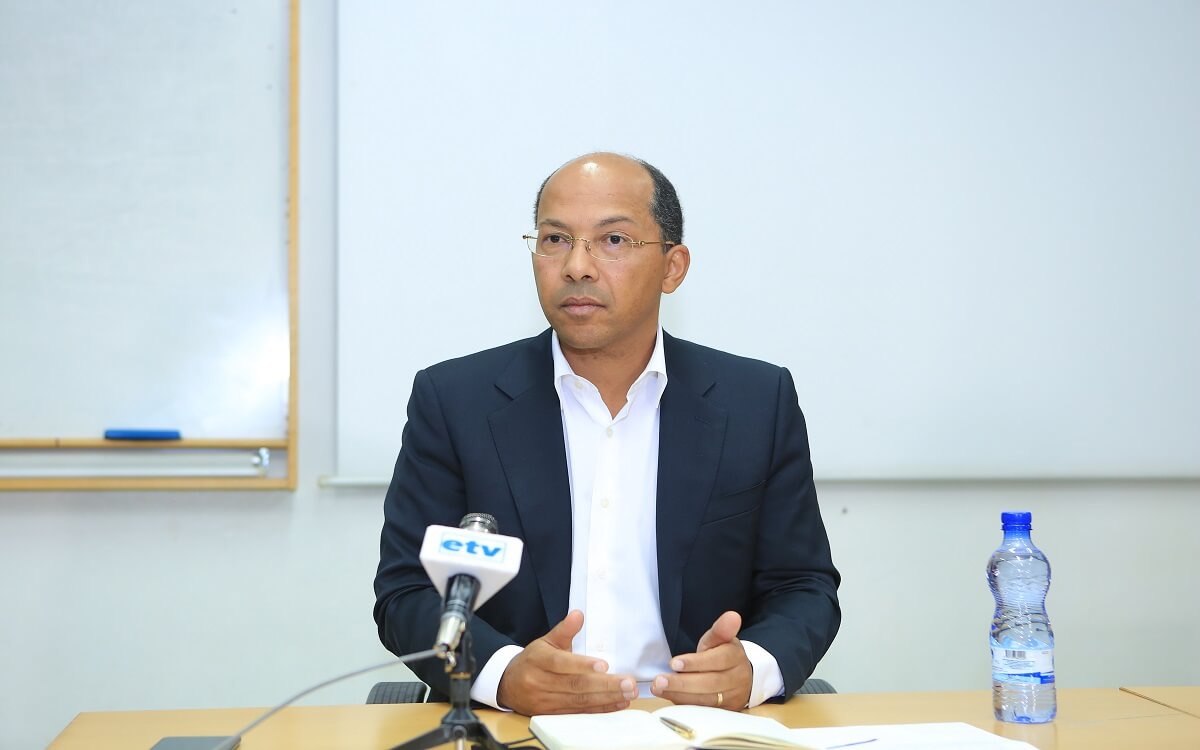
Africa’s media and communications industry rewards entrepreneurs who solve a distribution problem rather than chase an inspirational idea, and few examples make that clearer than APO Group, the Pan-African communications consultancy founded by journalist-turned-entrepreneur Nicolas Pompigne-Mognard. Nearly two decades after he started it with a personal investment and no outside financing, the business remains fully owned by its founder and continues to operate as one of the continent’s main channels for press release distribution, media relations and public relations work.
Pompigne-Mognard was a journalist, not a businessperson, when he identified the gap. Working as the European correspondent for a Gabonese media house, he struggled to access African press releases at a time when negative coverage of the continent dominated international media and there was no reliable channel for positive African stories to reach a global audience. He funded the company himself and built it without co-founders or investors, a decision he still credits with keeping the business aligned to his original goals.
What business opportunities exist in Africa’s media and communications industry?
The distribution gap Pompigne-Mognard identified in the mid-2000s, corporates and institutions in Africa struggling to get factual, positive stories in front of international media and investors, has not closed on its own. If anything, the growth of pan-African business news, investor interest in African markets and cross-border e-commerce has widened the market for services that connect African organisations to global media, from press release distribution and media monitoring to public relations strategy and government and investor communications.
Entrepreneurs entering this space today are more likely to compete on specialisation than APO Group did at launch: sector-specific communications (health, fintech, mining, climate), multilingual distribution across English, French and Portuguese-speaking Africa, and data-driven media monitoring are all still comparatively underserved relative to demand.
How did APO Group grow without external investment?
Pompigne-Mognard has been explicit that the company has never raised outside capital and remains 100% owned by him. That choice cuts both ways for an entrepreneur weighing it: it removes pressure to grow for an investor’s timeline or exit target, but it also means the business has had to fund every stage of its own expansion, including its African Media Group and technology divisions, from operating profit rather than a funding round.
For a bootstrapped services business, that generally means reinvesting the bulk of early profit back into the company rather than drawing it out, and it is a model that suits founders who plan to run the business for the long term rather than build toward a sale.
What structure does a Pan-African communications business need?
APO Group operates across three connected service lines: press release distribution and media relations, technology and platform solutions for clients managing their own media presence, and strategic consulting for organisations expanding across African markets. Structuring a services business this way, distribution, technology and advisory under one roof, lets a single client relationship generate several revenue streams rather than a single one-off fee.
The company has also built formal partnerships with major international media and imagery organisations, which matters more in a media distribution business than in most other sectors: credibility with the platforms that carry your client’s story is the actual product being sold.
Why do journalists often make effective entrepreneurs?
Pompigne-Mognard argues that journalism trains exactly the skills a service-business founder needs: curiosity, the ability to get people to answer difficult questions, strong networks built through reporting, and the discipline to turn a complicated situation into a clear, compelling narrative quickly. A journalist moving into business also carries a form of credibility that opens doors a first-time founder from another background often has to earn from scratch.
None of this substitutes for the basics of running a company, cash flow discipline, hiring well and being willing to change a business model that is not working, but it does explain why several successful African media and communications ventures have been founded by former reporters and editors.
What are the practical lessons for a first-time entrepreneur from this story?
Reinvest early profit into the business rather than personal spending, keep the founding team as small as it can practically be to avoid decision-making friction, hire people who are better than you at their specific function, and be willing to adjust the business model as the market shows you what actually works. None of these are unique to media, but they are the specific lessons Pompigne-Mognard points to most often when asked what built APO Group.
There is also a sequencing lesson worth pulling out on its own. Pompigne-Mognard did not set out to build a company; he set out to solve a single, specific distribution problem he had personally experienced as a working journalist. The business model followed once the problem was solved for one client and then repeated for the next. Entrepreneurs entering Africa’s media and communications sector today would do well to look for their own version of that starting point: a specific, recurring frustration a client or an industry has, rather than a broad ambition to “do media” or “do PR” without a concrete first customer already in mind.
Frequently asked questions
What services does a Pan-African communications consultancy typically offer?
Press release distribution to international and African media, media relations and monitoring, public relations strategy, and increasingly technology platforms and strategic consulting for organisations expanding into new African markets.
Can a media or communications business be started without outside investment?
Yes, though it requires enough personal capital or early revenue to cover the founder’s living costs and basic operating expenses in the first year or two, and a willingness to grow more slowly than a venture-backed competitor might.
Is there still demand for African-focused press release distribution?
Demand has grown alongside rising international investor and media interest in African markets, and remains particularly strong for multilingual distribution and sector-specific communications work that generalist global newswires do not prioritise.
What skills transfer from journalism into running a business?
Research and interviewing skills translate into stronger client discovery and due diligence, storytelling skills translate into marketing and pitching, and a journalist’s professional network often becomes an early client and referral base.
How do I register a communications or media consultancy in South Africa?
Register the business with the Companies and Intellectual Property Commission (CIPC), and if you plan to offer public relations or advertising services to listed or regulated clients, check whether your target sector has its own professional body or code of conduct you should align with from the outset.
Further reading:
Originally published in March 2020. Updated September 2026 to confirm APO Group’s continued independent ownership and to widen the piece from a single founder profile into a broader look at opportunities in Africa’s media and communications sector. Verify current service offerings directly with any consultancy you engage.