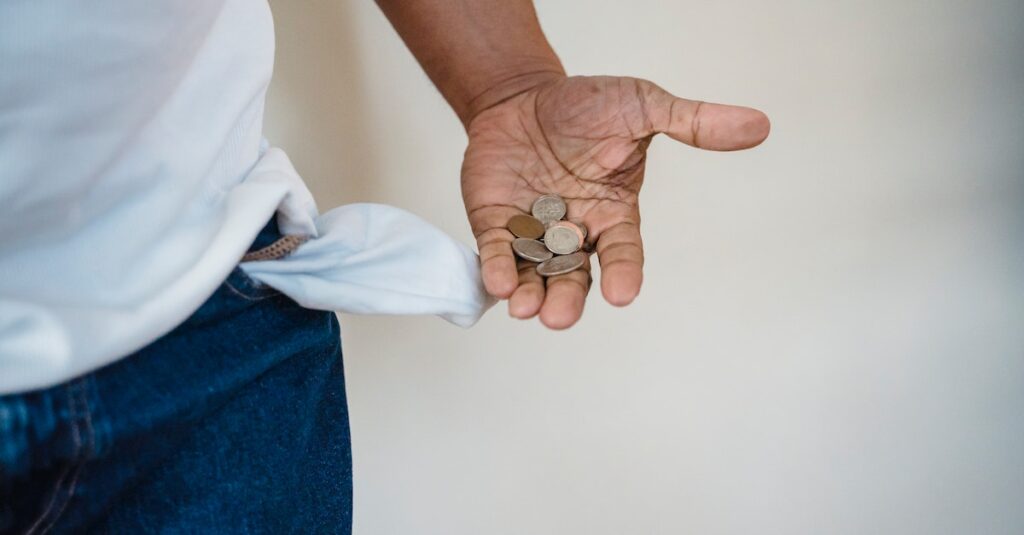
A global recession is a period when national economies around the world slow down at the same time rather than one country’s downturn spilling into its neighbours. The International Monetary Fund classifies one using a combination of falling global GDP per capita alongside rising unemployment, weakening trade and slowing capital flows, not a single number crossing a line.
The last one the IMF declared was 2020, driven by the pandemic shutting down economic activity almost everywhere at once. As of 2026, global growth has slowed but the IMF has not declared a new global recession, which is a distinction worth understanding rather than skimming past.
Where the global economy actually stands right now
The IMF’s mid-2026 outlook puts global growth at around 3%, down from earlier projections, largely on the back of the conflict in the Middle East disrupting energy markets and unsettling confidence. In an adverse scenario, with prolonged supply disruption and inflation expectations coming unanchored, the IMF has said growth could slow toward 2%, which it describes as bringing the global economy close to recession territory without being in one.
That is meaningfully different from a declared recession. Growth slowing to 2 or 3% is a global economy under strain, not one in reverse. The distinction matters for a business owner because the appropriate response is different: a genuine recession calls for defensive cash management, while a slowdown calls for watching your specific customers and sector rather than reacting to headline anxiety.
What actually causes one
No single trigger produces a global recession. It is usually several pressures compounding at once.
Rising interest rates, deployed by central banks to fight inflation, slow borrowing and spending everywhere they are applied simultaneously. Shocks to global trade or energy, such as war or a major supply disruption, ripple through economies that depend on the affected goods or routes. A financial crisis in one major economy, as happened with the 2008 housing and lending collapse, can spread through connected banking systems. And a sudden stop in economic activity, as the pandemic caused in 2020, can trigger one directly.
Since the Second World War, the IMF has recognised global recessions in 1975, 1982, 1991, 2009 and 2020. They have varied from a few months to over a year, and the 2020 event was the deepest since the Great Depression.
What it does to a small business specifically
The transmission is fairly consistent across these events. Consumer spending contracts first, hitting anything discretionary hardest. Access to credit tightens as banks grow more cautious, which is precisely when a business most needs a facility. Customers pay slower, which shows up as your own debtor days stretching before your revenue line does. And retrenchments elsewhere in the economy reduce the pool of people with disposable income to spend with you.
The businesses that come through these periods intact are usually the ones with a cash reserve built before the slowdown started, not the ones scrambling for a facility once it has already begun. Our guide to cash flow solutions for South African SMEs covers building that buffer.
What to actually do about it
You cannot influence a global slowdown, but you can control how exposed your business is to one.
Diversify your customer base so no single client or sector concentration can take you down with it. Keep debt serviceable at a higher interest rate than today’s, since rates typically rise during the response to inflation that often accompanies these periods. Build a cash reserve while conditions are stable rather than trying to build one once they are not. And watch your own numbers rather than the news: your debtor days, your order volumes and your enquiry rate tell you more about your specific exposure than a global growth forecast ever will. The broader effect of rising prices on your business is covered in our guide to the impact of inflation on business finance.
What a genuine slowdown looks like from inside a small business
The macro numbers arrive with a lag. By the time growth figures confirm a slowdown, a small business has usually already felt it for a quarter or two: enquiries slow first, then quotes convert less often, then payment terms stretch as customers manage their own cash more carefully. That ordering is useful, because it means your own pipeline is an earlier signal than any economic release.
Track it deliberately rather than noticing it anecdotally. A monthly note of enquiries received, quotes converted and average days to payment gives you a trend line before the quarter closes, and a trend line is what lets you cut costs or tighten terms proactively rather than reactively once the cash position has already deteriorated.
Frequently asked questions
Is the world in a global recession right now?
No. As of 2026 the IMF projects global growth of roughly 3%, slowed by the conflict in the Middle East, but has not declared a recession. A more severe scenario could bring growth closer to 2%, which the IMF describes as near recession territory rather than in one.
How is a global recession different from a normal recession?
A normal recession affects one country or region. A global recession is when many national economies decline together, measured by the IMF using falling per capita GDP, rising unemployment and weakening trade across a broad set of countries at once.
How long do global recessions usually last?
Historically a few months to a little over a year. The 2020 recession was unusually severe but resolved faster than some earlier ones because of the scale of government and central bank intervention.
What is the single best thing a small business can do to prepare?
Build a cash reserve while trading conditions are good. Every past recession has rewarded businesses that had one and punished those relying on credit that then became harder to access.
Should I worry about a recession based on the news?
Watch your own numbers, debtor days, enquiries, order volumes, rather than reacting to headlines. A global slowdown does not affect every sector or region equally, and your own leading indicators will tell you sooner than a forecast will.
What to do this week
Check your debtor days against three months ago. If they are stretching, that is an earlier and more useful signal than any global growth forecast, and it is the one thing you can act on immediately.
This article was updated in September 2026.