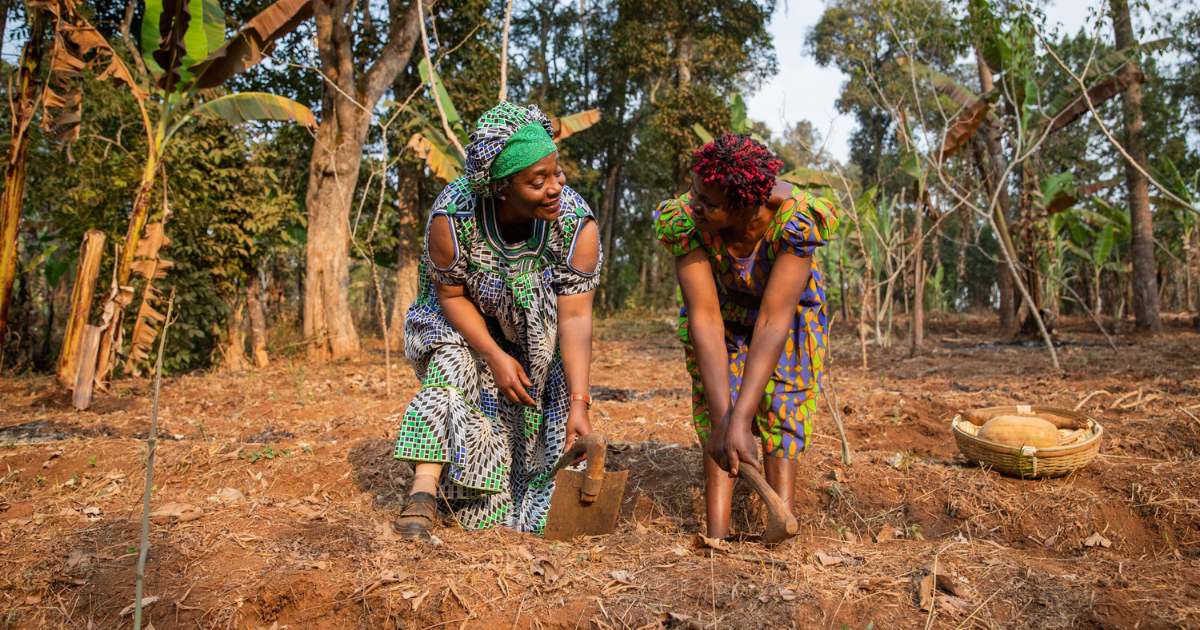
The Food and Agriculture Organization of the United Nations reported new data that shows that 76% of working women in sub-Saharan Africa work in agrifood systems. Their findings also report on challenges faced by women in Africa’s agrifood sector. Agricultural entrepreneurs have brought forward solutions to not only solve the challenges in agriculture but also reshape the future of agriculture.
They grow crops, raise livestock, process food, and sell agricultural products that help feed millions of people every day. Despite their contribution, many women continue to face barriers such as limited access to land, finance, technology, and markets. These challenges have slowed business growth and reduced opportunities for many women-led farming businesses.
Instead of waiting for these barriers to disappear, many women are building businesses that solve problems across the agricultural value chain. From developing digital farming tools to reducing food waste and improving access to finance, women entrepreneurs are helping shape a stronger and more sustainable future for agriculture.
The Work Women Put Into Agriculture
Women in Africa grow up to 80% of the food that families eat every day. Yet this labour barely shows up in land ownership records, farm equipment loans, or agricultural budgets.
However, the people closest to the soil are almost never the ones featured in the funding announcement. In Nigeria, women make up more than half of the agricultural workforce. Yet they hold onto only a small slice of the country’s farmland. That gap isn’t a footnote. It’s the whole story of why agriculture hasn’t scaled the way it should. However, in South Africa, women are slowly and increasingly making their mark in the agricultural sector.
Women farmers in agribusiness are stepping around this problem instead of waiting for it to be fixed. They’re building companies, not just tending fields.
Closing the Gap Between Land and Capital
Access to farmland has always been tied to access to credit. Credit, in turn, has always been easier to get when you already own something to put up as collateral. That problem has kept many women farmers stuck at subsistence level, growing just enough to feed a household with little left to sell or reinvest.
Gender-focused funding is starting to chip away at this. The Africa Enterprise Challenge Fund now runs an Investing in Women window that hands out capital ranging from fifty thousand dollars up to a million, specifically for women-led agribusinesses. AGRA’s Women Agripreneurs of the Year Awards go even further, offering grants up to three hundred thousand dollars to help women scale operations they’ve already proven can work. Programmes like these aren’t charity. They’re a correction to a market that ignored half its workforce for decades.
The World Bank found that when women smallholders see higher harvests, household income rises by 20 to 30%. That extra income feeds straight into better nutrition, healthcare, and education for their kids. That’s not a soft statistic. That’s a growth engine most investors overlooked for far too long.
Technology Built by the People Who Needed It First
Agritech used to mean big machinery and satellite data built for large commercial farms. That’s changing. Women are a huge part of why.
Take Peninah Wanja in Kenya. She grew up watching her mother struggle to get decent milk yields from the family cow, despite doing everything right. Years later, as an agricultural extension officer, she learned that one officer in Kenya is often responsible for advising close to four thousand farmers.
That ratio makes personal visits almost impossible. So she built DigiCow, an app that lets dairy farmers track milk output, breeding cycles, and animal health themselves, with voice-based tools for farmers who aren’t comfortable typing on a screen. It now supports hundreds of thousands of farmers.
That’s the part people miss when they talk about agritech. The best tools in this space rarely come from a lab. They come from someone who lived the problem and got tired of waiting for someone else to solve it.
Fixing the Waste Nobody Talks About
Post-harvest loss is one of the quietest crises in agriculture. Crops rot before they ever reach a buyer, not because farmers grew the wrong thing, but because there’s no cold storage and no processing nearby. Beyond the lost income, rotting produce releases methane as it breaks down, adding to the same climate problem farmers are already fighting against.
Shareka built Chashi Foods around this exact gap. Her company dries surplus fruit and vegetables before they spoil, turning what would have been waste into shelf-stable products farmers can actually sell. It’s a simple idea executed with precision. It’s also the kind of fix that doesn’t need a government grant to work, just someone willing to build it.
Water scarcity gets the same treatment. Dorcas Lukwesa’s mobile aquaponics venture raises fish and vegetables together in a closed-loop system, where fish waste feeds the plants, and the plants filter the water. It uses roughly 90% less water than conventional farming. In regions where rainfall is unpredictable and irrigation is expensive, that number changes what’s possible for a farmer with limited land.
Why This Matters Beyond Africa
None of this is confined to one continent. From Nigeria’s farmland to vineyards in Lebanon and orchards in Brazil, women are running agribusinesses that blend sustainable farming practices with real commercial ambition. Networks like the African Women in Agribusiness Network exist because mentorship and market access rarely reach women through the usual channels. Women built their own channels instead.
The agribusiness sector across Africa alone is projected to reach a trillion dollars in value by 2030. Roughly 60% of the population already depends on agriculture for their livelihood. A sector that size cannot afford to keep sidelining the people producing most of its food. Every founder mentioned here didn’t wait for permission or a perfect funding environment. They looked at a broken system, close up, and built something that worked around it.
That’s the actual shift happening in agriculture right now. Not a trend, not a talking point for a conference stage, but a slow rebuilding of who gets to decide what farming looks like next. Give women better access to land, capital, and markets, and the results won’t just show up in gender equality reports. They’ll show up in how much food actually makes it from the field to someone’s plate.