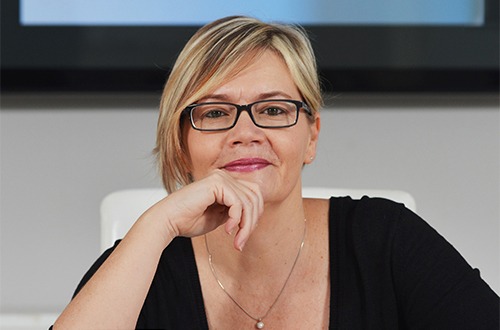
Most small businesses that fail to raise finance are not rejected for being unfundable. They are rejected for approaching the wrong lender with the wrong documents. That diagnosis is the reason Darlene Menzies built Finfind, an aggregator that matches a business to the funders whose criteria it actually meets rather than leaving owners to guess.
Menzies had already built SMEasy, an accounting and business management platform aimed at owners without a finance background, before founding Finfind. Both products address the same underlying problem from different angles: small businesses lack the financial information and the market knowledge that funders assume they have.
Matching is a different problem from lending
There is no shortage of funding products in South Africa, across development finance institutions, banks, grant programmes and private lenders. What is scarce is a reliable way to know which of them will consider a particular business at a particular stage. Solving discovery rather than supply is a genuinely different business, and it is often the more defensible one because it improves as the database of funders and outcomes grows. The current product is at Finfind.
Readiness is what decides most applications
The recurring finding across funding platforms is that applications fail on preparation. Financial statements that are out of date, no separation between personal and business accounts, no management accounts, and no clear statement of what the money is for and how it will be repaid. None of these require capital to fix. They require the owner to treat their own numbers as a working tool rather than an annual compliance exercise, which is precisely the gap SMEasy was built to close.
Building two products around one insight
Menzies solved the same problem twice, first by helping owners produce usable financial information and then by connecting that information to funders. That sequence is instructive. A founder who understands one customer problem deeply can often build more than one business from it, and the second venture starts with an audience and a reputation the first one created.
Institutional backing changes what a platform can attempt
Finfind has operated with support from the Department of Small Business Development and has raised private investment, which is what allows a matching platform to be free at the point of use for the owners who need it. Understanding who pays for a product, and why, is part of assessing whether it will still be there in three years.
Frequently asked questions
What does Finfind do?
It matches small businesses to the funding products they are actually eligible for, across lenders, development finance institutions and grant programmes, rather than requiring owners to search each one.
Why do funding applications usually fail?
Most fail on preparation rather than on the merits of the business: outdated financials, mixed personal and business accounts, no management accounts, and no clear repayment case.
What can an owner fix before applying?
Separate the business bank account, bring financial records up to date, produce monthly management accounts, and write a clear statement of the amount needed, its purpose and the repayment source.
Is there a shortage of funding in South Africa?
Less a shortage of products than a shortage of matching. Many owners approach lenders whose criteria they do not meet, which produces rejections that look like scarcity.
What is SMEasy?
An accounting and business management platform Menzies launched for owners without a financial background, aimed at producing the records a funder or a bank will ask for.
Further reading
Originally published in August 2017. Updated September 2026 to focus on the funding readiness problem the business was built to solve and what owners can act on directly.