
Customer Acquisition entails a spectrum of endeavours and tactics aimed at drawing in fresh clientele and transforming them into loyal patrons. It’s an ongoing endeavour demanding a meticulously crafted strategy to pinpoint, engage, and ultimately captivate your desired audience.
Key Stages of Customer Acquisition
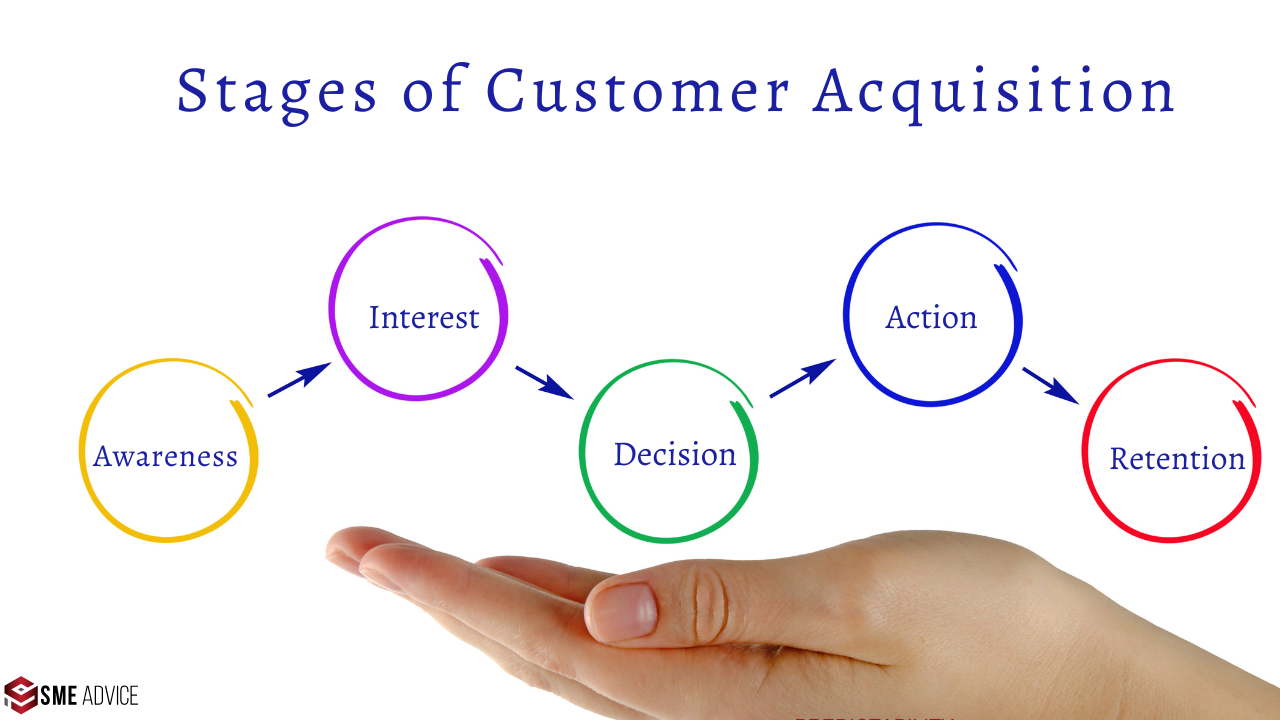
- Awareness: The initial stage where potential customers become aware of your brand and its offerings. This can be achieved through various marketing channels like advertising, social media, content marketing, public relations, or even word-of-mouth recommendations.
- Interest: Once aware, potential customers develop an interest in your product or service. Engaging content, informative blog posts, social media interactions, or free trials can all help pique interest and encourage further exploration.
- Decision: In this stage, potential customers evaluate their options and compare your offering with competitors. Compelling product demonstrations, customer testimonials, free consultations, or clear value propositions can influence their purchase decision.
- Action: This stage marks the conversion, the customer makes a purchase or signs up for your service. User-friendly websites, streamlined checkout processes, attractive pricing, and special offers can all contribute to a smooth conversion experience.
- Retention: Customer acquisition doesn’t end with the initial purchase. Building long-term loyalty through exceptional customer service, loyalty programs, exclusive benefits, and continued engagement fosters repeat business and positive word-of-mouth promotion.
Customer Acquisition Strategies
- Content Marketing: Creating valuable, informative content (blogs, articles, videos) establishes your brand as an authority and attracts potential customers searching for solutions.
- Search Engine Optimisation (SEO): Optimising your website and content for relevant keywords ensures your brand appears prominently in search engine results, increasing organic visibility.
- Pay-Per-Click (PPC) Advertising: Targeted online advertising on platforms like Google Ads or social media allows you to reach specific demographics and interests, driving traffic to your website.
- Social Media Marketing: Engaging with potential customers on social media platforms like Facebook, Instagram, or Twitter builds brand awareness, fosters community, and allows for direct interaction.
- Email Marketing: Building an email list and sending targeted campaigns with valuable content, promotions, and special offers nurtures leads and drives conversions.
- Public Relations (PR): Securing positive media coverage in relevant publications or industry blogs increases brand credibility and attracts potential customers.
- Referral Programs: Incentivise existing customers to spread the word and refer to their network, leveraging the power of trust and positive experiences.
- Affiliate Marketing: Partner with other businesses in your niche to promote your offerings through their platforms, leveraging their audience and established customer base.
Factors Affecting Customer Acquisition Costs (CAC)
- Industry: Competitive landscapes significantly affect acquisition costs. Industries with higher competition typically have higher CACs.
- Target Market: Niche markets with a smaller pool of potential customers can lead to higher acquisition costs than broader demographics.
- Marketing Channels: The cost of different marketing channels (e.g., PPC vs. content marketing) varies, impacting overall CAC.
- Brand Awareness: Established brands benefit from existing recognition, leading to lower acquisition costs compared to new entrants.
- Product or Service: Complex or high-priced offerings often require more investment in customer education and justification, potentially increasing CAC.
Metrics for Measuring Customer Acquisition Success
- Customer Acquisition Cost (CAC): Total marketing and sales expenses divided by the number of customers acquired.
- Customer Lifetime Value (CLTV): Total revenue a customer generates throughout their relationship with your business.
- Conversion Rate: Percentage of visitors to your website or landing page who convert into paying customers.
- Sales Cycle Length: Average time it takes to convert a lead into a customer.
- Return on Investment (ROI): Measure of the financial return generated from your customer acquisition efforts.
Best Practices for Effective Customer Acquisition
- Define Your Ideal Customer Persona: Create a detailed profile of your ideal customer, including demographics, needs, and pain points, to tailor your acquisition strategies.
- Develop a Compelling Value Proposition: Communicate how your product or service solves your target audience’s problems and delivers unique benefits.
- Utilise a Multi-Channel Approach: Integrate various marketing channels to reach your target audience across different touchpoints.
- Embrace Data-Driven Decisions: Track and analyse customer acquisition metrics to identify successful strategies and optimise campaigns for better results.
- Prioritise Customer Experience: Deliver an exceptional customer experience throughout the entire buyer journey, from initial touchpoint to post-purchase interactions.
- Build Customer Loyalty: Implement strategies to convert customers into loyal advocates who promote your
Customer acquisition is an ongoing process that requires continuous optimisation and adaptation. Understanding core concepts, employing the right strategies, and tracking relevant metrics are essential for any business to attract new customers, build loyalty, and achieve sustainable growth.
