
Emotional intelligence (EI) refers to the ability to recognise, understand, manage, and express emotions effectively, both in oneself and others. As a key aspect of personal and professional development, emotional intelligence plays a significant role in various domains, including leadership, communication, relationships, and decision-making.
The Four Pillars of Emotional Intelligence
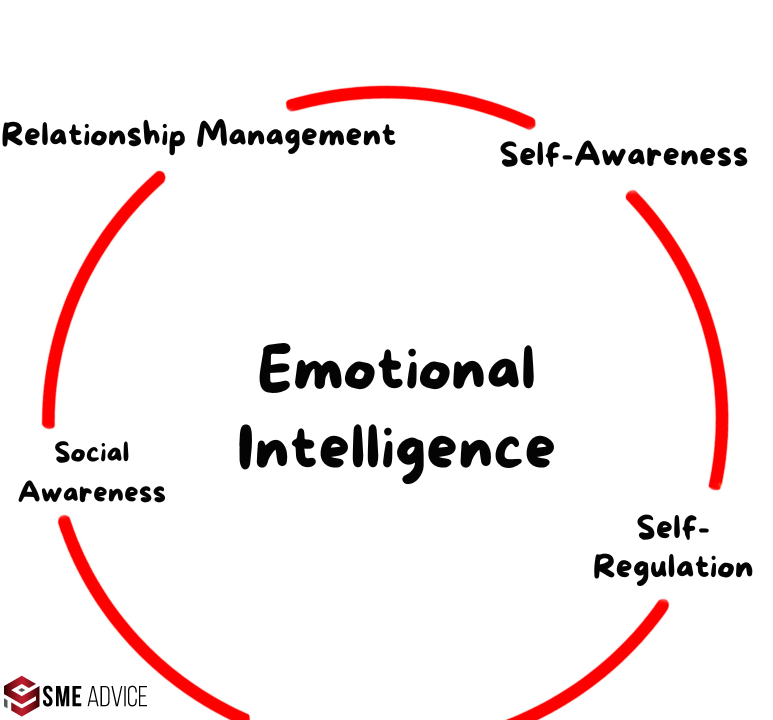
According to the model developed by Daniel Goleman, emotional intelligence consists of four key areas:
- Self-Awareness: This refers to our ability to recognise and understand our own emotions. It involves being aware of our emotional triggers, strengths, weaknesses, and values.
- Self-Regulation: This is the ability to manage our emotions effectively. It involves taking control of our reactions and responses to situations.
- Social Awareness: This refers to our ability to recognise and understand the emotions of others. It involves being perceptive to nonverbal cues, empathy, and cultural sensitivity.
- Relationship Management: This is our ability to build and maintain healthy relationships. It involves effective communication, conflict resolution, and teamwork.
Benefits of High Emotional Intelligence
Developing strong emotional intelligence offers a range of benefits for individuals and organisations:
- Improved Decision-Making: By understanding your emotions and their impact, you can make more rational and well-considered decisions.
- Enhanced Self-Motivation: A strong sense of self-awareness allows you to set realistic goals and stay motivated to achieve them.
- Effective Stress Management: The ability to manage your emotions helps you cope with stress more effectively, leading to increased well-being.
- Stronger Relationships: High EQ individuals build stronger relationships through empathy, effective communication, and conflict-resolution skills.
- Improved Leadership: Leaders with strong emotional intelligence create a more positive and productive work environment for their teams.
- Greater Personal and Professional Success: By harnessing the power of emotions, individuals can achieve greater success in all aspects of their lives.
Developing Your Emotional Intelligence
The good news is that emotional intelligence is a skill that can be learned and developed over time. Here are some strategies to enhance your EQ:
- Practice Self-Reflection: Take time to reflect on your thoughts, feelings, and behaviours. Consider journaling or meditation to gain deeper insights.
- Identify Your Triggers: Recognise situations or emotions that typically trigger negative reactions. Develop coping mechanisms to address these situations constructively.
- Develop Active Listening Skills: Pay close attention to verbal and nonverbal cues when communicating with others.
- Practice Empathy: Put yourself in other people’s shoes to understand their perspective and feelings.
- Practice Mindfulness: Mindfulness exercises help you become more aware of your emotions in the present moment, allowing for conscious responses.
- Seek Feedback: Ask trusted friends or colleagues for honest feedback on your emotional intelligence.
- Continuously Learn: Read books, and articles, and attend workshops to learn about emotional intelligence and develop new skills.
Real-World Applications of Emotional Intelligence
Emotional intelligence plays a vital role in various aspects of life
- Workplace: Employees with high EQ excel at teamwork, leadership, and communication, contributing to a positive work environment.
- Sales and Negotiation: Understanding customer needs and emotions is key to closing deals and building strong client relationships.
- Conflict Resolution: Those with good EQ can manage disagreements effectively and find solutions that benefit all parties involved.
- Parenting: Emotionally intelligent parents build secure attachments with their children and guide them in managing their own emotions.
- Personal Relationships: Understanding and responding to your partner’s emotions strengthens relationships and fosters closeness.
Emotional intelligence is a key life skill that empowers us to manage the complexities of emotions and relationships. By investing time and effort in developing our EQ, we can open up greater personal and professional success, build stronger bonds with others, and lead more fulfilling lives.
