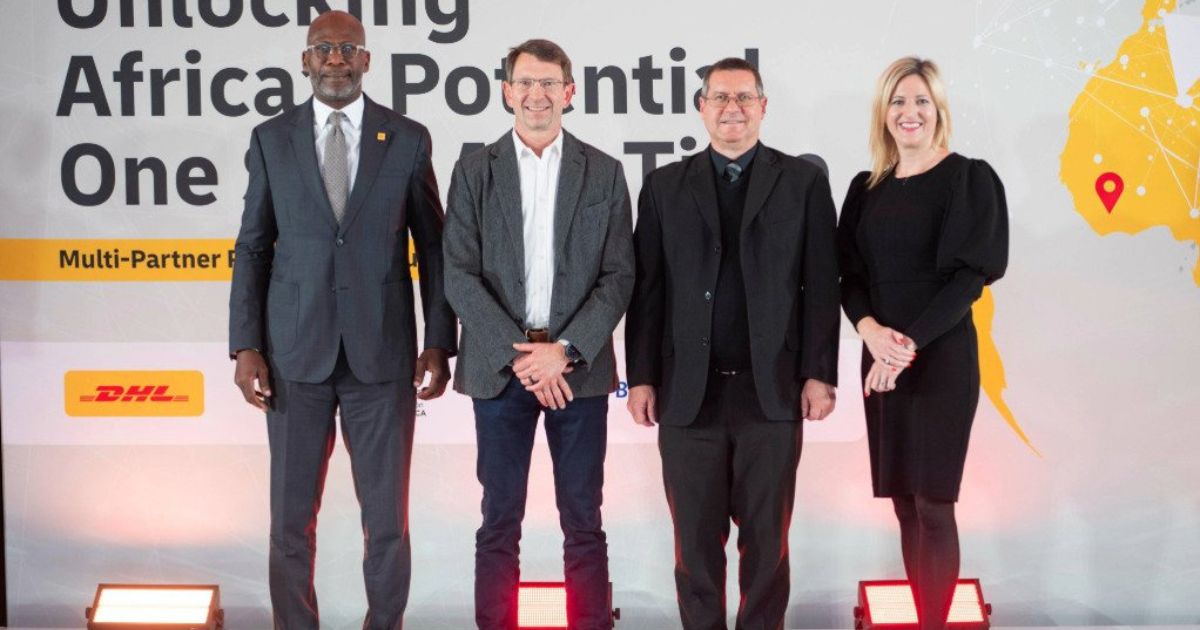
On 11 August, DHL, Standard Bank, MTN, Wesgrow and the dtic signed a memorandum of understanding to formalise the multi-partner launch of the GoTrade platform. The platform has already been launched in other parts of the world with key role players in those countries. Launching in South Africa is the culmination of the hard work and collaborative efforts of all parties involved to ensure SMEs are empowered to scale into international markets as emerging exporters.
Globally, SMEs experience the exact same challenges but against the backdrop of their own country. These challenges are skills and knowledge development, Information and Communication Technology (ICT), logistics, and funding. Given that these entrepreneurs are responsible for 70% of employment and constitute 90% of all businesses worldwide, enabling them to access new markets and grow is essential. That’s exactly what the partners of the GoTrade platform believe.
Looking at the impact of micro, small, and medium-sized enterprises in South Africa, their function as economic drivers that contribute nearly half of the country’s GDP makes their economic participation invaluable. Enabling cross-border trade allows South African entrepreneurs to grow beyond geographical constraints, increasing their customer base and revenue.
The Collaborative Strategy
Each partner who has joined the platform is a corporate whose passion for SME growth aligns with the purpose of GoTrade.
DHL is the entity that ties the global initiative together. They bring expertise in cross-border logistics, fulfilment and export-import regulations. With this, they fill one of the key problems that SMEs face: logistics.
Hennie Heymans, CEO, DHL Express Sub-Saharan Africa, explained that the export opportunity isn’t unique to South Africa; it’s a natural result of the movement of people, because as individuals move abroad for work or other reasons, they still long for their home country.
What’s more, trade opportunities have opened up across Africa, and exporting doesn’t necessarily mean Europe or the Americas.
“You know, if you take shea butter, for example, you know, we see a massive surge in exports. Where? To the diaspora. If you take fashion, you know, we are very culturally minded on this continent. Ethiopian people love to wear their Ethiopian fashion. Likewise, Ghanaians love donning their local fashion. It is an enormous industry,” he notes.
Simone Cooper, Head of Business and Commercial Banking at Standard Bank, shared that becoming a partner on GoTrade is a logical step for the bank, given the interactions they have with many of their SME clients. “SMEs in South Africa are always looking for growth opportunities. Many of them are coming to talk to us about wanting to export into the continent and into other markets,” she shares. “The theme around exporting is becoming more pervasive in the conversations.
The GoTrade partnership ties in neatly with Standard Bank’s existing export readiness programme. “The programme is centred around creating SMEs that can export. As we all understand, it’s easy for SMEs to know which markets they want to go into. They’re good at their product, good at marketing their products and selling their product, but where they typically get stuck is the regulations.
“That’s where we typically find the big gap for SMEs; it’s this technical know-how of how do I actually get my product to be export-ready?” Cooper explains that each country or region has its own rules and regulations, so these components can be quite tricky to navigate. However, drawing on the experience from a brand such as DHL Express, SMEs that the export readiness programme identified as emerging exporters can leverage this extensive regulatory experience through the GoTrade platform.
“What we’re doing with DHL is to create a bespoke export readiness programme. DHL brings is not only knowledge but the ability to run this programme at scale,” she adds.
Another deciding factor for Standard Bank is how their own footprint in Africa aligns closely with that of the logistics partner.
Emerging Exporters
Willem Van der Spuy, Acting Deputy Director-General of the Export Branch at South Africa’s Department of Trade, Industry and Competition (the dtic) represented the department’s stake in the GoTrade launch. Unpacking what emerging exporters mean, he says it points to companies which are starting to export. “Usually it is companies which have some product that they already have and that they’re starting to sell, and then what we are doing is that we are introducing them to new markets.”
Van der Spuy elaborates that through the Global Export Passport programme, which is part of the National Export Development Programme, the dtic gives certain training, capacity building, and incubation support for companies to become export-ready.
“We take them from a point where they have a viable product, and then we introduce them to markets. We identify products with export potential through market information on what the demand is in certain markets.
What we are looking for through this programme is emerging exporters that we can introduce their products to those markets.
He explains that the continuous rise in e-commerce has opened new market avenues for South African retail SMEs, and exporting is an extension of that. Speaking specifically about the joint partnership, he notes that a partner such as Standard Bank can connect SMEs with knowledge and trade financing that the dtic would not have been able to do on their own. Similarly, MTN is a technology provider that extends beyond Internet connectivity, but also devices, cybersecurity and some financial services.
“We believe it’s a good starting point where you can have a more integrated package and response to emerging exporters’ needs,” he says.
Furthermore, Van der Spuy explains that engaging with SMEs through the GoTrade platform is of particular importance now that the AfCFTA is being implemented.
“More and more countries are signing on. That means lower tariffs and duties for small businesses exporting to those member countries,” he notes. “It deals with issues around standards, around trade and some of the resolution mechanisms for non-tariff barriers, and that is all being addressed with an agreement.
“This is once again unlocking opportunities at a scale which makes it much more reasonable.” He explains with an example that scaling through this approach is much easier than traditional export avenues. Where traditional routes require the exporter to build relationships with importers, find and test a market, and invest large amounts of capital into large shipments without any guarantee, a good integrated e-commerce value chain means lower risk with smaller on-demand orders being fulfilled.
Connecting the Continent
As we know, SMEs are the backbone of Africa’s economy. We’ve identified the key challenges that they are facing, and part of it is market access,” says Emmanuel Forson, Group General Manager of Value Proposition and Segments at MTN Enterprises Business Unit. “The collaboration with DHL allows SMEs to close this gap and transact and move their product across borders.”
Forson explains that MTN’s footprint across Africa is instrumental to connecting South Africans to international markets. “We have 15 markets where we operate, and we are trying to move to one central platform where every country can plug in.
“This type of partnership gives SMEs the leverage to get where they need to be,” Forson says.
He emphasises that connectivity is the foundation of digital transformation – a key factor in expanding your market as an SME. “That’s what we always start our journey by offering connectivity and other ICT solutions, such as cloud services, cybersecurity services, collaboration tools, and even some ERPs,” he adds.
Heymans elaborates that GoTrade is the culmination of various efforts that empower SMEs. “GoTrade has established itself as a credible programme that is very specific to our (DHL Express) purpose. As we’ve travelled through the continent, one thing that became absolutely apparent to us is that these verticals are existing in isolation. We’ve created an ecosystem of partners where we can feed off one another,” Heymans expands about the platform. “The good news is that the digital infrastructure is in place. Our biggest challenge now is to get the ecosystem going.” He concludes that the next step would be to gain traction among South African SMEs who fall into the category of emerging exporters to join the programme.