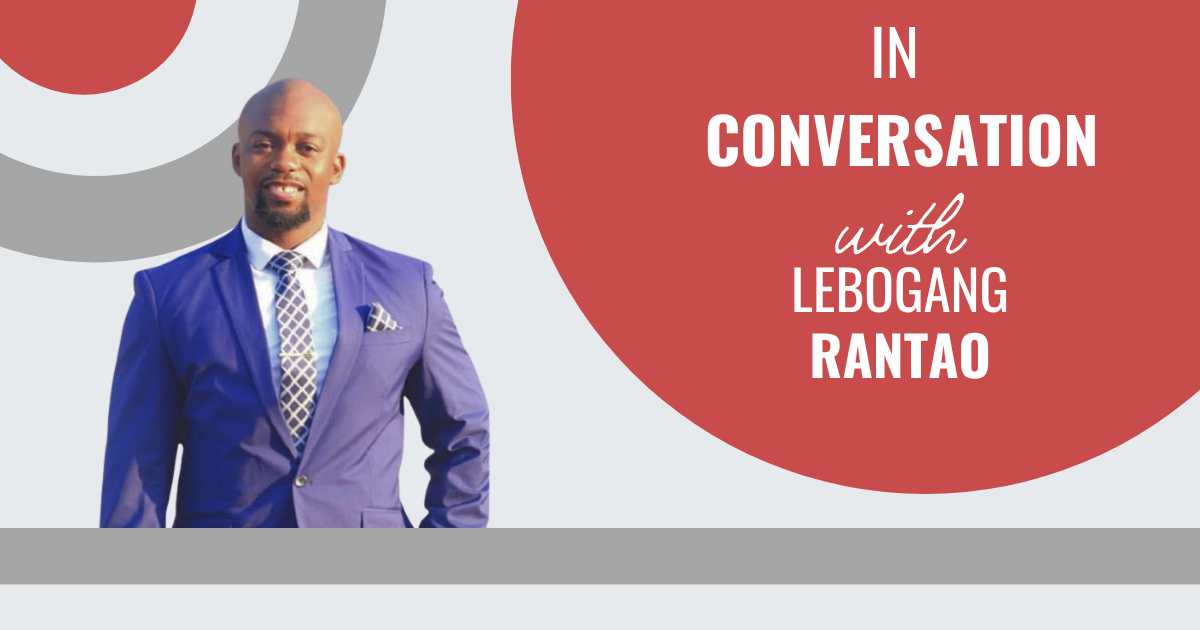
Spirituality and technology are increasingly intersecting, giving rise to ‘spiritual technology’, a term for digital platforms enabling faith-based and spiritual engagement. In South Africa, this evolution is embodied by Ngoma, a platform connecting traditional healers, herbalists, and seekers.
In this segment of SME Founder Focus, we speak with Ngoma’s founder, Lebogang Rantao, about his journey building Ngoma, as well as the lessons he learnt along the way.
The Lessons that Led to Ngoma
Ngoma isn’t Rantao’s first venture. It’s his third. And the second in tech. His first tech business was venture-capital backed and ultimately had to shut down. Rather than see that as a dead end, Rantao carried its lessons, along with experience running activations back in his varsity days, straight into building Ngoma.
“I learnt to listen to people and identify their problems. I learnt how to troubleshoot for unhappy customers. I also learnt how to work in system environments and under high pressure. And in this Ngoma journey, I learnt that nothing is more intense and pressurised than being a custodian of beliefs and customs,” says Lebogang.
Where Spirituality Meets Technology
The traditional healing economy in South Africa is enormous, estimated to be worth R20 billion a year. What frustrates him is that the people providing these services have historically captured very little of that value themselves.
Rantao has noted a disconnect, despite the economic value of this sector. “What troubles me is that, despite the significant value this sector contributes to our economy and society, many of the individuals providing these services have not been able to participate meaningfully in the economic value being created.”
He unpacks that this is because many individuals do not know where to find spiritual healers, but many of them know how to surf the net, have unlimited Wi-Fi, and feel more comfortable having a consultation in their home for the first time rather than e-ndumbeni (a sacred healing hut).
This is where technology and businesses like Ngoma come in as a solution. It allows people to access services they previously had no access to, while allowing healers who have historically had limited access to digital systems and the broader digital economy to earn, build their practices, and demonstrate their earning potential.
Solving Problems Through Accessibility
Millions of people across Africa rely on traditional healing, yet the industry around it remains largely informal and hard to navigate; that’s the core problem Ngoma set out to fix. Rantao says the scale of the challenge became clear once his team started speaking directly to the healers who’d join the platform, as well as to people who wouldn’t typically think of themselves as healing-service users at all.
“I realised that the demand out there is not being met, but the supply is there. However, it was not that the supply didn’t want to provide a service, but one of not knowing how to overcome the barriers. The barriers that have been placed – physical, economic, infrastructural, and spiritual barriers – are all obstacles that can be taken away by providing access and accessibility through the technological tools we have,” says Rantao.
Building Trust in a Digital Age
Trust has been one of Ngoma’s toughest hurdles. Rantao describes the questions constantly running through both healers’ and seekers’ minds: Will this healer actually show up? Will the app actually pay me? Are these healers even real?
Ngoma is essentially digitising something that has operated, in his words, on a “covert operating system for millennia”, and doing that means confronting the secrecy, stereotypes, and misconceptions that have long surrounded the industry. None of that works, he says, without first earning and keeping the trust of everyone using the app or website, because trust is the foundation everything else is built on.
Turning Belief Into Business
Rantao doesn’t romanticise the grind of building Ngoma. He compares it to trying to get water out of a rock or pushing water uphill: a constant battle not just to convince people the idea could work, but to convince people to actually help build and use it.
“At the end of it, all we want is for people to use it. For people to get the answers to questions that have been burning them. For knowledge to be shared and opportunities to be created. In the end, that’s what keeps us going.”
Funding the Vision
Ngoma has largely been self-funded, built out of pocket. Rantao credits meeting a technical lead who shared his vision as one of the turning points early on. In 2025, the business received a small grant that allowed it to register IP, test the product with real customers, and start planning a full MVP rollout for 2026/2027.
Access to funding hasn’t come easily for Lebogona Rantao.
“In terms of access to funding, I cannot even count how many times I read or heard the word ‘no’.” But that is part of the journey. I believe in no part is it made easier by what we do, but the journey must continue, and it just helps us build resolve and a better business that will take traditional and spiritual healing to the stratosphere,” he says.
What’s Next for Ngoma?
Rantao’s vision for Ngoma is straightforward. He aims to build the biggest, most reliable, and most trusted infrastructure platform for African traditional spirituality, with a reach that extends well beyond South Africa. Within the next three to five years, he wants Ngoma operating in three to five other African countries, with the SADC region as the first target, and potentially up to ten countries beyond that. From there, he sees the rest of Africa, and eventually Asia, as the next frontier.