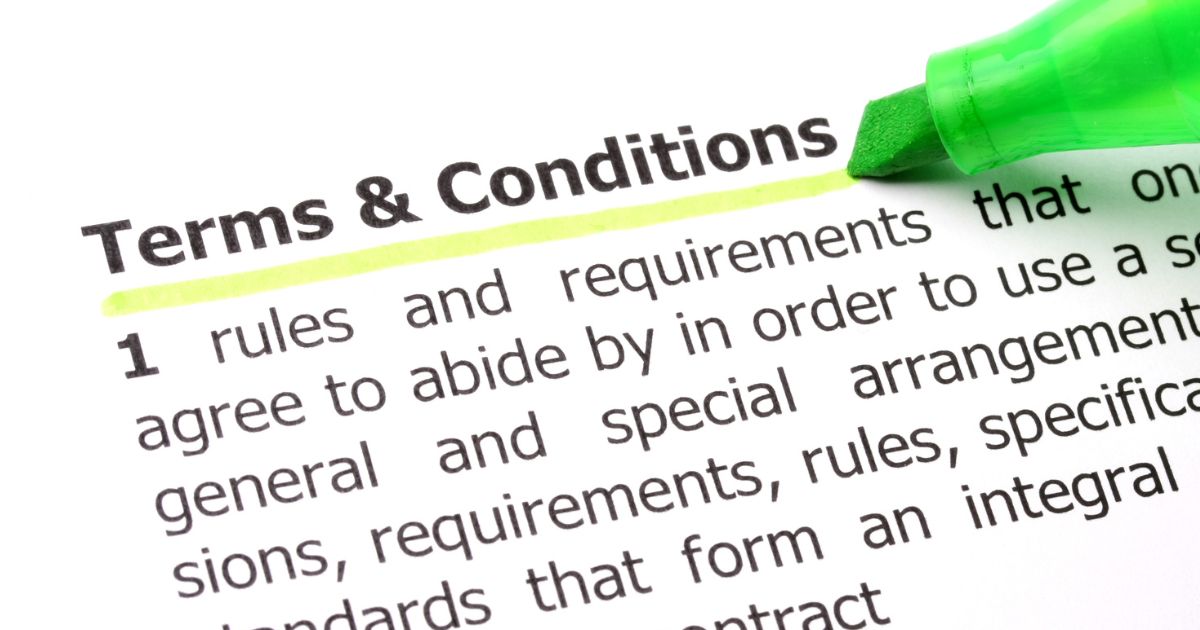
Creating a website for your business is quite easy nowadays. Many artificial intelligence (AI)-powered platforms enable users to simply prompt them to create a good website with a unique design. Creating and maintaining the website is only one part of it. You need to add a blog, visual content, product descriptions and, most importantly, terms and conditions (T&Cs).
Your website terms and conditions – otherwise known as terms of service or terms of use – are critical because they provide legal protection, limit liability, and safeguard intellectual property. And they set clear rules for visitors and protect website owners from misuse or unexpected legal claims.
For small businesses, having this written protection is very important, as it can save you money and time from unexpected challenges.
In this article, we look at what website terms and conditions are, how they work and what you need to include when drafting your own.
What are Website Terms and Conditions?
Website Terms and Conditions are a legally binding contract between a website owner and its users that sets rules, limits liability, and protects intellectual property. Also known as Terms of Service or Terms of Use, they establish the guidelines for accessing a site.
Key purposes
- Define what users can and cannot do on the site
- Protect the owner if a user faces issues or errors
- Safeguard texts, logos and designs from theft
- Allow owners to ban or close bad accounts
Core Legislative Requirements
Website terms and conditions are primarily governed by the Electronic Communications and Transactions Act (ECTA), the Consumer Protection Act (CPA), and the Protection of Personal Information Act (POPIA). These laws require clear disclosures, fair consumer terms, and strict data privacy practices.
When drafting T&Cs, you must take the following legalities into consideration to ensure compliance with South African law.
1. Clarity and Accessibility
T&Cs must be written in clear and understandable language. Legal jargon can confuse consumers and may lead to disputes. The document should be easily accessible on the company’s website or at the point of sale, ensuring customers can review terms before engaging in the transaction.
2. Compliance with Consumer Protection Laws
Under the CPA, businesses must make sure their T&Cs comply with specific consumer rights. This includes:
- Fair and reasonable terms: Avoid terms that are very one-sided or unfair to consumers.
- Disclosure: Clearly disclose all fees, charges and conditions related to the purchase of goods or services.
- Right to withdraw: Include all information about the customer’s right to cancel orders within a specific timeframe, especially if you practise distance selling.
3. Limitation of Liability
While businesses usually seek to limit their liability for damages arising from their products or services, those clauses must be carefully drafted. The CPA prohibits unfair exclusions of liability, especially in cases of gross negligence or intentional misconduct. Make sure that any limitation of liability clause is reasonable and clearly stated.
4. Governing Law and Jurisdiction
You must specify the governing law that will apply to the T&Cs and the jurisdiction in which any disputes will be resolved. In South Africa, it is common to stipulate that South African law governs the agreement, which helps to avoid confusion and legal complications.
5. Intellectual Property Rights
Include any clauses that protect the company’s intellectual property, such as trademarks, copyrights and patents. These clauses must clearly state that all content, logos, and materials used on the company’s platforms are owned by the business and cannot be reproduced without permission.
6. Privacy and Data Protection
To avoid any issues with POPIA, it is important to address how customer data will be collected, stored, used and protected. Outline what the business’ data privacy practices are, the purpose of data collection, and the rights of consumers regarding their personal information.
7. Termination and Amendments
Clearly state the conditions under which the T&Cs may be terminated or changed. Include provisions for notifying customers of changes to the T&Cs to allow them to accept or decline the new terms. This ensures transparency and maintains trust between the company and its customers.
8. Dispute Resolution Mechanisms
Include a dispute resolution clause that specifies how disputes will be handled. Consider including mediation or arbitration options before resorting to litigation, which can be a lengthy and costly process.
Drafting your Website Terms and Conditions
For small businesses, a clear and concise document of your T&Cs is not just about legal compliance; it’s also about establishing a framework within which your business operates.
Key clauses for your small business terms and conditions
- Introduction: Briefly describe your business and what it offers.
- Payment terms: Explain how customers can pay, when payments are due and what happens if a payment is late.
- Returns and refunds: Outline how you deal with returns, exchanges and refunds to keep everything clear and fair for your business and the consumer.
- User conduct: Describe what behaviour is allowed and what isn’t when using your website or buying your products.
- Limitation of liability: Clearly state what you’re responsible for and what you’re not to protect your business against potential lawsuits.
- Intellectual property: Clarify that your website’s content, products and logos belong to you and are protected by law.
- Dispute resolution: Explain how disputes between your company and customers are resolved. This must include the governing law, jurisdiction and out-of-court mechanisms.
Terms and Conditions for Online Stores
Your T&Cs for your online store might be slightly different from those for the physical store. When drafting them, you should cover the following:
- Seller contact details: This includes your business name, physical address, and contact details.
- Withdrawal rights: The customer’s right to return goods, including how many days the customer has to return a product starting from the day they receive it. In South Africa, this is typically shown on the website.
- Delivery terms: Outline the countries you ship to, the estimated delivery time, and what will happen if a delivery fails or is refused.
- Payment methods: Which methods you accept and whether any of them carry additional fees.
- Returns and refunds: How customers can initiate a return, how quickly your process funds, and who covers the cost of return shipping.
- Warranty information: Under the CPA, in South Africa, the minimum automatic statutory warranty period for general goods is 6 months, and for repair work and installed parts it is 3 months.
Your website T&Cs are not only for your protection but also for your customers. Ensure that they are easily accessible and written in plain language to ensure there is no confusion.