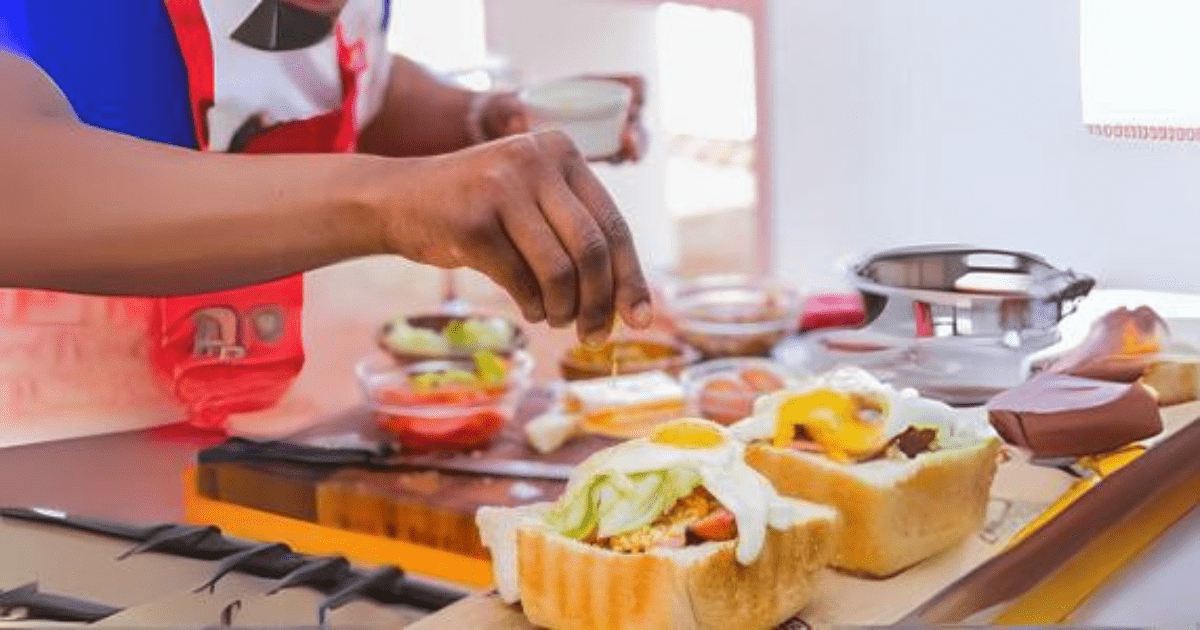
A kota business is one of the most accessible food service ventures you can start in South Africa: low startup costs, minimal space needed, and genuine demand wherever people want an affordable, filling meal. Get the location, menu and business plan right, and it can be a genuinely profitable business.
This guide covers what you need to get started and the considerations that actually matter.
Industry overview
Starting a kota business can be a profitable move when you choose the right location and plan the business properly. Demand is strong in townships, CBD areas, shopping precincts, and anywhere else with a steady flow of people looking for an affordable meal.
Among South Africa’s food business ideas, kotas sit near the top for accessibility: startup costs are low, the space requirement is minimal, and the skills barrier to entry is genuinely low too.
Getting started
Unlike starting a shisanyama business or a bakery, a kota business does not demand significant space or capital. You can run one out of a home kitchen, a container, a shack, or a proper brick-and-mortar unit, whichever matches your available capital.
The basic equipment list is short: a fryer for chips, a frying pan and stovetop for eggs and polony, and a fridge for ingredient storage. Your specific menu may call for a few extra pots and pieces of kitchen equipment beyond that.
Location is the single most important decision. Position your business where there is genuine foot traffic and, ideally, limited direct competition nearby.
Reliable suppliers matter more than they first appear. Buying ingredients from supermarkets erodes your margins quickly, so look for wholesalers who can supply bulk ingredients, and factor in the packaging your kotas will be wrapped in.
Marketing does not need to be complicated: a clear, visible sign is the starting point, supported by social media, flyers and occasional promotions to build repeat custom.
Your business plan needs real numbers behind it: your menu, the cost to make each kota, your selling price, the volume you need to sell to break even and turn a profit, and how you plan to scale once the basics are working.
Industry challenges
Kotas are an affordable meal, which means margin per unit is thin, you will need genuine volume to hit meaningful profit targets, not just a handful of daily sales.
Competition is real too. Beyond other kota businesses, you are competing with fast food chains, supermarkets, and every other takeaway operator in your area.
Laws and regulations
Any food business in South Africa needs a business licence and a certificate of acceptability, both aimed at ensuring your kitchen meets relevant health and safety standards. Apply for both through your local municipality before you open.
Must-have tech tools
Beyond your kitchen equipment, a till and a point of sale system with a card machine are close to essential now, most run as smartphone apps that connect directly to a card reader. Accounting software is also worth adopting early to keep your margins under proper control as volume grows.
Frequently asked questions
How much does it cost to start a kota business in South Africa?
Considerably less than most food businesses. A basic setup, fryer, stovetop, fridge and initial stock, can start small from a home kitchen or container, scaling up as revenue allows.
Do I need a licence to sell kotas?
Yes. A business licence and a certificate of acceptability are required for any food business in South Africa, both obtainable through your local municipality.
Where is the best location for a kota business?
Anywhere with genuine foot traffic and limited direct competition, townships, CBD areas and busy shopping precincts all work well provided the specific site has real passing trade.
What is the biggest challenge in running a kota business?
Thin margins per unit combined with real competition from other takeaways, fast food chains and supermarkets. Volume, not price per kota, is usually what determines profitability.
Can a kota business scale into something bigger?
Yes. Many successful food operators started with a single kota container and grew into multi-outlet businesses over time, strong demand and easy replication make this a genuinely scalable model.
Where to start
Nail your location, keep your equipment list lean, secure your licensing early, and build a business plan with real numbers behind your menu and pricing. A well-run kota business can scale from a single container into a genuine food service brand.
Originally published in June 2022. Updated September 2026 to reflect current setup costs and requirements for a kota business. Costs vary by location, so confirm current figures for your specific area.