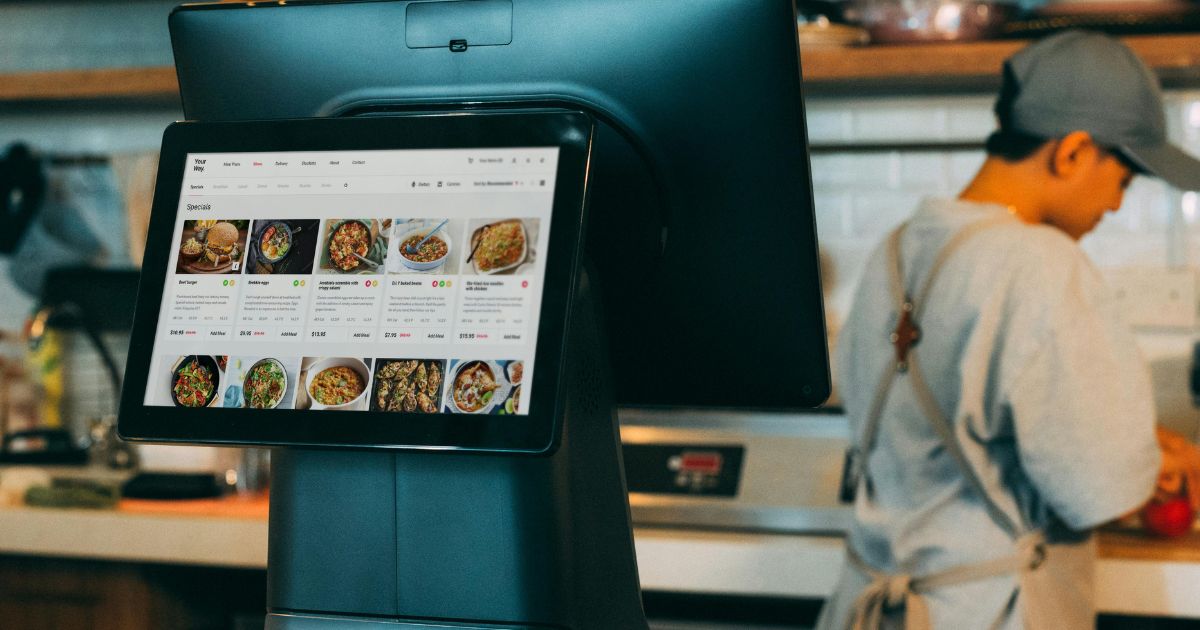
Choosing a point-of-sale (POS) system is one of those decisions that quietly shapes how your business runs day to day. From how fast you can serve a customer to whether you can get a stock report before a Monday morning meeting.
For South African small to medium-sized enterprises (SMEs), the decision is also shaped by local realities: load shedding, patchy rural connectivity, and the need for affordable, flexible cash flow.
South Africa’s financial technology (fintech) sector is highly saturated with innovative products aimed at consumers and small businesses. The most recent innovations include buy now, pay later (BNPL) offerings and, for businesses, POS systems embedded with financing opportunities.
In today’s article, we look at what POS systems are and the top offerings for SMEs. We look at how these different systems work, starting costs and what they offer SMEs in terms of access to financing.
What is a POS System?
A POS system is the hardware and software that a business uses to complete customer transactions. It replaces the old cash register, serving as the central hub where you ring up sales, process card or cash payments, and track day-to-day business operations.
There are various types of POS systems, ranging from traditional standalone systems to mobile POS systems and cloud-based POS systems.
How Do POS Systems Work?
A POS system allows your business to accept payments from customers and keep track of sales. As simple as that sounds, the setup can look different depending on whether you sell online, in-person or both.
POS Systems Compared: Which One Is Right For Your South African SMEs?
All business owners understand the importance and function of POS systems. However, the critical moment comes when it’s time to choose the right one for your SME. The following four POS systems all work in South Africa, and we will compare each to help make your decision easier.
1. Yoco POS
Yoco has various POS offerings – the Yoco Counter, Khumo 2 handheld and Khumo Print 2 handheld – that pair with your smartphone or tablet via Bluetooth. The free Yoco POS app runs alongside it, giving you a till, sales dashboard, and reporting from your phone. There’s also a payment gateway plugin for WooCommerce and Wix stores if you sell online.
Cost: Yoco doesn’t charge monthly fees; you pay once-off for hardware. The Khumo 2 is R699, the Khumo Print 2 is R1499, and the Yoco Counter is R2999.
Features: Real-time sales insights, staff profiles, tips and split-bill handling on newer devices, a loyalty programme built into checkout, and “Yoco Savings” pockets for setting money aside automatically.
Financing: In terms of access to financing, Yoco has an offering called Yoco Capital. It’s a cash advance offered to eligible merchants based on their sales history through Yoco. There’s no fixed interest rate or repayment term; instead, a small percentage of each future sale goes toward repaying the advance, so repayments naturally slow down in quiet months.
Ideal fit for: Solo traders, market stallholders, salons, and small retailers who want zero commitment and simple pricing.
2. iKhokha
Nedbank acquired iKhokha’s POS system, a business management and POS solution designed to help retail shops, kiosks, and restaurants ring up sales, track inventory, print receipts, and manage staff. The system integrates with the iKhokha app to make it easier to manage and track sales from your phone or laptop.
Cost: The card machine and basic app are free to use, with transaction fees starting from around 2,75% and dropping as your monthly turnover grows. If you want the full Poster POS system, expect R660 per month for small shops and kiosks and R960 for high-volume stores or restaurants, including advanced software licences and expanded product limits. The hardware costs R7499 once-off.
Features: Detailed sales and profit reporting, automatic stock recalculation as you sell, three daily automatic data backups, guest counts and average order value tracking, plus the ability to sell prepaid airtime, electricity, and bill payments directly through the machine.
Financing: Much like Yoco, iKhokha has a cash advance offering called iK Cash Advance. iK Cash Advance is a flexible working capital feature that provides eligible merchants with funding up to R1 million based on their transaction history. To qualify, SMEs must be an iKhokha merchant for at least six consecutive months and make more than R2500 per month in sales.
Ideal fit for: Retailers and hospitality businesses that want inventory and staff tools bundled with payments and that value the prepaid-services side hustle.
3. Capitec Card Machines
Capitec’s POS devices (Pro and Print) are aimed at existing Capitec business banking clients, syncing settlements directly into your Capitec account. The machines directly integrate into your Capitec Business App for sales tracking and account management.
Cost: Hardware is sold outright rather than rented, with R699 once-off for the Pro device and R1 399 for the Print version. Commission starts at around 1,85% on card transactions and can drop further as turnover increases, making it one of the cheapest options for higher-volume businesses. International transactions are at a fixed rate of 2,3%.
Features: Unlike the fintechs, Capitec’s offering is lean, making it a payments-first solution rather than a full retail POS with inventory or staff scheduling. Its advantage lies in low fees and integration with Capitec’s business banking, overdrafts, and lending products.
Financing: Because it’s a bank, it can monitor the cash flow moving through your POS device and use that data to offer financing for SMEs. The digital bank has a Pay As You Trade Loan which requires no collateral and is repaid using a percentage of daily transactions. Merchants can access capital up to R1 million.
Ideal fit for: Established businesses already banking with Capitec or high-volume traders.
4. Stitch Express POS (with Shopify POS integration)
Stitch Express recently launched its in-person payments offering for growing South African retailers, and with it, became the first provider to offer a fully integrated Shopify POS solution in South Africa. If you already sell on Shopify, a Stitch terminal connects directly to your online store so in-store sales sync automatically with the same product catalogue, orders, and fulfilment you use online.
It’s available three ways: as a standalone card terminal, through Shopify POS, or via an API for businesses running a custom-built checkout.
Cost: In terms of hardware, Stitch Express has device options, including rent-to-own. Processing fees include R2 for standard payouts, R10 for instant payouts, 5,7% for BNPL transactions, 2,95% for local cards, 3,4% for international cards and 2% for Capitec Pay transactions.
Features: Accepts card by tap, insert, and swipe, plus Apple Pay, Google Pay, and Capitec Pay. Its most distinctive feature is “Pay Later” at the till: customers scan a QR code to pay in instalments, with the plan linked directly to the specific order and items being bought. Refunds are automated and can go back to the original payment method, including cardless refunds and refunds to Apple Pay/Google Pay. Every transaction – online or in person – shows up in one dashboard.
Financing: Stitch Express doesn’t offer a merchant cash advance or business loan product.
Ideal fit for: Shopify (or WooCommerce/Squarespace/Webflow) merchants who already run an online store and want their physical till to share stock, orders, and reporting with it, rather than running two disconnected systems.
Choosing the Right POS System
If your priority is getting started with low upfront cost and flexible funding when you need it, Yoco or iKhokha are the easiest entry points. Both companies offer merchant cash advances built around your actual sales, which can be far more accessible than a traditional bank loan especially for a business without collateral.
If transaction fees are your biggest cost driver because you process high sales volumes, Capitec is the ideal choice, especially if you already bank there and want your POS data to strengthen a future loan application.
If you’re already selling on Shopify and want your online and in-store operations to be integrated, Stitch Express POS solves a real pain point that card-machine-first providers don’t. However, remember that it does not have any financing opportunities.
There’s no single “best” POS system; the right choice depends on your transaction volume, whether you sell online as well as in person, and how much you value having a financing safety net built into your payments provider.