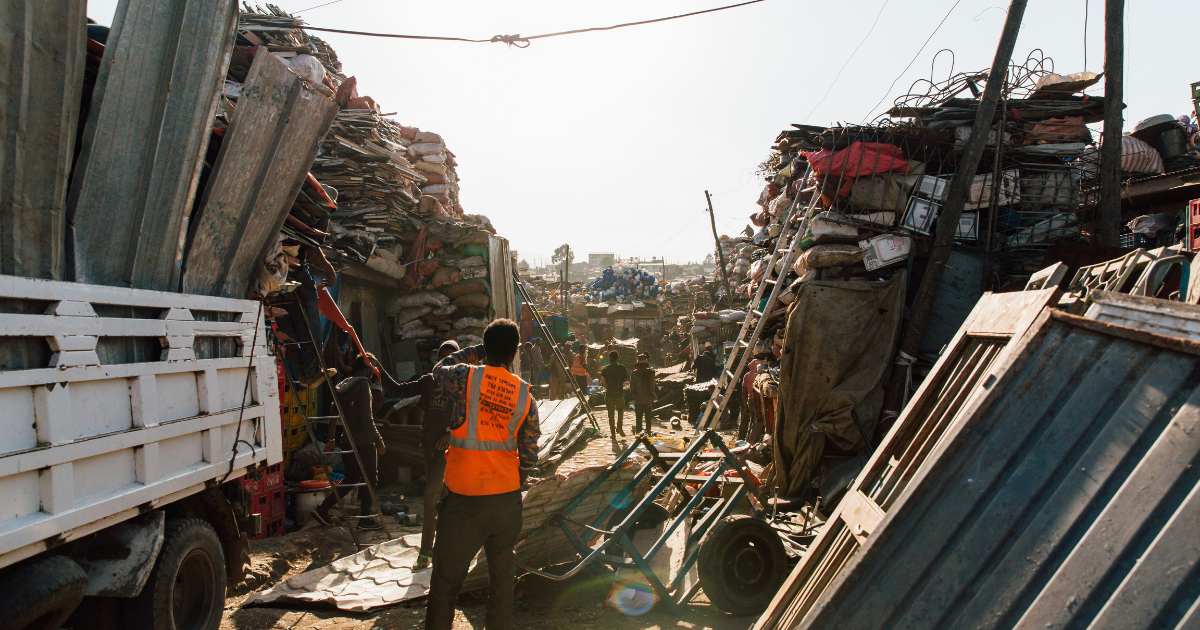
There are many ways to make money in South Africa, either as a business owner or a solo entrepreneur. Business ideas range from making your own clothing line, opening a spaza shop or a retail store. A business idea that tackles environmental issues while enabling people to make money is scrap metal collection and resale.
South Africa’s scrap metal collection industry is a multi-billion Rand sector, processing between 2,5 and 3,5 million tonnes of metal annually. Driven by the mining, construction, and manufacturing sectors, it serves as a critical pillar of the country’s circular economy but is heavily impacted by strict state regulations and infrastructure theft.
The country faces serious challenges from theft of metal and the associated impairment and destruction of infrastructure. Theft of scrap metal, especially copper cable, imposes costs far beyond the actual value of the material taken. These costs, mostly in the form of disruptions to rail transport and electricity, effectively cut production and inhibit economic growth.
Entrepreneurs looking to enter the scrap metal collection and resale sector need to be compliant to ensure they avoid fines and possible jail time.
In this article, we look at what a scrap metal collection and resale business is, what regulations govern the sector and what is required to start the business.
What is a Scrap Metal Collection Business?
A scrap metal collection business is an enterprise that gathers, buys, and sorts discarded or obsolete metal. The goal is to sell the collected materials in bulk to larger recycling facilities, foundries, or mills, where it is processed into raw materials for new manufacturing.
Key Categories of Scrap Metal
Scrap metal can be separated into two types of metals: ferrous and non-ferrous. Ferrous metals contain iron, making them magnetic. Common examples include steel, cast iron, and wrought iron. These metals are used in construction and manufacturing for their strength and durability. A magnet test can identify ferrous metals: if the magnet sticks, it’s ferrous.
Non-ferrous metals are metals like aluminium, copper, brass, zinc, magnesium, tin, lead, and nickel, which lack iron and are nonmagnetic. They resist corrosion and conduct electricity well. Due to their applications in various industries, nonferrous scrap metal often holds more value than ferrous scrap.
Scrap Metal Collection Laws and Regulations
Scrap metal collection in South Africa is strictly regulated by the Second-Hand Goods Act and recent Department of Trade, Industry and Competition (DTIC) policy directives to combat infrastructure theft. Key requirements include mandatory dealer registration, prohibition of cash transactions, detailed record-keeping on the Metal Trade System, and strict export restrictions and duties enforced via the South African Revenue Services (SARS).
Key Regulatory Measures
These are the key regulatory measures implemented in the sector to curb theft and lawlessness.
1. Registration and Compliance
- Dealer registration: All dealers and recyclers must be registered under the Second-Hand Goods Act in order to trade. Operating without a valid registration can lead to immediate closure.
- Network trading constraints: Registered scrap metal dealers are only permitted to acquire scrap metal from, or dispose of it to, other legally registered dealers.
2. Transaction and Payment Restrictions
- No cash purchases: To curb the monetising of stolen infrastructure (such as PRASA cables and Eskom lines), cash transactions are prohibited. All payments must be done electronically via bank transfer or similar auditable digital mechanisms.
- Supplier identification: Collectors and dealers must verify the identity of the person selling the scrap and record their details (e.g., ID numbers, address).
- Burnt metal: It is illegal to possess or recycle any metal cable where the plastic or rubber cover has been burned off, unless the seller can provide a reasonable explanation and the matter is reported to the South African Police Service (SAPS).
3. Reporting and Auditing
- Digital reporting: All dealers must maintain comprehensive, track-and-trace systems for all acquisitions and disposals.
- Metal trade system: All registered dealers and manufacturers must report all acquisitions and disposals monthly to the national Metal Trade System by the 14th day of each month.
4. Export Controls and Duties
- Export permits and taxes: Due to extensive infrastructure vandalism, the government imposes strict rules on metal exports. This includes specific export duties on ferrous and non-ferrous waste and scrap as regulated by SARS.
- Price preference system (PPS): Scrap metal must first be offered for domestic use to local mills and foundries at a price discount before it is allowed to be exported. Temporary bans on the export of copper and ferrous waste are also periodically enacted to protect domestic infrastructure.
For further details, official application processes, and forms, consult the SAPS Second-Hand Goods Services portal.
Scrap Metal Collection and Resale Business: Requirements
To start a scrap metal collection business in South Africa, you must register your company with the Companies and Intellectual Property Commission (CIPC) and obtain a Second-Hand Goods dealer’s license from the South African Police Service (SAPS). You will also need municipal zoning approval for your premises, proper waste management permits, and a SARS tax clearance.
Core requirements to get your business legally and operationally compliant are:
1. Legal and Regulatory Registration
- Company registration: You will need to register your business with the CIPC.
- Second-Hand Goods licence: Under the Second-Hand Goods Act, anyone dealing in or recycling controlled metals must register with the SAPS. You will need to undergo police clearance, be fingerprinted, and maintain a strict record of all sellers and materials bought.
- SARS compliance: You need to obtain a valid tax pin and register as a vendor for VAT if your annual turnover exceeds or is expected to exceed the statutory threshold of R1 million for small businesses and R2,3 million for larger businesses.
- Central supplier database (CSD): You must register on the National Treasury CSD if you ever plan to bid on government, municipal, or state-owned enterprise (e.g., Eskom, Transnet) scrap tenders.
2. Environmental and Municipal Compliance
- Zoning permits: Your collection site or scrapyard must be located in an area zoned for industrial or commercial use by your local municipality. You will need a formal zoning certificate or municipal consent.
- Waste management license: Depending on the volume and type of scrap handled, you may need an Environmental Impact Assessment (EIA) and a waste management license from the Department of Forestry, Fisheries and the Environment (DFFE) or your local provincial department.
3. Record-keeping and Metal Theft Laws
- Seller identification: You are legally required to verify and record the details (ID/Passport, proof of residence) of anyone selling metal to you. Cash purchases over a certain legal limit are strictly regulated.
- Prohibitions: Strictly avoid buying municipal infrastructure, copper cables, or railway components without verifiable ownership or permits.
4. Operations and Infrastructure
- Storage and transport: You must secure your business location with perimeter fencing, concrete floors (to prevent soil contamination), and appropriate loading/unloading space.
- Equipment: Ensure you invest in calibrated heavy-duty platform scales, balers (to compress metals), personal protective equipment (PPE), and reliable transport (like a flatbed truck or heavy trailer).
- Safety and training: You must strictly adhere to the Occupational Health and Safety Act (OHSA), ensuring safe handling and storage of hazardous or heavy metals.