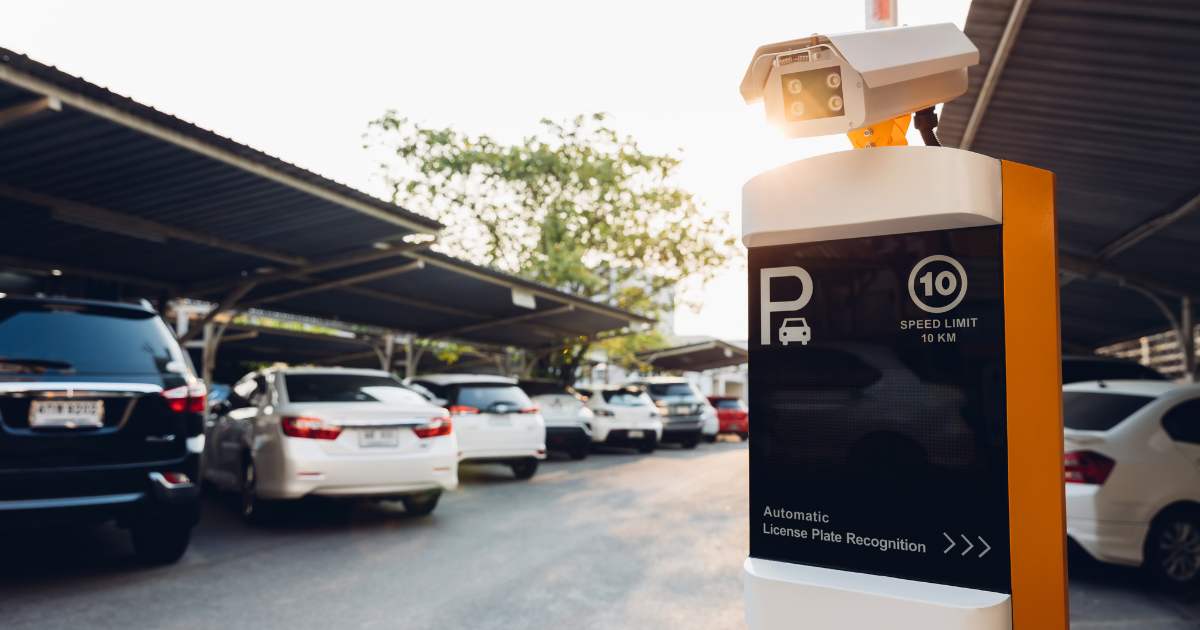
Technology has not only changed how businesses operate and build products, but also how they approach matters, such as parking management. A founder establishing their business in a busy business district knows how important safe and accessible parking is for customers. Customers will want to come and spend time at your business if they know their cars are safe and that the e-hailing drop-off is a safe position.
For small to medium-sized enterprise (SME) founders looking to establish their business in a busy business district, having robust parking management solutions is critical. And that’s where technology comes in. Smart parking management solutions have optimised commercial real estate in South African business districts like Sandton, Rosebank, and Cape Town. They replace manual, paper-based administration with IoT-driven platforms that feature license plate recognition (LPR), automated payments, and smart space-sharing.
In this article, we look at what smart parking management systems are, how they work and practical examples of smart parking solutions in South Africa.
What are Smart Parking Management Systems?
A smart parking system is an integrated set of technologies that detect the availability of parking spaces, communicate real-time information to users, and optimise the management of the entire parking space, public or private.
Unlike traditional methods, this system provides real-time updates on available parking slots, enables online parking booking, supports digital payment methods, and manages memberships or time-based billing. It’s widely used in commercial buildings, shopping malls, airports, hospitals, and even residential societies.
Smart parking management system components:
- IoT sensors: Installed in individual stalls or areas, they detect the presence or absence of a vehicle.
- Apps and dashboards: Allow users to view, book, and pay for parking directly from their smartphones.
- Cloud infrastructure: Collects and analyses data to support decision-making, reporting, and predictive maintenance.
- Integration: Parking management systems integrate with smart traffic lights, electric vehicle charging, access control, video surveillance, etc.
Although not yet widely commercial, smart parking management systems are typically available in places like airports, malls and business parks.
How Smart Parking Management Systems Work
The efficiency of a connected parking solution relies on a technological ecosystem where hardware and software work together.
Data Collection: Sensors and Internet of Things (IoT)
At the centre of these systems are devices designed to detect vehicle presence. This real-time data collection is the foundation of the entire solution. Several technologies are used:
- Access control systems: These systems regulate which vehicles are allowed to enter or exit the parking facility.
- Occupancy sensors: Installed on each space (magnetic, ultrasonic) or at entry/exit points, they detect whether a space is taken
- License plate recognition (LPR) cameras: Positioned at entries and exits, they identify vehicles and, through image analysis, can also determine occupancy levels
The Software
Hardware would be useless without the intelligence of software to process and add value to the collected data. Key features of this software include:
- Access management: Define precise rules (who can enter, when, and to which space), based on user rights (employees, visitors, subscribers) and credentials (badge, QR code, license plate)
- Real-time occupancy algorithms: Calculate and predict availability to guide users efficiently
- Dashboards and reporting: Provide managers with a clear view of parking usage (occupancy rates, peak times, mobility mix, avoided CO₂ emissions) for data-driven decision-making
User Experience: Apps and Guidance
The final element of these systems is the interface for the end user. With intuitive mobile or web apps, drivers become active players in their parking journey. They can:
- Check real-time availability before leaving
- Reserve a space in advance
- Be guided directly to an available space via dynamic signs
- Handle payments digitally
Benefits of Smart Parking Management Systems for Businesses
Smart parking solutions provide a range of benefits for various groups. For customers, they provide safety and convenience, and for businesses, they are a modern, low-cost solution.
Benefits for businesses include:
Increased Efficiency
Smart parking solutions are great for optimising available space in car parks. Through sensors and monitoring systems, drivers are guided precisely and efficiently to available spaces. This reduces the time spent searching for a space, avoiding congestion and improving traffic flow.
As a result, you can optimise parking capacity and reduce the time spent looking for parking for the user. Additionally, this will allow for more efficient and faster vehicle turnover, which will mean more customers inside your store.
Improved User Experience
Direct access to available spaces eliminates the uncertainty and stress of finding a space, resulting in a benefit to drivers. In addition, the technology can also provide real-time information on the availability of special places, the location of free spaces and tariffs, enabling informed decision making.
Greater Security
Smart parking solutions are not only great for creating more space, but they also offer safety. For instance, sensors with cameras make it possible to monitor parking spaces by means of video recording for better car park security. In addition, they can include other features such as smart lighting, exterior guidance, proximity alerts and number plate reading. All these features offer an element of security for drivers and their vehicles, as well as an important monitoring tool for the owners and operators of the parking infrastructure.
Scalability and Profitability
For businesses with car parks, this technology presents an opportunity for growth and profitability. It allows for the implementation of dynamic and flexible tariff systems, which can bring in more money to the business.
Examples of Smart Parking Management Systems in South Africa
Smart parking systems in South Africa leverage IoT, License Plate Recognition (LPR), and cashless apps to eliminate paper tickets, reduce queues, and optimise space. Key deployments include major retail centres, airports, and commercial campuses nationwide.
Local platforms include:
- HUB Parking Technology: HUB provides enterprise-level hardware and digital platforms (like the Janus Management System) at large public facilities, such as OR Tambo International Airport. Their solutions integrate LPR, smart signage, and automated monthly subscriptions for tenants and frequent flyers.
- Servest Smart Park: Used across various retail centres and corporate parks, the Servest system combines mobile QR code payments (via SnapScan or Zapper) with LPR to create a seamless, contactless entry and exit experience.
- Hikvision Africa Solutions: Hikvision Africa offers comprehensive smart parking solutions for commercial, industrial, and municipal applications. These systems automate vehicle access, provide real-time space guidance, and optimise lot security to reduce manual operations and enhance revenue.
- admyt: admyt is a leading digital parking platform and app utilising license plate recognition (LPR) software and smartphone technology to provide a seamless, ticketless and cashless parking experience.