Software developers spend a significant amount of time building applications that help businesses operate and communicate with customers. However, when something goes wrong behind the scenes, understanding what caused the problem is not always straightforward. This is where application programming interfaces (APIs), which allow different software systems to communicate, can become difficult to monitor.
For South African developer Mfundo Mthembu, this challenge presented an opportunity to develop FootLook, a technology platform that helps developers observe API activity in real time and gain better visibility into how their applications behave.
The idea came from his own experience as a developer and his ambition to build a sustainable technology business. Rather than developing software exclusively for an employer, Mthembu wanted to create a product that other developers and businesses would choose to use, trust and pay for.
“For FootLook, success means becoming a recognised tool in the .NET ecosystem, helping developers understand their API behaviour more easily and giving software teams better visibility when investigating failures and performance issues,” Mthembu shares.
Building a Solution for Developers
APIs play an important role in modern software development. They allow applications to exchange information and perform tasks across different systems. For example, an online shopping platform may rely on an API to process payments, retrieve customer information or communicate with a delivery service.
When these connections experience problems, developers need to understand what happened and where the issue originated. This can become complicated when an application depends on several systems working together.
FootLook focuses on real-time API observation, giving developers greater visibility into application behaviour. Its purpose is to make it easier for software teams to investigate failures and performance issues.
The platform is particularly focused on developers working within the .NET ecosystem, a software development platform commonly used to build web applications, business systems and other digital products.
For Mthembu, the goal is to create a tool that addresses practical challenges developers encounter in their work. However, he does not intend to limit FootLook to its current capabilities.
“I would like to grow the product from its current focus on real-time API observation into a broader developer-focused platform that supports more of the API lifecycle,” he explains.
The API lifecycle covers the different stages involved in creating, testing, maintaining and improving an API. Expanding into these areas could allow FootLook to support developers throughout more of their work.
Developing a Platform Around Customer Needs
As FootLook grows, Mthembu sees opportunities to introduce features that make the platform more useful to software development teams.
These could include better collaboration tools and connections to other development platforms. Such integrations would allow developers to work with FootLook alongside the systems they already use to manage software projects.
“That could include stronger team workflows, integrations with issue-tracking and development platforms, and commercial capabilities that make sense as adoption grows,” he says.
Issue tracking platforms help development teams record, assign and manage software problems. Connecting these systems to API observation tools could make it easier for teams to investigate technical issues while keeping track of the work required to resolve them.
However, introducing additional features also requires an understanding of what customers actually need.
A platform may offer several technical capabilities, but those features only provide value when they solve problems developers encounter regularly.
Mthembu wants FootLook’s development to reflect this principle rather than expanding the product based on assumptions about what customers might want.
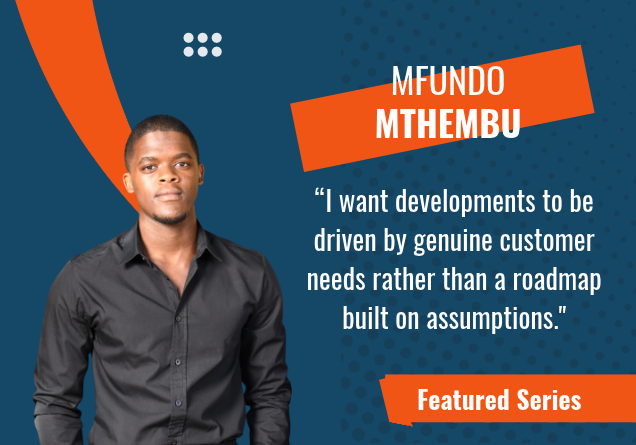
“I want those developments to be driven by genuine customer needs rather than a roadmap built on assumptions,” he explains.
This approach could also influence the commercial direction of the business. As more developers and software teams begin using the platform, Mthembu hopes to explore opportunities that support its growth while maintaining its usefulness.
Turning Technical Skills into Business Opportunities
Building FootLook is about more than developing another software product. For Mthembu, it represents an opportunity to turn his technical experience into a business with the potential to serve customers beyond South Africa.
Software developers often spend their careers building and maintaining systems for employers or clients. While this work requires specialised knowledge, developing an independent product introduces a different set of responsibilities.
A developer must consider not only whether the technology works, but also whether it solves a problem that customers consider important enough to pay for.
There are also questions about how the product will reach customers, how it will be maintained and what will make users continue choosing it as their needs change.
For Mthembu, creating FootLook means moving beyond the role of developing software for an employer and taking ownership of a product that could grow into a sustainable business.
He believes more South African developers should explore similar opportunities.
“We have talented developers who are capable of building sophisticated systems, but I believe there is an opportunity to encourage more of us to turn our technical knowledge into products, intellectual property and businesses that reach beyond our borders,” he shares.
Unlike software developed exclusively for one organisation, an independent technology product can potentially serve multiple customers. It can also create intellectual property that remains part of the business as it grows.
Mthembu hopes FootLook will contribute to a broader conversation about the opportunities available to South African technology entrepreneurs.
Alongside building FootLook, Mthembu has maintained an interest in education and helping other developers develop their skills.
He has been involved in university teaching and recently delivered a guest lecture at the University of Cape Town. These experiences have strengthened his interest in contributing to the next generation of technology professionals.
For aspiring developers, learning how to write software is an important starting point. However, understanding how technical skills can be used to identify business opportunities may open another career path.
Mthembu would like to see more developers recognise that entrepreneurship is an option alongside traditional employment in the technology industry.
“I would love to see more South African developers building globally relevant products, more local technology businesses reaching international customers, and more opportunities for young developers to see entrepreneurship as a realistic path,” he says.
His interest in sharing knowledge also reflects his belief that South Africa has the technical talent needed to develop products for international markets.
Growing FootLook Beyond Its Current Capabilities
Although FootLook currently focuses on real-time API observation, Mthembu hopes to establish it as a recognised product within the .NET developer community.
Its future development could include broader API management capabilities, improved team workflows and integrations with other software development tools.
However, the immediate direction of the platform will depend on how developers use it and what they need as the business grows.
Beyond the product itself, Mthembu hopes FootLook will demonstrate how technical experience can become the foundation of an independent business.
“When FootLook succeeds, I want it to be more than a useful developer tool. I want it to be an example of what can happen when a developer identifies a real problem, takes ownership of the solution and commits to building something valuable over time,” he concludes.