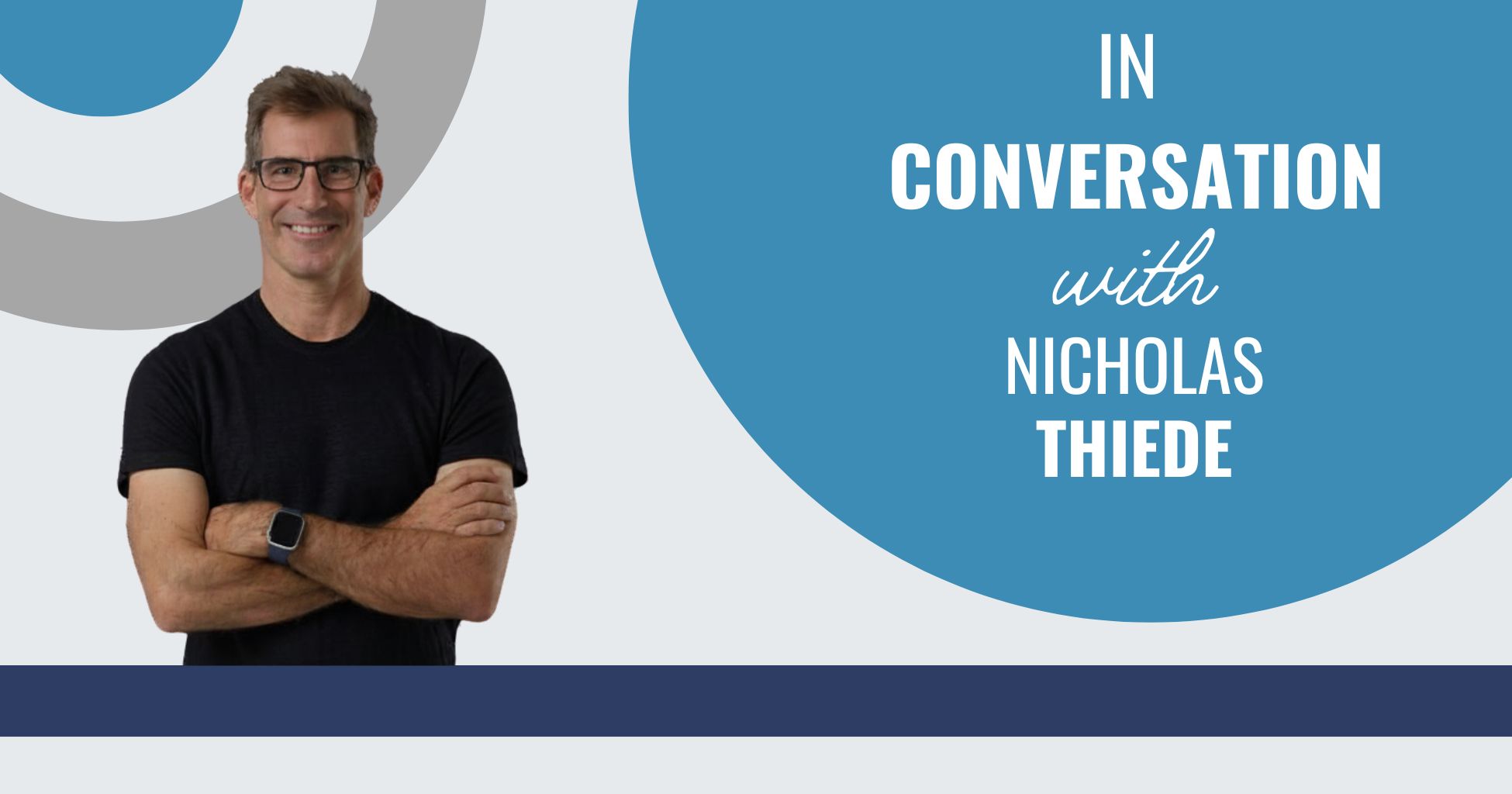
The entrepreneurial journey is rarely linear. Just like life, the road twists and turns, leading you through the ups and downs to reach your next destination. Sometimes, it calls for a detour – a step back, if you will – before your adventure continues on its original course. This metaphor resonates with Nicholas Thiede.
“My journey certainly wasn’t a straight line, and I’m grateful for that,” says Nicholas Thiede, founder of ScaleUp, the South African-founded business helping founder-led companies replace complexity with clarity, structure, and operational rhythm.
“I’ve built and scaled four businesses: first in Germany and then in South Africa.” He explains that these experiences were all stepping stones that led to ultimately founding ScaleUp, and each one taught him something new.
“At MyHammer, my first entrepreneurial role in Germany, I was COO during a period of explosive growth, taking the team from 10 to 100 people while the media watched our every move. It was an incredibly exciting period but also an intense one. Next, I stepped into the CEO role at Semigator to turn around and develop a business that grew too fast to sustain itself. We pivoted three times and eventually sold it. On paper, it was a successful outcome, but by the end of it, I was completely depleted.”
Stepping Back from Business
The exhaustion from the hustle prompted Thiede to do something many would think is crazy; he took a break from the fast-paced corporate world that a C-suite executive had come to grow familiar with and traded it for peace and reflection.
“After that exit, I did something founders don’t often allow themselves to do: I stopped. I spent four years in Tanzania with my family, watching my children grow up, helping to organise a kitesurfing championship and reflecting on my own entrepreneurial journey and strengths,” he recalls.
That time away was where the idea behind ScaleUp really began. “I came across Verne Harnish’s book Scaling Up, and his framework gave structure to many of the lessons I had previously learned through trial and error.
After moving to South Africa in 2017, Thiede became an MD of PixelFaerie in Cape Town, where he helped grow the business. “That’s where the Scaling Up framework started to influence my work. I had clearer priorities, stronger weekly rhythms and far more structure than I had experienced in my previous businesses,” he highlights. “I could feel the difference it made.”
Thiede explains that it was that experience that ultimately led me to start ScaleUp as a business on its own. “Not because I believed I had every answer, but because I had experienced many of the challenges founders face firsthand. I wanted to combine those lessons with a practical framework and help other founders navigate growth without having to figure everything out the hard way.”
The Business of Business: Helping Founders Thrive
When asked why he made helping entrepreneurs his business, his answer is simple: “Because I know what it feels like to be the one everyone else is leaning on while still figuring it out for yourself.
“When you’re building something, at least initially you’re the last line of defence for every decision, every fire, every hard conversation. It’s lonely and taxing in a way people outside the founder’s seat rarely understand.
“I’ve felt the weight of a team that’s grown faster than our systems could support. I’ve felt what it’s like when the business owns you, not the other way around. So when I finally found my footing again after Tanzania, it felt almost obvious – I didn’t want to just build one more company for myself. I wanted to stand next to founders while they build theirs and be the person who holds the mirror when they need it most, not just what’s comfortable to hear,” he points out. “That’s a role I wish I’d had earlier in my own journey. And to contribute best practices and some common sense in business that is far easier to do from the outside than from the inside.”
But Thiede’s approach to mentorship and support shouldn’t be conflated with regular business coaching. “Traditional business coaching often focuses on helping an individual founder think through challenges. It can be highly effective, yet it is typically focused around solving a set of specific problems. In contrast, we work with entire leadership teams to build the structures, priorities and accountability needed to execute consistently.”
ScaleUp is thus not only support for the founder alone but also for the team who drives business growth from the top down.
The Scaling Up methodology works as follows: The framework is applied directly to each business across the four critical dimensions, namely, people, strategy, execution, and cash. “And we don’t simply teach the ideas and leave – we work with the team quarter after quarter to ensure the decisions made in the room translate into action, coupled with clear accountabilities.”
Another aspect that makes the ScaleUp coaches unique is the extremely high standards they are expected to meet, because they are all experienced entrepreneurs in their own right. “Their guidance comes from firsthand experience of growth, pivots and leadership pressure, rather than theory alone,” Thiede says.
He names a few examples of ScaleUp coaches. One is Jamie Surkont, who co-founded and exited the used car dealer getWorth, while another, Simon Hartley, founded the last-mile delivery service WumDrop, which he later sold to Massmart/Walmart. “They are highly successful business leaders in their own right but remain humble, approachable and willing to share the lessons they learned along the way – they’re just awesome guys to have on the team.”
Leadership Support is Crucial
According to Thiede, the biggest benefit of this type of support is perspective. “When a leadership team is deep in the day-to-day running of a business, it can be difficult to see the patterns, blind spots and decisions holding it back. An experienced outside voice helps the team step back, challenge its thinking and have the honest conversations it may otherwise avoid.
“That support also creates greater alignment and accountability. Instead of every difficult decision landing with the founder, the leadership team becomes clearer on its priorities, responsibilities and what needs to happen next. The founder gradually transfers more and more accountability to the team members – to the benefit of all.”
The ScaleUp team also works in person wherever possible. “Being in the room makes it easier to read the dynamics, surface what isn’t being said, build the trust needed for meaningful change, and create the energy with the team to achieve real transformation.”
The outcome is leadership teams that start to work as cohesive and autonomous teams, businesses that start to grow double digits after years of stagnation, and founders that exit their business in a way that minimises lock-in periods, because the business has been structured around several capable heads and hands instead of depending on a pivotal founder.
A Birds’ Eye View Across Industries
Working across various industries with many founders, Thiede has identified some interesting trends. Most notably, he sees founders struggling to let go of responsibilities and hand them over to other members of the leadership team.
“Founders who are brilliant at starting but who don’t have too much experience in building and leading teams and who were never taught how to let go. Typically, they started the company by doing everything themselves, and that instinct – which got them to their first few million in revenue – becomes the very thing that caps their growth.
“I see leadership teams where everyone is busy, but no one is quite sure who owns what. I see founders who can tell you their year’s revenue target down to the rand but couldn’t tell you what their leadership team is actually responsible for delivering this quarter.”
But Thiede is also seeing something more hopeful: a strong willingness, especially among South African founders, to seek out an external perspective. “There’s less ego around asking for help than in other countries I’ve worked. People here understand that outside expertise isn’t a sign of weakness; it’s what separates the businesses that plateau from the ones that keep compounding.”
Scaling Is No Longer an Option – It’s a Necessity
Against the background of the current economic climate, focusing on scaling a business is no longer optional. “Keeping the lights on will keep you alive, but it won’t keep you free. I’ve watched founders run a ‘profitable’ business for years while quietly working eighty-hour weeks just to hold it all together. That’s not a business – that’s a very demanding job wearing a business’s clothes,” Thiede remarks.
“Scaling properly means building something that can grow without you personally carrying every decision on your back. It’s the difference between a company that depends on you and a company that works because of the structure you’ve put in place,” he explains. When I finally got that balance right, I was able to have regular dinners with my family again and actually be present, instead of being mentally stuck in the office.
“That’s the real reason to focus on scaling – not just bigger numbers, but a business that gives you your life back instead of consuming it,” he concludes.