In short: Khula!, founded by two UCT students to connect small-scale black farmers to the formal market, won South Africa’s Best Business App award in 2018. It has since grown into a genuine agritech platform serving 20,000 users, raising $6.7 million and partnering with major players like Bayer.
What problem was Khula! actually built to solve?
Co-founder Karidas Tshintsholo was direct about the gap: “Black farmers have been excluded from the formal markets because their produce is too small.” Khula! connects small-scale emerging farmers with the formal marketplace by letting them combine crops to meet the volume requirements larger buyers demand, something no individual small farmer could achieve alone.
Who founded Khula! and how did they start?
Karidas Tshintsholo and Matthew Piper launched the app in 2016 while still studying at the University of Cape Town, having met through the Allan Gray Orbis Foundation. It was their second business venture together, built around a straightforward hypothesis: small-scale farmers needed a way to pool supply, not just a way to list produce individually.
How does the platform actually work today?
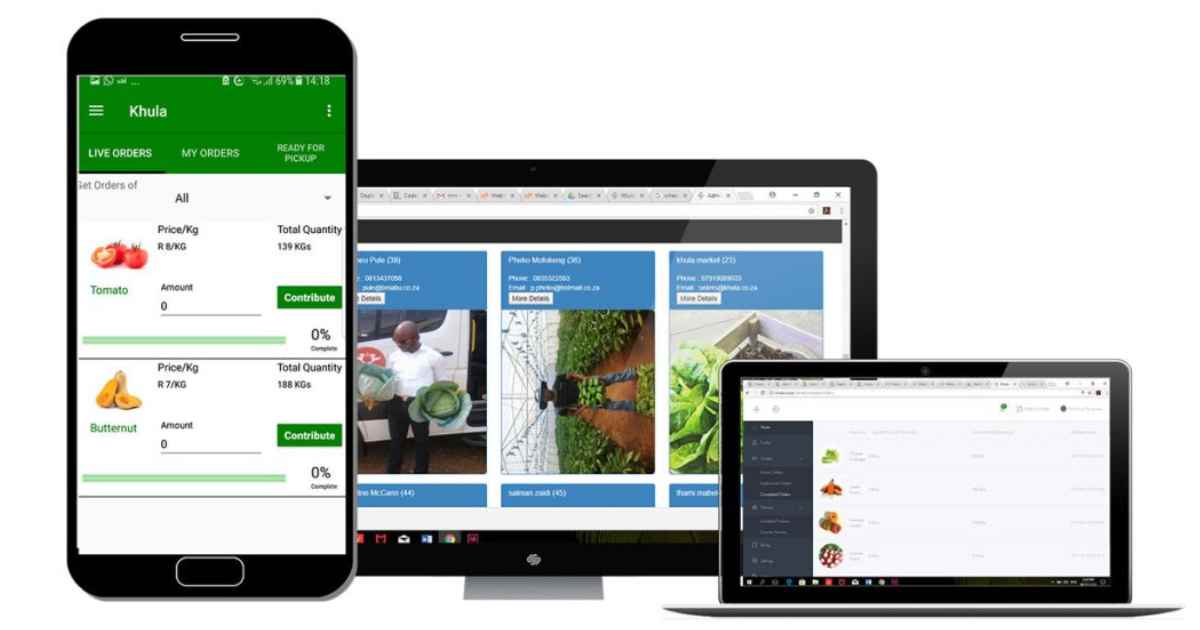
What began as an inventory-listing and crowd-sourced marketplace tool has grown into three integrated applications: an Inputs App giving farmers access to more than 5,000 farming products, a Fresh Produce Marketplace for direct selling, and a Funder Dashboard connecting farmers to low-interest loans. AI-powered tools now also let farmers diagnose crop issues directly through the platform, a capability that didn’t exist in the original 2018 version.
Who were Khula!’s early clients, and how has that scaled?
In its early days, farmers on the platform were supplying fresh produce to establishments including The Michelangelo Hotel, RocoMamas and the Sandton Convention Centre. The platform has since scaled to serve around 20,000 users ranging from small-scale to commercial farmers, with more than 5,000 products listed on its marketplace, a substantial jump from its original small-farmer pilot base.
What funding and partnerships has Khula! secured since?
Khula! raised $6.7 million (roughly R126 million) in Series A funding in March 2025, led by E Squared Investments with participation from the Kgodiso Development Fund, Absa and AECI. In 2026, Bayer expanded its partnership with Khula! to help South African farmers access tools, skills, finance and market connections, a sign the platform has moved from a student project into infrastructure serious agribusiness players want to build on.
Frequently asked questions
Is Khula! still operating today?
Yes, and has scaled substantially since its 2018 award win, now serving around 20,000 users with over 5,000 products on its marketplace and Series A funding secured.
What kind of farmers does Khula! serve?
Originally built for small-scale, historically excluded black farmers, the platform now serves a range of farmers from small-scale to commercial.
What can farmers actually do on the Khula! platform?
Access farming inputs, sell produce directly through a marketplace, apply for funding through a dedicated funder dashboard, and use AI tools to diagnose crop issues.
Originally published in October 2018. Updated September 2026.