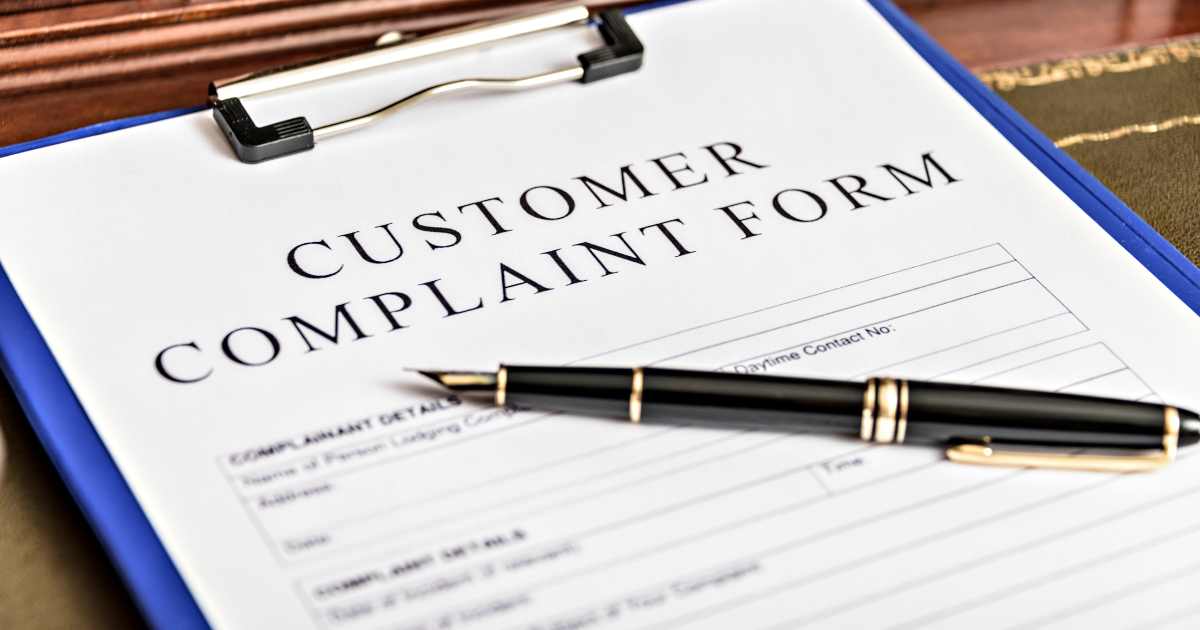
Being a business owner means dealing with all different types of customers and customer complaints. How you approach these interactions can be the deciding factor between having a customer for life or losing a customer. Customer complaints are not just issues that can be solved through a conversation; they are valuable insights which have their own public and private regulatory frameworks.
What are Customer Complaints?
Customer complaints in business are defined as the expressions of dissatisfaction that come from customers regarding a product, service or overall experience with a company. These complaints arise from various issues such as product quality problems, delays in service, negative interactions with staff, or unmet expectations.
Knowing what laws are on your side when it comes to customer complaints is important to effectively manage them and maintain customer satisfaction and loyalty.
In this article, we look at what customer complaints entail and what the public and private regulatory frameworks are.
Common Types of Customer Complaints
Every business owner knows what the perils of their customers are; however, most complaints are quite generic across all businesses. Here are some common complaints:
- Product or service complaints: This is when a product arrives broken or functions differently than expected. When you receive a product or service complaint, you need to document it thoroughly, ask questions to determine where the problem started and also ask the customer to show you the problem to ensure they are using it correctly.
- Waiting time complaints: Occur when a customer makes a call to a company (call centre), and experiences long hold times or when they have to wait in line for a long time. Long wait times can be an indication that your business needs to optimise operations. If a customer complains about waiting time, you must apologise for their wait and, if possible, provide a reason for the wait time.
- Delivery complaints: Delivery complaints happen when you change the expected delivery date of a product or service. This is common in online businesses which rely on delivery partners, who can sometimes be the issue. If you have delivery complaints, you need to look up the tracking details and ensure the customer that the delivery is on the way.
- Staff complaints: This is when a customer is not happy with an interaction they had with one of your employees. If you receive this complaint, ask the customer to describe the interaction, the name of the employee and acknowledge the customer’s frustration and apologise for the situation.
- Online complaints: When a customer provides feedback publicly on an online forum or social media platform. This type of complaint requires quick resolution because people can see it. If you receive an online complaint, reach out to the person directly and ask to discuss their concerns and assure them that the complaint will be fixed immediately.
- Continual complaints: These complaints occur when a customer provides the same feedback multiple times or if multiple customers provide the same feedback. If you receive continuous complaints, you need to resolve them quickly to maintain trust with other customers.
- Communication complaints: Communication complaints arise when there’s a misunderstanding between the customer and your business. This can be caused by various things, such as how the customer treats employees, or if the customer misinterprets the company’s messaging (advertisement).
These types of complaints are common, but knowing how to differentiate will help you solve them effectively. It’s also important to understand these differences so you may see where your business might be lacking in operations or in product/service development.
Public Regulatory Frameworks for Customer Complaints
As a business owner, you have more than just your own resources when it comes to dealing with customer complaints. There are public regulatory frameworks in place as well. These frameworks are aimed at helping customers but also have protections for businesses.
The public framework for customer complaints is governed by the Consumer Protection Act (CPA), which establishes the National Consumer Commission (NCC) and empowers it to enforce consumer rights.
What is the Consumer Protection Act (CPA)?
The Consumer Protection Act (CPA) aims to protect consumers by establishing a legal framework for a fair, accessible, efficient, sustainable, and responsible marketplace for goods and services. It promotes fair business practices, protects consumers from unfair trade practices, and provides for improved standards of consumer information.
The CPA states that customers can lodge complaints with the NCC provincial consumer affairs offices or sector-specific ombudsmen. To file a complaint, customers need to register a profile on the NCC e-services portal. Through the portal, the Commission can attend to the complaint and engage with the consumer and solve the issue quickly.
How does the CPA Help Businesses?
Although the CPA was designed to protect the rights of consumers, there are less obvious protections for businesses within the Act. Some of the benefits include:
- Protection against monopoly: The act prevents competitors from undermining your business via unfair marketing or business practices.
- Consumer definition: The CPA’s definition of ‘consumers’ also includes corporations with an asset value or annual turnover of less than R3 million. This means small businesses purchasing goods or services from suppliers have the same rights and protection as ordinary consumers.
- Terms and Conditions: The Act includes prohibitions around contractual terms and requires businesses to constantly update them to protect themselves against non-payment, product or service liability and other related issues.
Private Regulatory Frameworks for Customer Complaints
Some of the private regulators in South Africa are an extension of the government’s efforts for fair business practices across all industries. Most of these organisations are industry-specific and are there to ensure fair practices where the NCC does not have jurisdiction. All services provided by these regulatory bodies are free, making them a cost-effective alternative to legal options.
Consumer Goods and Services Ombud (CGSO)
The CGSO is an independent body established in terms of section 82 of the CPA and operates as a non-profit company. The organisation works to resolve complaints by consumers against members of the Consumer Goods and Services Industry in terms of the CPA and enforces the Industry Code of Conduct.
In cases where the CGSO cannot resolve a matter, the matter can be referred to the NCC, which has the legal power to investigate the complaint and impose a compliance notice on the supplier.
National Financial Ombud Scheme South Africa (NFO)
The NFO is an umbrella financial services ombud scheme formed by the merger of four previously existing ombud schemes: the offices of the Banking Ombud (OBS), the Credit Ombud (CO), the office of the Long-term Insurance Ombud (OLTI), and the Short-Term Insurance Ombudsman (OSTI).
The primary focus of the independent body is to resolve customer complaints against financial services providers. The financial services providers that fall into the jurisdiction of the NFO are banks, credit providers, and short-term and long-term insurance providers.
Independent Communications Authority of South Africa (ICASA)
ICASA is responsible for the regulation of the telecommunications, broadcasting and postal industries. The organisation protects public interest and ensures affordable services for South Africans. ICASA deals with consumer complaints related to telecommunications, broadcasting, and postal services. These complaints typically involve issues like billing errors, poor service quality, or disputes over contracts.
Information Regulator of South Africa
The Information Regulator has several duties related to both the Protection of Personal Information Act (POPIA) and the Promotion of Access to Information Act (PAIA). The organisation promotes the protection of personal information, monitors compliance with POPIA, ensures access to information held by public and private bodies and any complaints related to personal information processing.
It’s quite obvious that the laws and regulatory bodies governing customer complaints are more for the protection of the customer. However, for business owners, it’s important to know these regulations and the bodies that govern them so they can help you dispute any unfair complaints.
Good governance and compliance structures are not just vital for big businesses; as a smaller business, you need to ensure you are complying from day one. This makes it easier to stay in line with the law and other regulations as your business scales.