Have you ever walked through a store or mall where a product stood out amongst its competitors and thought, ‘Wow, that’s a great brand!’? Chances are that it was made possible by a retail-savvy person who had that exact vision.
Richard Epstein first came across Psycho Bunny while travelling in the UK in 2019. “I was immediately struck by how it stood out in a crowded premium menswear space. Immediately, I identified how it would suit the South African market perfectly – something unique, bold and of excellent quality at that price point.” The potential was obvious to him.
“Psycho Bunny is not screaming a logo at you; it’s a detail that those in the know recognise. That kind of quiet luxury resonates very well with the South African consumer who has become increasingly sophisticated.
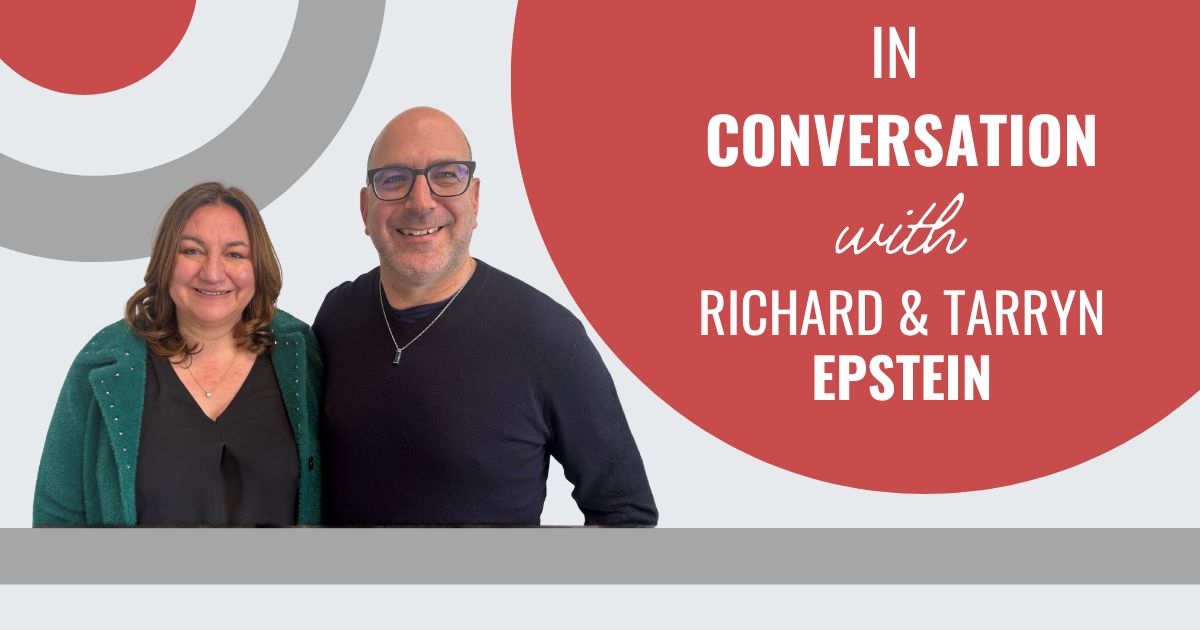
Richard is the director for both Slimsuit Distributors (Pty) Ltd and ARTI Holdings. His wife, Tarryn Epstein, is the managing director of Slimsuit Distributors (Pty) Ltd and director of ARTI Holdings.
A Decision Made Based on Experience
Epstein has a strong background in finance and sales, and he grew up around fashion retail. “My mom had a children’s clothing boutique long before chains like Woolworths & Edgars started offering children’s clothing ranges.
“My wife Tarryn has been in retail her entire career, mainly in operations, but bought Sea Weeds Boutique 20 years ago.” From this joint knowledge, Slimsuit Distributors was born. “We built Slimsuit Distributors as a vehicle for bringing quality global brands to the Southern African market.”
Beyond Psycho Bunny, the husband-and-wife team also holds the distribution rights to Joseph Ribkoff, Bugatti, Triumph, Betty Barclay, and various other swimwear and resort wear ranges. Distribution operates through their retail stores Sea Weeds Boutique, Sea Storm menswear, and the Psycho Bunny stores. Additionally, they also distribute to 120 other retail customers around South Africa and the SADC Region.
“What we built over the years was really an operational platform — the import infrastructure, the retail expertise, the brand-building capability. When the Psycho Bunny opportunity presented itself, we weren’t starting from scratch; we had a proven model to apply to a new brand. The difference with Psycho Bunny is the scale of ambition — we’re building a dedicated monobrand retail network, which is a different challenge and a genuinely exciting one.
Epstein explains that considering bringing a brand to South Africa, especially a luxury brand, requires a lot of research beyond liking the product or its aesthetic appeal. “I also looked at where the brand was performing internationally. It was strong in North and South America and also growing in Dubai and the Middle East. We felt that the gap in the local market was real. Premium casualwear with genuine quality credentials at an accessible luxury price point was underserved here. That analysis, combined with the brand’s momentum globally, made it a compelling opportunity.”
Bringing an international brand like Psycho Bunny to South Africa is a multi-layered process that goes far beyond simply signing an agreement and filling a container. “It starts with deep market research – understanding whether the brand’s DNA, price positioning, and aesthetic translate to the local consumer.
“On the ground, you need the right retail infrastructure, trained staff who understand the brand story, and a visual merchandising approach that meets the brand’s global standards. It’s genuinely a full business within a business, and most people underestimate the complexity until they’re in it.”
Pricing and Distribution Rights
“With our business, we focus on the consumer aged 35 years and up with disposable income who appreciates a good quality product at a reasonable price.” Based on the Epsteins’ years of experience, they understand that this consumer is happy to pay for a premium garment when they see or feel the quality of the fabric. “The key is to ensure the product hits the market at a competitive price relative to the pricing in its home market.
“With Psycho Bunny, we have reached a price point in the South African market at the same level as in the US, even though we pay 45% import duties on clothing into South Africa,” Epstein shares.
When it comes to obtaining the distribution rights, there is a lot of work that goes on behind the scenes in obtaining the Southern African (SADC) rights to a brand. “This typically means entering into a formal distribution or licence agreement that grants you the exclusive right to import, market, and sell that brand within this defined territory,” Epstein explains. “What entrepreneurs often don’t fully appreciate is that these agreements come with serious obligations – minimum purchase commitments, brand usage guidelines, approved retailer lists, and strict controls over how and where the product is sold.
“Through Slimsuit, we have been doing this for over 15 years successfully with other global brands that we distribute and supply to retailers within the SADC region. With Psycho Bunny, we are very careful not to simply discount freely or place the product in any outlet you choose. Psycho Bunny is not a discount brand, and we only hold two seasonal sales in store per year, once at the end of the summer season and then at the end of the winter season.
Connecting with a Global Brand Locally
For the Epsteins, bringing Psycho Bunny to South Africa is much more than a business. It’s an experience that touches them deeply. “It’s genuinely meaningful, both professionally and personally, to be involved in an international brand. We have a great relationship with our Global Psycho Bunny owners, and we view this as a partnership. There’s a real privilege in being the people who introduce a brand of this calibre to an entire market – you carry a responsibility to do it justice,” he says. “But beyond the business dimensions, it’s deeply satisfying to walk into one of our stores and see the energy, see customers connecting with the brand, and see our team proud of what they’re selling. Tarryn and I have built this together, and the Psycho Bunny journey represents the most ambitious chapter of what we’ve created. To be trusted by an international brand of this stature to represent them exclusively in South Africa – that’s not something we take lightly.
The Start of Great Things
Recently, the pair celebrated opening the sixth physical Psycho Bunny store, but shoppers can also find the brand online. What becomes interesting is that the Epsteins didn’t only choose to focus on one sales channel but rather focused on what the product demanded. “E-commerce is absolutely part of our strategy, but for a brand like Psycho Bunny – where the quality of the fabric, the weight of the garment, and the detail on the embroidery are concerned – the physical experience is irreplaceable. Customers need to touch it to understand why it’s priced the way it is.”
It’s clear that Epstein understands his market as well as the product. “A well-designed monobrand store also does something that an online store simply cannot: it communicates the full brand world. The atmosphere, the merchandising, the interaction with a knowledgeable staff member — that’s where brand loyalty is built. Our stores are performing well, and we’re seeing strong repeat business from customers who first discovered the brand in person. The physical and digital work together; one feeds the other. What we say is The Bunny gets you in, and the quality keeps you coming back!’”
One gap that might be evident in the brand’s range is the limited women’s range, but that hasn’t been stopping women from falling in love with the brand too.
“The women’s range is something we’re genuinely excited about. Women have been buying some of the smaller menswear sizes and kids’ sizes, but Psycho Bunny has been building its womenswear offering internationally, and as that range matures and deepens, we’ll be bringing more of it to South Africa,” he shares. “The brand’s aesthetic translates beautifully to women’s pieces – the same attention to detail, the same quality, the same confident but understated sensibility. We’re being deliberate about how we introduce it; we want to do it properly rather than rush.
“Watch this space,” he hints. “It’s a significant part of our growth story for the next phase.”
For now, the children’s clothing – the kids’ range – has shown phenomenal growth both in local and international markets. “What we’re seeing is a generation of parents who simply don’t want to compromise their aesthetic once they have children. Millennials and Gen Z grew up with strong brand awareness and a clear sense of personal style, and that doesn’t switch off when they become parents; it extends to their kids.
“There’s also an emotional dimension: dressing your child in something beautiful is a form of expression and aspiration. The Psycho Bunny kids’ range has been one of our most pleasant surprises in-store, with kidswear making up 20% of Psycho Bunny sales in our Psycho Bunny stores.
He attributes some of the success to the way the brand connects with the South African market in terms of visual appeal. “It marries the lifestyle of South Africans in terms of colour and vibrancy. There is also a huge swimwear influence within the brand. Our hydrochromic swim shorts have novelty and uniqueness: when the swim shorts are wet, the bunny logo appears, and when they are dry, the bunny disappears. This has taken the swimwear market by storm and has exceeded our expectations. Parents come in for themselves and leave with pieces for their children too. It speaks to a shift in how luxury is consumed — less about formal-occasion dressing and more about elevated everyday living, at every age.”