Access to finance remains one of the most significant barriers facing South Africa’s small and medium-sized enterprises (SMEs). While many entrepreneurs need additional capital to grow, securing funding can be challenging, particularly for businesses operating outside major economic centres.
According to FinFind’s SA MSME Access to Finance Report, SMEs face an estimated R350 billion funding gap, driven by factors such as limited collateral, insufficient business credit data, burdensome funding requirements, and low levels of funding readiness. The report also highlights a mismatch between the types of funding businesses need and the products available to them.
As a result, many SMEs may be tempted to pursue any available funding option rather than the most suitable one, increasing the risk of taking on finance that does not align with their business needs and growth plans.
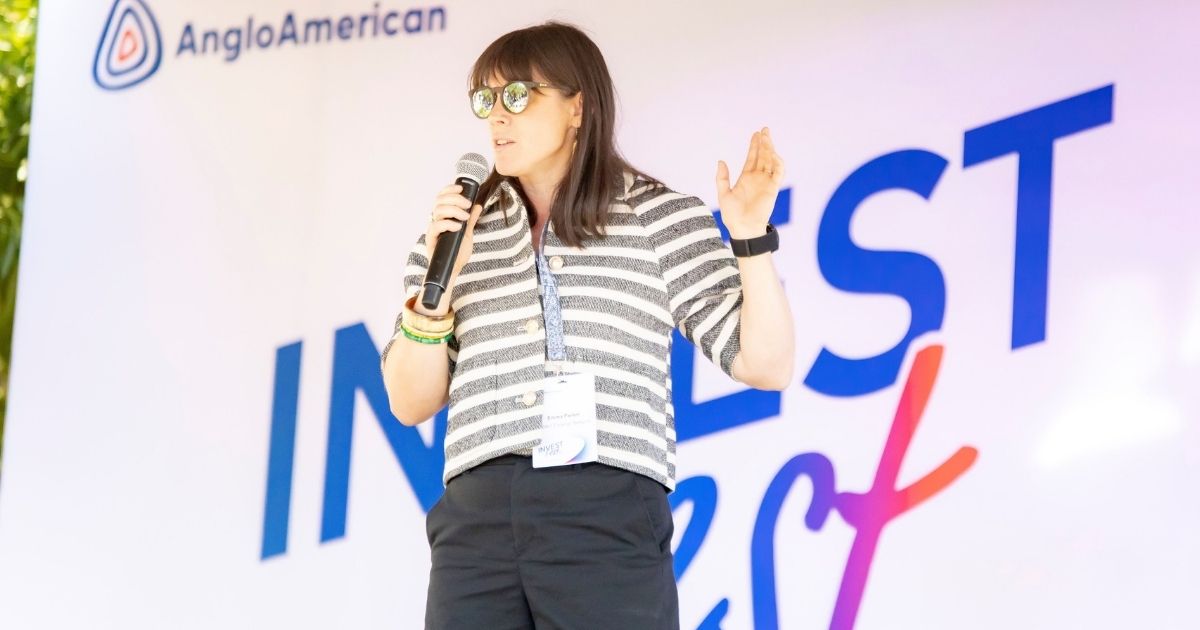
Emma Parker, Sustainable and Impact Finance Manager at Anglo American, explains that even when funding opportunities exist, many businesses are uncertain about which type of capital best suits their stage of growth or how to become investment ready.
“Understanding where to access funding and how different forms of capital can support a business at different stages is often as important as securing the funding itself. Before applying, you should really ask yourself why you need this finance and which finance options match that,” she says.
Funding Gap or Funding-Fit Gap?
A funding gap is the raw shortfall between the capital a business or project needs and the money it actually has, whereas a funding-fit gap (or product-market-funding fit gap) refers to a mismatch between a company’s profile and the specific criteria, stage, or investment thesis required by available lenders or investors.
Parker explains that despite South Africa having a relatively sophisticated financial system, access to funding remains a challenge for many SMEs. Smaller businesses often do not meet traditional bank lending requirements, whether because of limited collateral, shorter trading histories or less predictable cash flows. Where funding is available, SMEs may also find themselves exposed to relatively expensive capital given their stage of development and perceived risk.
On the other hand, she says there is also a significant funding-fit gap. This is where SMEs are looking for capital, but the available funding does not match their stage, risk profile or cash-flow characteristics.
“This distinction is important because increasing the pool of capital available to SMEs will not, on its own, solve the problem. We also need greater diversity in the types of capital available and better mechanisms for connecting SMEs with funding that is appropriate for their businesses,” says Parker.
What “Wrong Funding” Actually Looks Like
Parker explains that the wrong funding can have very different effects on a business. Often, the issue starts with a business not fully understanding its capital requirements and, as a result, using the wrong type of capital to meet the need.
This can take several forms: using expensive short-term debt to fund assets that will generate returns over several years; financing a long working-capital cycle with a facility that requires repayment before customers have paid; or taking on debt to fund an uncertain expansion before there is sufficient cash flow to service it.
Equity can create a different type of mismatch. In equity funding, a founder gives away permanent ownership to solve what is essentially a temporary, six-month working capital requirement. Beyond the dilution, this can also introduce the wrong shareholder into the business, one whose objectives may not be aligned with the founder’s or who adds limited strategic value.
Poorly structured capital can have long-term and, in some cases, expensive consequences that are difficult to reverse. Parker says, “The fundamental question entrepreneurs should be asking is not simply whether funding is available, but: “Does this funding behave in the same way that my business does?”
Matching the Type of Capital to the Need: Grants, Debt and Equity
When looking at the different types of funding SMEs can consider in growing their businesses, grants sit at the most accessible end of the spectrum. These are often made available by donors, government departments or development finance institutions and are non-dilutive, which means that founders give up no equity in exchange.
Debt finance – or borrowing money to fund your business – covers everything from microfinance to working capital, purchase order funding and asset finance. Business owners need to choose carefully, as they’re not all created equal and there is a different cost to each form of funding.
Equity is generally the most expensive form of capital, since investors expect a return for the risk they take. Early-stage businesses without a track record often raise equity, but Parker warns that raising equity too early can mean giving away more ownership than necessary, as investors will expect a larger equity stake to offset the risks they are taking.
Warning Signs: When Should an Entrepreneur Walk Away?
In a market where access to capital can be difficult, entrepreneurs need to be prepared to walk away when the funding solves today’s liquidity problem by creating a much larger problem tomorrow.
Parker says when founders assess funding opportunities, they need to look at more than just the money. With debt, look at elements like the total cash cost, repayment frequency, fees, security requirements, covenants and what happens if the business misses its forecast.
“A facility can appear affordable on an annual interest-rate basis but become very expensive once initiation fees, monitoring fees or aggressive repayment terms are included,” she says.
In equity, the equivalent assessment should be around valuation, dilution, investor rights and control. “Founders need to understand not only how much of the company they are selling today but also what that ownership could be worth after subsequent funding rounds.”
Getting the Sequencing Right as the Business Grows
Capital sequencing for SMEs is the strategic order in which a business raises and layers different types of funding, such as personal savings, equity, and debt, as it moves through its lifecycle.
Parker explains that early in a business’ development, when revenue is uncertain and the business is still proving its model, equity, grants or other patient capital can absorb risk that conventional debt cannot.
As revenue becomes more predictable, businesses can increasingly introduce working-capital facilities, asset finance or other forms of debt. Later, when the business has scale and more established cash flows, a wider range of institutional capital becomes available.
The problem starts when the business moves ahead of the sequence. She says that too much debt before cash flows are predictable creates repayment pressure. Too much equity once cash flows are established can result in unnecessary dilution.
Each funding round should improve the company’s position for the next one. “Capital should help the business reach a milestone, whether that is profitability, a larger order book, additional capacity or entry into a new market, that allows the next tranche of capital to be raised on better terms,” she explains.
How Growth Can Create Its Own Funding Trap
Before financing expansion, entrepreneurs need to model how growth affects working capital, capacity, margins and operational complexity. Parker says entrepreneurs need to understand how much additional cash is required for every additional rand of revenue and how long that cash remains tied up.
This is especially true for SMEs supplying large corporates or the public sector, where the timing of payments can have a significant impact on liquidity.
“Growth should ultimately strengthen the business rather than simply make the funding requirement larger,” highlights Parker.
What Needs to Change: Closing the Funding-Fit Gap
There is no single best funding option – capital should be used to help entrepreneurs bring ideas to life and validate their business models. And as the business matures, that capital should be used to accelerate growth rather than solve fundamental flaws in the model.
The funding ecosystem needs a wider range of products between conventional debt and equity, better risk assessment, and stronger support connecting SMEs to appropriate capital. Parker says this is the gap the Impact Finance Network (IFN) is working to close.
Since its launch in 2021, the IFN has supported more than 100 businesses through technical assistance, mobilised over R1,8 billion in third-party capital, and helped sustain over 46 000 livelihoods across Southern Africa.
It prepares businesses to become investment-ready through pre-investment support such as business plan, financial modelling and pitch preparation, then matches them with suitable investors and supports both parties to close the deal. Readiness, matching and capital together are what make the difference.
“Ultimately, a better SME funding ecosystem is not one in which every business receives funding. It is one in which viable businesses have a realistic path to the right type of capital, at the right stage and on terms that allow them to grow sustainably,” says Parker.
South Africa has no shortage of entrepreneurial talent. What many businesses need is support to navigate the funding landscape, understand their options and connect with the right investors.
“Capital has the power to turn ambition into opportunity, but the real impact happens when businesses are investment-ready and matched with the right funding at the right time. That’s how we unlock sustainable growth, create jobs and support the entrepreneurs building the future of our economies,” concludes Parker.