
21 Aug 2026 · 46 min · SME Podcast
Demystifying Government Funding with Sedfa’s Don Mashele
Hosted by Lungile Msomi
Meet the guest
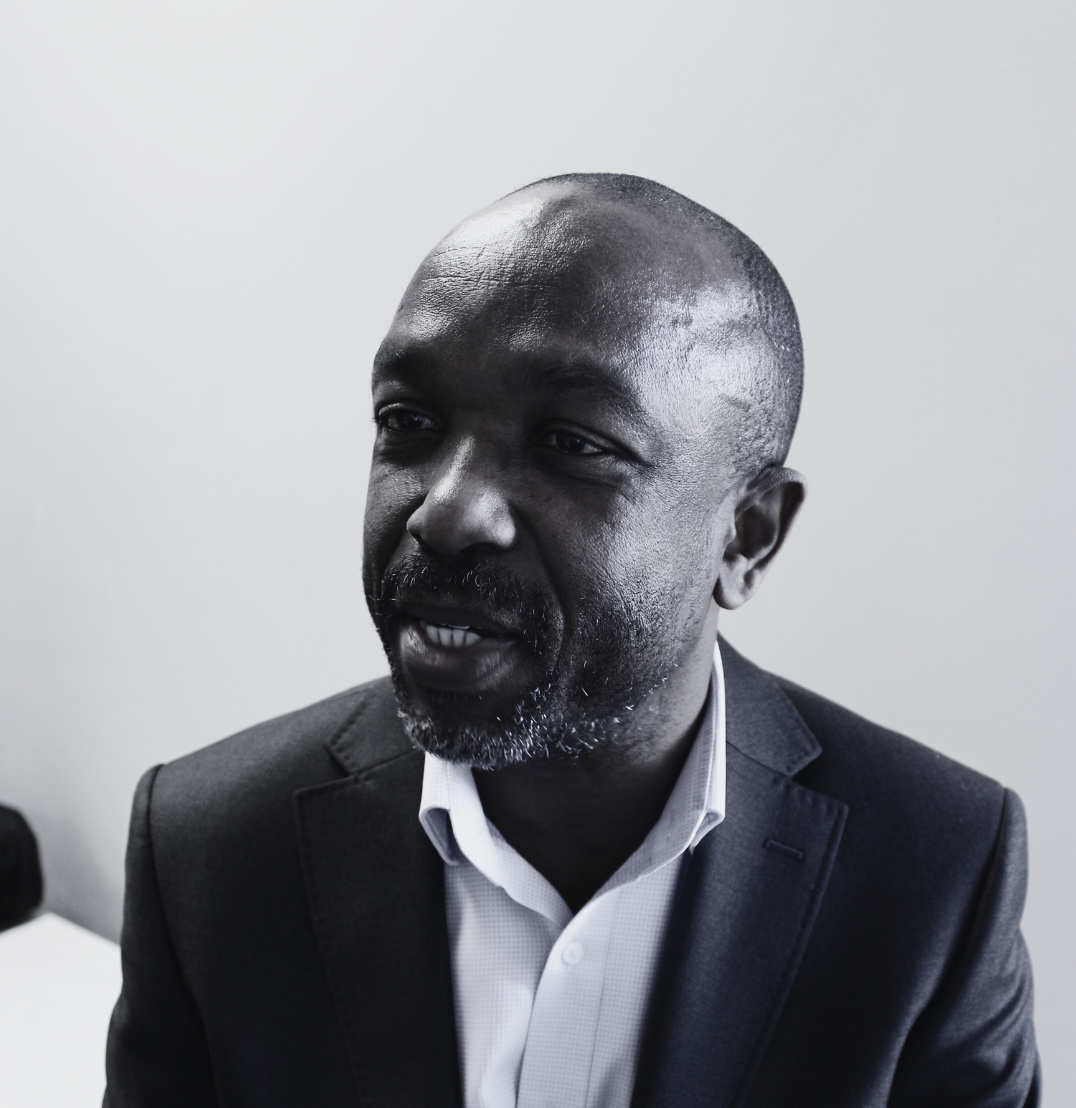
Don Mashele is the Head of Strategic Partnerships at SEDFA, the Small Enterprise Development and Finance Agency, where he manages the agency's partnerships and supports its clients. His career in finance began in 1993 and has been spent…
View speaker profile →About this episode
Government funding is not red tape for its own sake, says Don Mashele of the Small Enterprise Development and Finance Agency (SEDFA). Because the agency has no trading history to go on, the checklist is how it gets to know you, and the entrepreneurs who succeed are the ones who arrive with their file ready.
One door instead of three
Speaking to host Lungile Msomi, Mashele, who has worked in small business support for almost 30 years across Business Partners, Standard Bank, a provincial development corporation and an NGO, explained what changed when three agencies became one. SEDFA now combines the former Small Enterprise Finance Agency, the Small Enterprise Development Agency and the Cooperative Banking Development Agency. An entrepreneur who is told to get a business plan before applying for funding no longer has to go to a different institution, he said: it is another division of the same one, which he called a one-stop shop.
The journey depends on the stage. Someone with only an idea attends a workshop to test it, then a feasibility study, then a business plan, and only then a funding application. An established business can skip to a business plan and the agency's common funding template. A business plan, he stressed, is a compass you need whether or not you seek funding, and is not the same thing as a funding proposal.
Four pillars and the partner network
The agency's support is organised as four stages: Talk, Start, Build and Grow. The first is physical workshops at its branches where an idea is questioned hard, sometimes to the point where the founder realises there is no business, as happened with people who wanted to buy a single truck and learned they would need a fleet, insurance and tyres. Mashele noted that the agency does not provide equity: it lends, and anyone who cannot yet predict cash flows may need an angel investor, which it will help them find.
Because it cannot do everything, SEDFA partners with others: the Technology Innovation Agency for tech businesses, Productivity SA for manufacturing standards, and the National Youth Development Agency, whose voucher recipients can become a pipeline into SEDFA. Each partnership, he said, starts with a problem statement and a team that manages an implementation plan, so applicants are not left in between. The agency does not fund alcohol, tobacco or primary agriculture, though agro-processing qualifies, and its lending is capped at R15 million per business, with larger needs going to the IDC or the NEF.
Programmes for townships and manufacturers
Mashele discussed several of the agency's offers. The Spaza Shop Fund, which the host said has disbursed more than R80 million, aims to bring township shops into compliance, give them resources, and teach group buying, because a bulk-purchase discount decides whether a small shop can compete on price. Cooperation beats competition, he said, though owners must still do a feasibility study to avoid saturating a street.
The Township and Rural Entrepreneurship Programme is open permanently and combines a grant and a loan: up to R1 million, half of it a grant, with the loan at 5 percent; thresholds are under review. A separate manufacturing support programme goes up to about R15 million, with 20 percent as a grant of up to R2 million and a loan at prime. There is also a newer programme for young people. He urged more people to rebuild manufacturing, including agro-processing.
How the agency differs from a bank
Mashele said SEDFA exists to address market failure, meaning viable businesses that do not meet a bank's criteria, and so it does not require rand-for-rand security. It is registered with the National Credit Regulator, so it must test affordability, which is why it asks for financials, projections and the reasoning behind them. A bank can move fast because it already has your account history, whereas SEDFA is hearing about you for the first time.
His closing advice is to keep a funding file ready: the checklist is on the agency's website, and items such as tax clearance only need refreshing. "Don't start putting together a funding file when you see an opportunity that you must respond to tomorrow," he said, and a ready file also speeds up the agency's turnaround. SEDFA has branches in each province, a website and two mobile offices, with the aim of one per province.
Mentioned in this episode
- SEDFA: The agency's website, with its branch list and funding checklist.
- Beyond the loan: how SEDFA's business development support turns ideas into bankable businesses: Our feature on the support described here.
- SEDA grant funding is now SEDFA: what changed and how to apply: What the merger changed.
Questions this episode answers
What is SEDFA?
The Small Enterprise Development and Finance Agency, formed when the Small Enterprise Finance Agency, the Small Enterprise Development Agency and the Cooperative Banking Development Agency merged. Mashele says it offers financial and non-financial support under one roof.
How much can SEDFA lend, and does it take equity?
Its funding is capped at R15 million per business, and Mashele says it does not take equity or buy into a business. Larger needs go to other development finance institutions such as the IDC or the NEF.
How is SEDFA different from a bank?
It exists to address market failure: viable businesses that do not meet a bank's criteria. It does not ask for rand-for-rand security, but, with no history on the applicant, it asks for financials, projections and a detailed checklist.
What should an entrepreneur prepare before applying?
A funding file: the checklist from the agency's website, financial statements if trading, justified projections and compliance documents. Mashele says to keep it ready, updating items such as tax clearance, because a ready file speeds up the agency's turnaround.